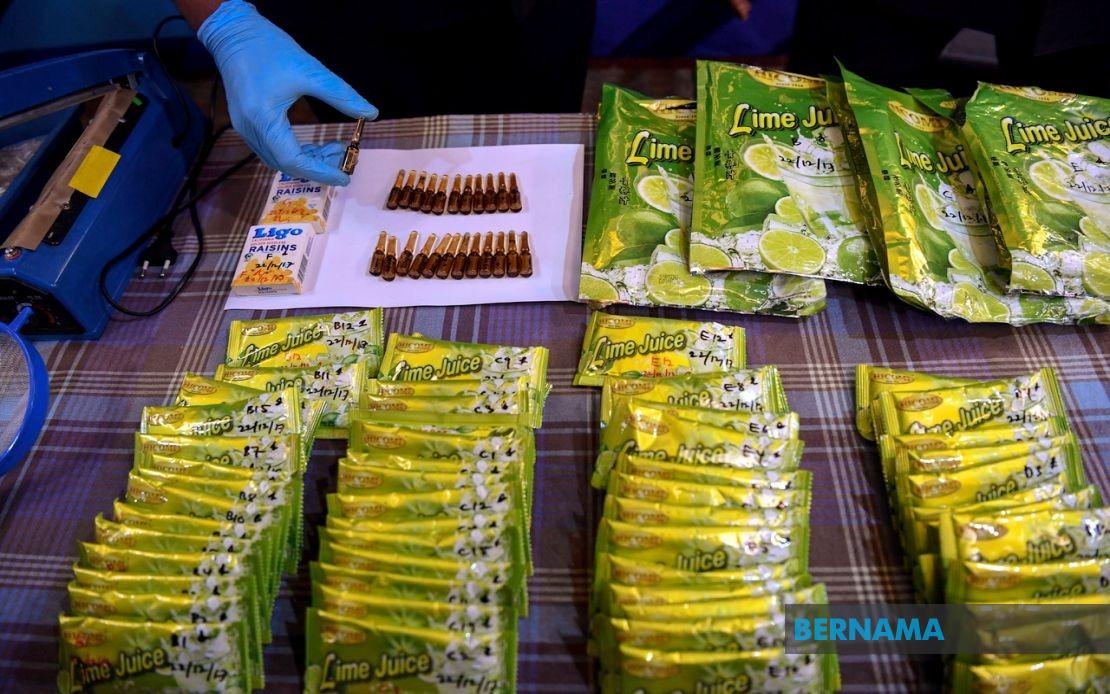
Malaysia faces an escalating crisis with synthetic drugs, prompting the Home Ministry to substantially intensify enforcement operations and pursue legislative reforms to address the proliferation of substances like methamphetamine, fentanyl, and the locally-named "piu-piu" pills. Home Minister Datuk Seri Saifuddin Nasution Ismail highlighted the gravity of the situation in a parliamentary response, characterising these drugs as posing severe risks to public health and social stability due to their extreme addictive potential and association with fatal overdose incidents and organized crime.
The scale of the problem has become impossible to ignore. Between 2023 and June 2026, Malaysia's law enforcement apparatus made 238,704 arrests connected to synthetic drug offences nationwide, a figure that underscores the breadth and depth of the trafficking challenge confronting authorities. This represents not merely a policing problem but a systemic public health emergency requiring coordinated intervention across multiple government agencies and enforcement bodies. The arrest data suggests that synthetic drugs have moved beyond niche markets to become deeply embedded within Malaysia's criminal underworld and street-level drug distribution networks.
To combat this threat, the Royal Malaysia Police has launched dedicated operations including Op Tapis and Op Tapis Kash, deployed strategically across urban centres as well as rural and geographically isolated regions where traditional enforcement presence may be limited. These coordinated efforts involve collaboration with the National Anti-Drugs Agency and the Royal Malaysian Customs Department, creating an inter-agency approach designed to disrupt trafficking supply chains at multiple points. The expansion of operations into remote areas reflects recognition that synthetic drugs have penetrated beyond major cities, reaching communities previously less affected by hard drug distribution networks.
Technological advancement now plays a central role in enforcement strategy. Drones and sophisticated surveillance camera systems enable authorities to monitor trafficking hotspots and detect distribution activities in real time, providing capabilities unavailable in previous years. This technological integration represents a significant evolution in Malaysia's drug enforcement methodology, allowing for broader coverage and more effective identification of trafficking corridors and processing facilities. However, the rapid adaptation of criminal networks to evade detection remains a persistent challenge that requires constant tactical adjustment.
Legislative action is proceeding in parallel with enforcement operations. The government is actively considering amendments to the Dangerous Drugs Act 1952 to incorporate newly emerging synthetic drugs, classified as New Psychoactive Substances, into the legislation's controlled substance schedules. This legal framework adjustment is essential because new drugs are continuously synthesised in clandestine laboratories to circumvent existing legislation, creating a perpetual legislative lag. By updating the Act, Malaysia aims to close regulatory gaps that traffickers exploit to market substances in technically legal status before formal criminalization occurs.
Prevention and community engagement complement enforcement and legal measures. Between 2023 and June 2026, authorities conducted 1,144 drug prevention programmes across the country, targeting public awareness and shifting social attitudes toward synthetic drug use. These initiatives operate on the premise that reducing demand complements supply-side enforcement, though evaluating their effectiveness requires sustained measurement and adaptation based on community feedback and behavioural data. The investment in prevention reflects understanding that enforcement alone cannot solve drug epidemics without corresponding cultural and educational shifts.
Sarawak presents a specific regional concern within the national picture. During the first half of 2026, authorities arrested 7,097 individuals in the state on drug-related charges, including 342 traffickers and 5,441 drug users, alongside seizure of 418.01 kilogrammes of drugs valued at RM53.73 million. These figures reveal that Sarawak, despite its geographical distance from major urban centres, remains deeply embedded within Malaysia's synthetic drug economy. The state's porous borders and maritime access points create vulnerabilities that traffickers exploit for transshipment and distribution operations. The parliamentary question specifically addressing Sarawak's situation indicates heightened political attention to the state's drug problem and constituent concerns about inadequate federal intervention.
Asset confiscation represents another enforcement strategy gaining prominence. Sarawak authorities confiscated syndicate assets worth RM1.95 million during the same six-month period, disrupting traffickers' financial operations and degrading their operational capacity. Beyond immediate criminal justice outcomes, asset seizure targets the economic foundations of trafficking networks, making criminal drug enterprise financially unviable. Additionally, 13 individuals were detained under the Dangerous Drugs Special Preventive Measures Act 1985, and action was taken against 131 hardcore drug addicts under Section 39C of the Dangerous Drugs Act 1952, indicating deployment of preventive detention alongside rehabilitative frameworks for severe cases.
Forensic laboratory capabilities are undergoing continuous enhancement to address the specific challenge posed by synthetic opioids and fentanyl analogues. These substances require sophisticated chemical analysis to identify and characterize, as clandestine producers continuously modify molecular structures to create variants that evade detection. Enhanced laboratory infrastructure enables faster identification of new compounds, permitting quicker legal response and more targeted enforcement operations. This forensic capacity-building is essential for maintaining enforcement effectiveness as drug manufacturers race ahead of detection methodologies.
The synthetic drug challenge represents a qualitative shift in Malaysia's drug enforcement environment compared to the heroin and cannabis trafficking of previous decades. Synthetic drugs require minimal plant material, can be produced in small clandestine laboratories, generate higher profit margins for traffickers, and pose unprecedented overdose risks. The psychological and physiological addiction profiles differ markedly from traditional opioids, creating distinct treatment and prevention challenges for health authorities. Integration of synthetic drug responses into existing drug control frameworks requires simultaneous evolution of enforcement tactics, public health responses, and legislative architecture.
Regional implications extend beyond Malaysia's borders. Southeast Asia's porous national boundaries, developing capacity for chemical precursor manufacturing, and proximity to major synthetic drug-producing regions create structural vulnerability to pharmaceutical crime. Malaysia's response strategy—combining enforcement intensity, technological deployment, legislative updating, and community prevention—may provide instructive models for neighbouring countries facing similar challenges. Conversely, ineffective responses in neighbouring jurisdictions create spillover effects that complicate Malaysia's domestic enforcement efforts, requiring transnational coordination mechanisms that remain underdeveloped across Southeast Asia.
The sustainability of Malaysia's intensified crackdown depends on consistent resource allocation, inter-agency coordination persistence, and public support for enforcement measures that necessarily affect civil liberties. Political commitment to the issue, demonstrated through parliamentary attention and ministerial statements, provides foundation for continued operations, though maintaining public engagement requires demonstrable progress in reducing drug availability and associated crime. Long-term success requires balancing supply-side enforcement with demand-reduction strategies, ensuring that treatment infrastructure keeps pace with addiction prevalence, and addressing root causes of drug user recruitment among vulnerable populations.

