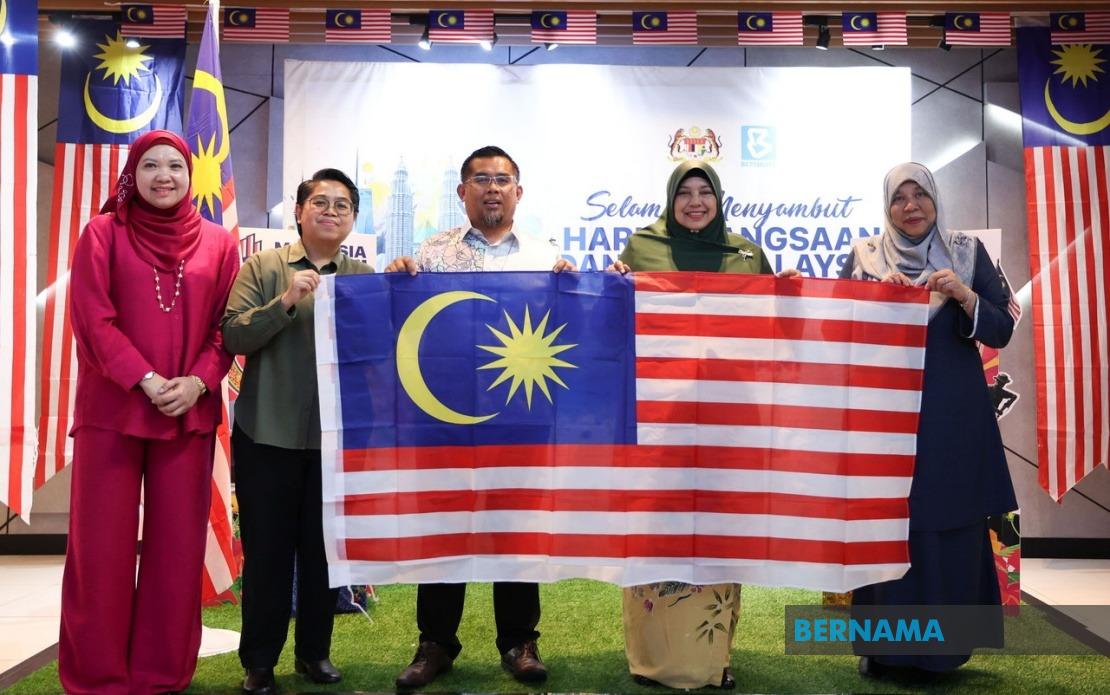
The government is preparing an expanded slate of activities for next year's National Day and Malaysia Day (HKHM) festivities, with the Communications Ministry introducing 16 side programmes designed to deepen patriotic spirit and strengthen national cohesion. According to Harun Ali, secretary of the ministry's Management Services Division, the initiative reflects a deliberate strategy to make the celebrations more inclusive and accessible to Malaysians from diverse backgrounds. The programming initiative marks a shift in how the government conceptualises national commemorations, moving beyond ceremonial formality to embrace grassroots participation and community engagement.
The portfolio of activities encompasses a diverse range of initiatives spanning cultural expression, competitive engagement, and community mobilisation. Featured programmes include Kembara Merdeka Jalur Gemilang (KMJG), a mobility campaign designed to carry the celebration across the nation, the National Month Decoration Competition encouraging neighbourhoods and organisations to demonstrate creative patriotism, and Ekspresi Merdeka, which provides platforms for artistic and cultural expression. The Kita MADANI Carnival adds a celebratory dimension aimed at bringing families and communities together through entertainment and interactive experiences. Together, these offerings represent an attempt to translate abstract notions of national unity into concrete, participatory experiences that resonate across generational and socioeconomic divides.
A significant departure from tradition this year involves relocating the main Merdeka Eve Celebration from its traditional venue in Putrajaya to Stadium Merdeka, the iconic venue deeply embedded in Malaysia's independence narrative. This decision carries symbolic weight, anchoring the 2026 celebrations to a physical space that witnessed pivotal moments in the nation's founding. Stadium Merdeka's historical resonance—as the site where Malaysian independence was formally proclaimed—creates a continuity between past achievement and present aspiration. The relocation signals an intentional effort to reconnect contemporary Malaysians with the historical foundations of their nation, using geography and heritage as tools for fostering deeper appreciation of independence.
Prime Minister Datuk Seri Anwar Ibrahim will deliver a special Merdeka Address as midnight approaches on August 31st, positioned as a moment to articulate the government's vision and rekindle collective resolve. Such addresses serve multiple functions within national ceremonies: they provide leadership narrative, frame national challenges within historical context, and offer an opportunity to appeal directly to citizens' patriotic sentiment during moments of heightened national consciousness. The timing at midnight—the symbolic threshold between one day and the next—amplifies the rhetorical power of the moment, casting the Prime Minister's words as a bridge between past independence struggles and future national aspirations.
A novel aerial attraction called "Melukis Senja" (Painting the Dusk) will introduce sophisticated aerobatic performances over Putrajaya's skyline. The display will feature Aero 3, executing manoeuvres that produce colourful smoke trails and coordinated fireworks. This innovation reflects contemporary approaches to public spectacle, combining technical aviation skills with visual pyrotechnics to create memorable experiences for observers across the capital. Such displays serve both practical and symbolic purposes: they provide entertainment value that appeals to younger audiences and families, while the visual drama of aircraft performing synchronized manoeuvres carries metaphorical resonance about national coordination and collective movement toward shared objectives.
The Communications Ministry's emphasis on the "price" of independence—that freedom was neither cheaply nor easily attained—anchors these celebrations within a pedagogical framework. By repeatedly invoking the sacrifices made by previous generations, the government seeks to cultivate what might be termed patriotic consciousness, a deliberate remembrance of the costs associated with national sovereignty. This framing responds to concerns, occasionally voiced by government officials and cultural commentators, that younger Malaysians may take independence for granted. The programming approach attempts to counteract this perceived complacency by surrounding celebrations with messaging about historical struggle and collective responsibility.
The call for Malaysians to display the Jalur Gemilang during National Month functions as both a practical decorative initiative and a symbolic gesture. The national flag, when displayed widely across homes, businesses, and public spaces, transforms the urban and suburban landscape into a visible expression of patriotic sentiment. For Malaysian observers, this ubiquity of national symbolism during the month preceding independence day creates an environment saturated with reminders of national identity. The practice also serves a social function, creating visible differentiation between those who participate and those who do not, thereby applying gentle social pressure toward compliance with national ceremonial expectations.
The Communications Ministry's approach reflects broader Southeast Asian trends in how governments mobilise nationalism through cultural and recreational programming. Across the region, national celebrations increasingly feature diversified activities aimed at broad demographic appeal rather than centralised, formal state ceremonies that may feel distant from ordinary citizens' lived experiences. Malaysia's expansion of programming diversity suggests recognition that patriotic sentiment is not automatically generated but must be actively cultivated through experiences that feel relevant and accessible. The 16 programmes represent a calculated investment in making national consciousness feel personal and participatory rather than imposed from above.
For Malaysian businesses and community organisations, the HKHM 2026 framework creates opportunities for sponsorship, participation, and commercial engagement around national themes. The National Month Decoration Competition, for instance, incentivises retailers, residential communities, and corporate entities to invest in visible patriotic expression, generating economic activity while advancing governmental objectives. This alignment of commercial and patriotic interests creates a mutually reinforcing cycle where economic actors benefit from participation while simultaneously amplifying the government's visibility and reach during crucial national commemorative moments.
The decision to distribute Jalur Gemilang flags through Bernama, the Malaysian National News Agency, symbolises the integration of media institutions within the broader patriotic mobilisation effort. By having the national news agency serve as a physical distributor of national flags, the government binds media organisations more directly to patriotic messaging. This approach reflects a particular conception of the media's role within society—not merely as observers and reporters of events, but as active participants in national consciousness-building and civic mobilisation.
Looking ahead to 2026, the Communications Ministry's comprehensive programming strategy suggests that Malaysian independence celebrations will become increasingly elaborate and diversified. Rather than concentrating resources on a single marquee event, the government is distributing celebratory energy across multiple simultaneous initiatives designed to engage different demographic groups through different modalities. This dispersal approach may prove more effective at sustaining patriotic sentiment throughout the entire National Month rather than concentrating it in a few climactic moments. For regions beyond Putrajaya, the KMJG programme and other decentralised activities ensure that National Month celebrations reach provincial and rural communities, potentially strengthening affective connections to national identity among populations that might otherwise experience independence celebrations as distant urban phenomena.

