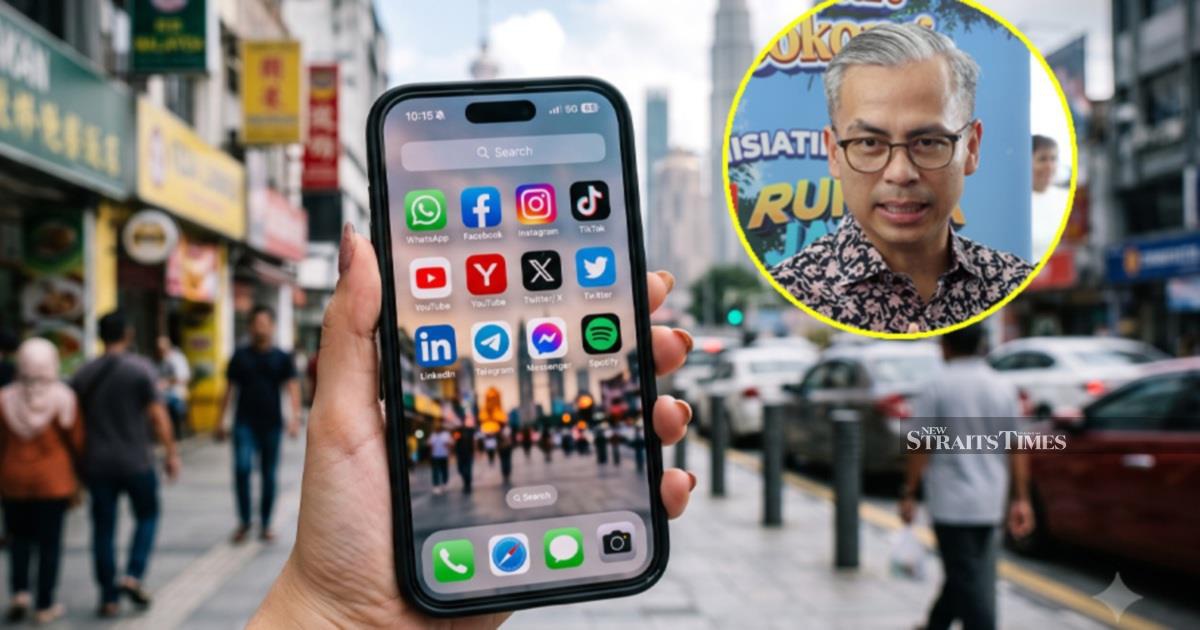
Malaysia's Communications Ministry has uncovered a significant disinformation operation involving more than 1,800 fraudulent social media accounts, many strategically weaponised to amplify inflammatory content touching on race, religion, and royalty—matters long regarded as politically explosive in the nation's delicate multicultural landscape. Communications Minister Datuk Seri Fahmi Fadzil disclosed the findings, signalling an intensifying enforcement effort against coordinated inauthentic behaviour that exploits Malaysia's constitutional sensitivities.
The discovery underscores growing concern among authorities that organised networks of fake accounts have become a primary vector for spreading divisive narratives across the Malaysian digital ecosystem. Rather than representing organic grassroots debate, these coordinated campaigns often employ bots, dormant profiles, and compromised accounts to artificially amplify specific messages, creating false impressions of public opinion on contentious matters. This orchestrated amplification is particularly dangerous in the Malaysian context, where historical communal tensions remain embedded in national memory and where even seemingly minor provocations can trigger broader social friction.
The 3R nexus—encompassing race, religion, and the institution of monarchy—has traditionally been protected under constitutional frameworks and laws designed to preserve national harmony. The fact that a substantial portion of detected fake accounts were being deployed to weaponise content around these specific topics suggests a strategic effort to exploit constitutional and legal sensitivities for maximum divisive impact. This pattern indicates adversaries understand Malaysia's social fault lines with considerable precision and are deliberately targeting vulnerabilities in the national consensus.
Minister Fahmi's public disclosure represents a notable escalation in the government's transparency regarding foreign and domestic disinformation threats. By quantifying detected accounts and specifying their thematic focus, the Communications Ministry is signalling that detection capabilities have matured and that enforcement agencies possess sufficient intelligence to identify organised campaigns. This transparency also serves a secondary purpose: educating the Malaysian public about the prevalence of inauthentic behaviour online, potentially increasing digital literacy around recognising coordinated manipulation.
The nature of fake account operations typically involves several methodological approaches. Networks commonly deploy dormant accounts activated during specific campaigns, utilise automated systems to generate coordinated posting patterns, and often employ compromised legitimate accounts whose credentials have been stolen or purchased. By operating in coordinated clusters, these networks amplify each other's content, pushing messages higher in algorithmic ranking systems and ensuring greater visibility regardless of genuine user engagement levels. For audiences unfamiliar with network manipulation tactics, this artificial amplification creates an illusion of widespread support or concern where none necessarily exists.
The timing of this announcement carries particular significance given Malaysia's forthcoming electoral cycles and ongoing political transitions. Disinformation networks targeting 3R issues are particularly effective during periods of heightened political activity, when populations are already engaged with news and political discourse. By injecting divisive content during such periods, coordinated campaigns can influence political sentiment, deepen existing divisions, and potentially sway electoral outcomes or policy decisions. The government's proactive identification of these networks suggests awareness that such threats intensify during sensitive political moments.
For Malaysia's social media ecosystem and wider digital economy, these findings highlight the persistent challenge of platform responsibility and governance. While international platforms including Facebook, Instagram, TikTok, and Twitter possess sophisticated detection systems, the sheer volume of generated content means that coordinated inauthentic behaviour often evades automated detection. Moreover, the profitability of fake account networks—driven by advertising revenue, political patronage, or state-sponsored operations—ensures continued investment in evasion techniques. This perpetual cat-and-mouse dynamic between platform defences and adversary innovation suggests that detection numbers will likely continue rising as capabilities improve.
The regulatory framework governing Malaysia's digital space has expanded considerably in recent years, particularly through the Communications and Multimedia Act, the Penal Code, and the Online Safety Act. These legislative tools provide authorities with legal instruments to address coordinated disinformation, though enforcement remains inconsistent and sometimes controversial. The ministry's public announcement of 1,800 detected accounts signals intention to leverage these frameworks more aggressively, though questions persist regarding whether enforcement mechanisms adequately target organised networks versus individual users.
Regional implications merit consideration, as Malaysia's experience mirrors challenges across Southeast Asia. Thailand, Philippines, Indonesia, and Vietnam have all reported significant disinformation operations exploiting cultural and political sensitivities. The coordination and scale of these campaigns suggest either sophisticated domestic operations or involvement by foreign actors with regional targeting capabilities. Malaysia's detection and disclosure strategy may prompt similar announcements from neighbouring governments and could catalyse regional cooperation frameworks addressing cross-border disinformation.
The broader societal impact extends beyond immediate electoral or political concerns. When substantial portions of apparent public discourse originate from inauthentic accounts, genuine civic dialogue becomes distorted. Citizens attempting to understand genuine public opinion face signals polluted by artificial amplification, undermining democratic deliberation. For Malaysia specifically, where communal relations depend substantially on good-faith communication and mutual understanding, coordinated manipulation of 3R discourse poses existential risks to social cohesion.
Moving forward, the ministry faces considerable challenges in scaling detection and enforcement while maintaining public trust and avoiding accusations of selective application for political purposes. Transparency regarding detection methodologies, account removal timelines, and enforcement actions will be essential for credibility. Additionally, partnerships with social media platforms themselves remain crucial, as most fake account detection ultimately relies on platform cooperation and data sharing.
The revelation of extensive fake account networks represents a watershed moment prompting Malaysian digital governance institutions to acknowledge and confront organised disinformation as a systemic threat rather than isolated incidents. Whether authorities can maintain this momentum and prevent similar operations from emerging remains uncertain, but the ministry's proactive stance suggests increasing recognition that digital authenticity fundamentally underpins democratic institutions and social stability.

