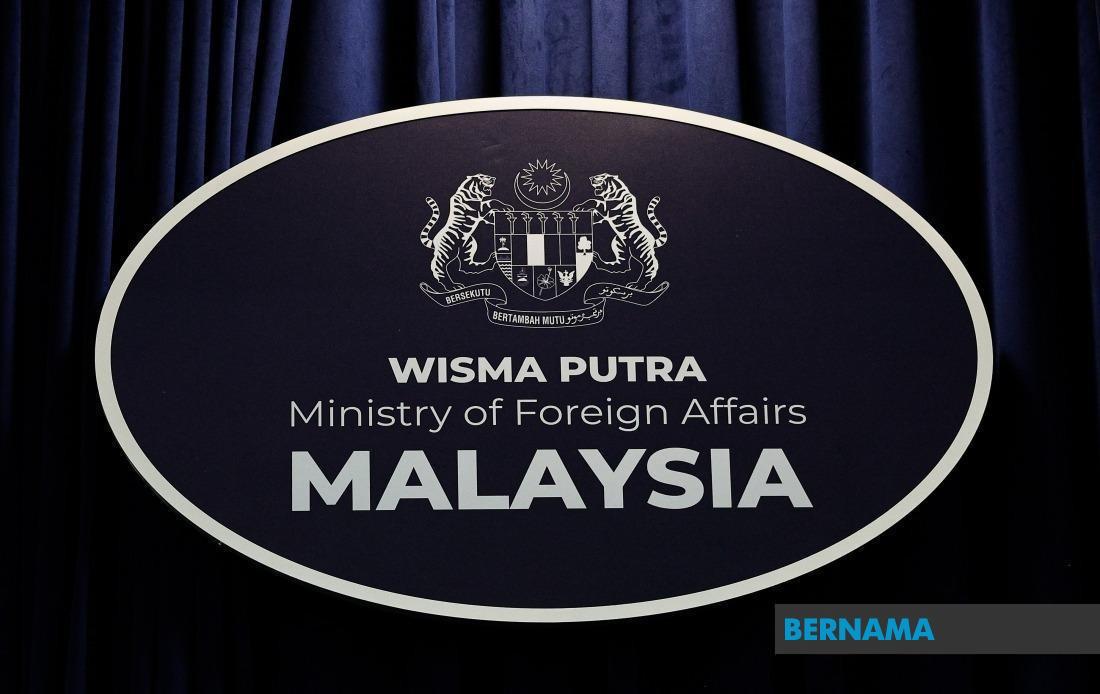
Malaysia's Foreign Ministry has issued a formal condemnation of Israeli military forces' forcible takeover of the Kalandia Training Centre in Kafr Aqab, occupied East Jerusalem, on August 25. In a statement released through Wisma Putra, the ministry characterised the incursion as part of a broader strategy to obstruct educational and training opportunities for young Palestinians, thereby violating their fundamental human rights. The government of Malaysia views the action as a flagrant breach of international norms protecting humanitarian and educational institutions.
The Kalandia Training Centre holds significant historical and practical importance for Palestinian refugees and residents across the West Bank. Established in 1952 as UNRWA's pioneering vocational training facility, the centre has provided crucial technical and skills development programmes for over seven decades. Each year, approximately 340 young Palestinian refugees pass through its programmes, acquiring qualifications in trades and professions essential for economic participation and self-sufficiency. The disruption of such services represents not merely a logistical interruption but strikes at the heart of capacity-building efforts within Palestinian communities.
Malaysia's position reflects broader international concern regarding the sanctity of United Nations facilities and their operational independence. Under established international conventions and the UN Charter, premises occupied by UN agencies enjoy special protections and immunities designed to insulate humanitarian work from political interference. Wisma Putra emphasised this principle by noting that United Nations premises are inviolable and that signatory nations bear an obligation to respect their privileged status. The seizure therefore constitutes not only a disruption to education provision but potentially violates the fundamental agreements governing UN operations in occupied territories.
The Kalandia centre's disruption carries implications extending beyond immediate Palestinian learners. For Southeast Asian nations maintaining diplomatic engagement with both Israeli and Palestinian actors, the incident underscores escalating tensions surrounding humanitarian access in conflict zones. Malaysia, as a consistent advocate for Palestinian rights within regional and international forums, views such actions as incompatible with efforts toward a negotiated two-state resolution. The incident also raises practical questions about the security and sustainability of UN-operated programmes throughout the occupied territories, potentially affecting multiple humanitarian initiatives.
Wisma Putra's statement articulated several interconnected concerns regarding the seizure. The ministry argued that the Israeli action demonstrates intentional policy aimed at denying Palestinians, particularly youth, pathways toward education and economic development. This characterisation positions the incident within a larger narrative of systematic constraints on Palestinian institutional development. By framing the seizure as part of a deliberate strategy rather than an isolated security operation, Malaysia's foreign ministry signals serious assessment of the action's implications for civilian welfare and long-term Palestinian development prospects.
The Malaysian government has called upon the international community, specifically the United Nations Security Council, to adopt concrete enforcement measures. This appeal reflects Malaysia's belief that existing international frameworks require activation and implementation to prove meaningful. Rather than accepting the seizure as a fait accompli, Wisma Putra seeks to mobilise multilateral pressure through the Security Council, invoking both the UN Charter and relevant International Court of Justice decisions as legal foundations for intervention. Such appeals, while often non-binding, serve to register Malaysia's formal opposition and reinforce advocacy positions aligned with Palestinian interests.
For Malaysian audiences, this statement reinforces the government's consistent foreign policy stance on Israeli-Palestinian issues. Malaysia has long positioned itself as a vocal advocate for Palestinian statehood and rights within international organisations and regional forums. The condemnation of the Kalandia seizure represents continuity with established diplomatic positions rather than a new shift. However, the incident also reflects widening confrontations around Palestinian institutional spaces, suggesting intensifying rather than de-escalating patterns in the occupied territories.
The broader significance of the Kalandia incident lies in its symbolic and practical dimensions. Symbolically, the seizure of an educational facility signals contested control over Palestinian civil society infrastructure. Practically, the loss of training capacity directly impacts employment prospects for Palestinian youth and contributes to broader economic marginalisation. For Malaysia and other nations concerned with Palestinian development, such disruptions undermine not only immediate welfare but long-term prospects for sustainable Palestinian economic institutions capable of functioning independently within a future state structure.
The international legal framework governing UN operations and occupied territories remains contested terrain, but Malaysia's invocation of established principles reflects widespread consensus among non-aligned nations regarding the inviolability of humanitarian spaces. Whether the Security Council acts on Malaysia's appeal remains uncertain, given permanent member vetoes and geopolitical constraints. Nevertheless, Malaysia's formal condemnation ensures that the seizure receives documented diplomatic opposition and contributes to international record-keeping regarding actions affecting Palestinian civilian institutions. For Malaysian policymakers and observers, the incident reinforces the vulnerability of Palestinian institutional development to military action and the limitations of international mechanisms in preventing such disruptions.

