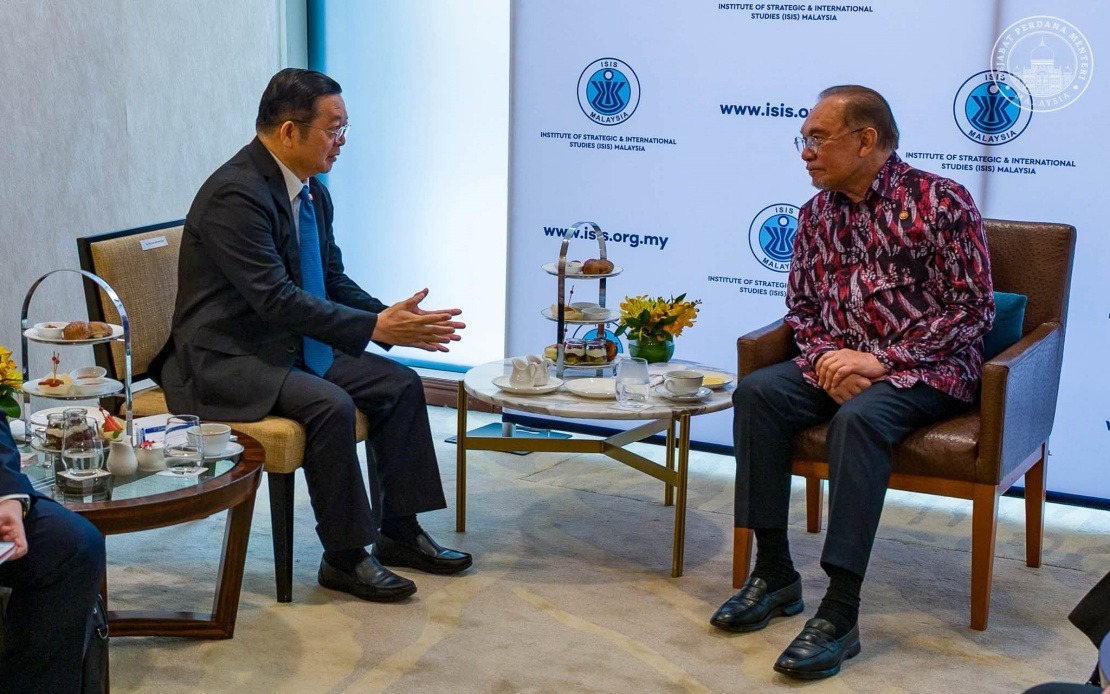
Prime Minister Datuk Seri Anwar Ibrahim has pledged Malaysia's unwavering commitment to fortifying ASEAN as a robust and inclusive regional community capable of delivering on the hopes and expectations of its 650 million citizens. Speaking following a bilateral meeting with ASEAN Secretary-General Dr Kao Kim Hourn at the 39th Asia-Pacific Roundtable in Kuala Lumpur, Anwar underscored the importance of Malaysia's active participation in shaping the bloc's strategic direction during an increasingly volatile period for Southeast Asia.
The prime minister, who concurrently holds the portfolio of Finance Minister, emphasised that Malaysia would remain steadfast in advancing ASEAN's collective interests across multiple fronts. His remarks came in the wake of delivering the keynote address at the roundtable forum, a prestigious gathering of policymakers, academics, and strategic thinkers from across the Asia-Pacific region. The venue provided a timely platform for Anwar to signal Malaysia's readiness to engage constructively on pressing regional matters that have emerged as defining challenges for ASEAN's near-term agenda.
The bilateral discussion between Anwar and the ASEAN Secretary-General ranged across a comprehensive slate of geopolitical and economic issues that occupy the bloc's deliberations. The Myanmar crisis, which has cast a shadow over ASEAN unity since the military coup in February 2021, featured prominently in their conversation. This reflects ongoing Malaysian concern about the humanitarian fallout and instability emanating from the country, which sits at the heart of mainland Southeast Asia and maintains close ties with several ASEAN neighbours. Anwar's emphasis on this issue signals Malaysia's desire to see concrete progress on ASEAN's Five-Point Consensus and renewed diplomatic efforts toward resolution.
Disputes in the South China Sea represented another major discussion point, underscoring the persistence of maritime tensions that continue to threaten regional stability and freedom of navigation. Malaysia, with its own territorial claims and significant maritime interests in the contested waterway, has long advocated for constructive dialogue and the early conclusion of a binding Code of Conduct between ASEAN and China. The discussion likely touched on the latest developments affecting this protracted challenge, including increased naval activities and the role of the 2016 arbitral award in shaping diplomatic expectations.
The emergence of artificial intelligence as a substantive agenda item reflects ASEAN's growing recognition that technological advancement poses both opportunities and risks for the region's development trajectory. The rapid proliferation of AI applications across commerce, governance, and security has prompted regional governments to consider coordinated approaches to harnessing its benefits while mitigating potential harms. Malaysia, positioned as a relatively advanced economy with growing tech sector capabilities, stands to benefit from conversations around AI governance frameworks and capacity-building initiatives that ASEAN might collectively pursue.
Timor-Leste's recent accession to ASEAN as the bloc's eleventh member has introduced fresh dynamics requiring careful navigation. The integration phase following the East Timorese nation's entry represents an important test of ASEAN's inclusivity and its capacity to absorb new members while maintaining cohesion. Discussions around this transition are essential, particularly regarding how ASEAN institutions will accommodate Timor-Leste's particular development needs and security concerns, and how Malaysia might contribute meaningfully to this process.
The ASEAN Community Vision 2045 framework, which outlines the bloc's long-term aspirations for regional integration across political, economic, and socio-cultural dimensions, featured in the exchange. This ambitious blueprint requires sustained commitment and coordinated implementation across member states, with each nation bearing responsibility for advancing shared objectives. Malaysia's role in this endeavour encompasses everything from market integration initiatives to people-to-people connectivity programmes that strengthen the regional fabric beyond governmental structures.
The ongoing conflict in West Asia and its potential ramifications for Southeast Asia presented another critical topic for discussion. The region's substantial Muslim populations and economic ties to Middle Eastern partners mean that developments in Gaza, Israel, and Iran carry direct relevance to ASEAN's interests. Anwar's inclusion of this matter in his remarks with the ASEAN chief reflects Malaysian sensitivity to these dynamics and broader concerns about how external conflicts might ripple through regional stability and intra-ASEAN relations.
Anwar's reaffirmation of ASEAN's foundational principles—unity, centrality, and cooperative engagement—appears particularly significant given the mounting pressures testing the bloc's cohesion. Rising great power competition, particularly between the United States and China, has created an environment where ASEAN members face intensifying pressure to align with one superpower or another. Malaysia's advocacy for maintaining ASEAN's centrality as an independent actor capable of managing its relationships with major powers on its own terms reflects a broader regional concern that the bloc risks fragmentation if it becomes a proxy battleground for external rivalry.
The timing of this bilateral engagement, occurring amid broader flux in regional dynamics, carries strategic weight. Malaysia's explicit commitment to a constructive ASEAN role signals that despite domestic political preoccupations, the government remains invested in multilateral frameworks and regional stability mechanisms. For Southeast Asian neighbours and dialogue partners, this reaffirmation offers reassurance that Malaysia will continue advocating for consensus-based approaches and institutional strengthening rather than zero-sum competition that could undermine ASEAN's effectiveness as a unified voice in international affairs.

