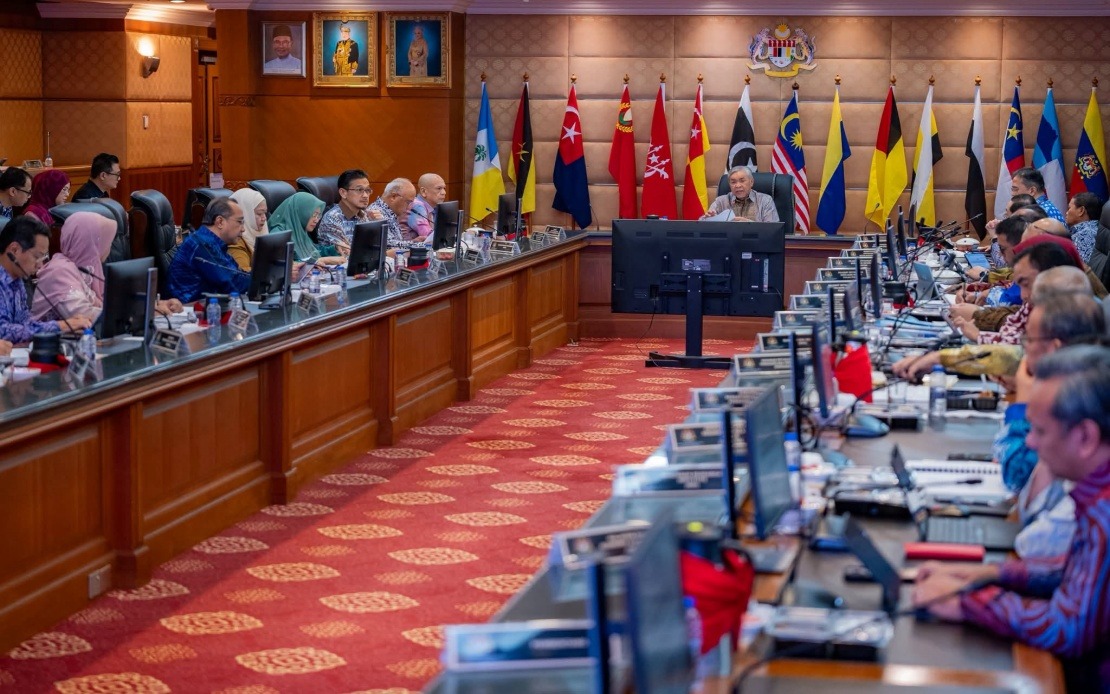
The Malaysian government is pursuing a carefully calibrated approach to overhauling its white rice policy, moving beyond simple price controls to address systemic pressures affecting food security and affordability across the nation. During the 18th Executive Committee meeting of the National Cost of Living Action Council (NACCOL) in Putrajaya on August 13, Deputy Prime Minister Datuk Seri Dr Ahmad Zahid Hamidi presented a comprehensive roadmap that acknowledges the competing interests of consumers, producers, and vulnerable households while positioning agricultural sustainability at the centre of long-term cost-management strategy.
The centrepiece of the government's rice sector strategy is a soft-landing transition framework that relies on subsidised rice supplies to protect economically disadvantaged households during the implementation of broader policy reforms. This phased approach reflects recognition that abrupt removal of support mechanisms risks destabilising both household budgets and farm-gate economics simultaneously. Rather than treating rice pricing as an isolated issue, the Deputy Prime Minister emphasised that addressing cost-of-living pressures demands coordinated intervention across multiple domains, from production efficiency and supply-chain logistics to the structural affordability of essential services including healthcare and education.
Ahmad Zahid's articulation of the government's cost-of-living framework extends considerably beyond the supermarket shelf price, a conceptual shift that carries significant implications for Malaysian policymaking. By explicitly connecting retail food costs to production expenditures, transport infrastructure, and farmer income security, authorities acknowledge that sustainable price stability cannot be achieved through demand-side measures alone. This holistic framing suggests the administration recognises that squeezed margins throughout the agricultural supply chain ultimately manifest as inflationary pressure on consumers, creating a structural trap where subsidies merely postpone inevitable adjustment. The acknowledgment of geopolitical risks, West Asian volatility, and escalating import compliance costs reflects growing awareness that Malaysia's food systems remain vulnerable to global shocks beyond domestic control.
A particularly significant policy development emerged from discussions around the Sumbangan Asas Rahmah (SARA) assistance programme, which the NACCOL committee has proposed expanding to encompass fresh produce including fruits, vegetables, and fresh protein sources. This expansion signals a philosophical shift from purely purchasing-power support toward active nutritional intervention. Rather than simply augmenting cash transfers, the government appears intent on directing subsidy mechanisms toward categories of food that deliver greater health returns, addressing both caloric sufficiency and dietary quality among recipients. For Malaysia, where rising obesity and metabolic disease burden increasingly constrains workforce productivity and healthcare expenditure, reorienting food assistance toward nutrient-dense categories potentially offers public health dividends extending beyond poverty alleviation.
The committee's simultaneous focus on healthcare affordability through the RESET strategy framework demonstrates that the government conceptualises cost-of-living management as genuinely multisectoral. Eleven distinct RESET initiatives aimed at moderating private healthcare expenditure while expanding treatment options suggest policymakers recognise that food affordability gains evaporate if households face catastrophic medical costs. This integrated perspective aligns with the broader Cost of Living Action Plan 2030, which attempts to address expenses across interconnected sectors rather than through fragmented interventions. The shift from ad-hoc responses toward a coordinated framework carries particular relevance for Southeast Asia, where many governments still pursue siloed sectoral policies that frequently undermine one another.
Education affordability emerged as equally central to the government's cost-of-living strategy, with officials noting that 62,937 Form Six and university students received assistance totalling RM589.6 million last year through 13 distinct tertiary education schemes. This substantial allocation underscores commitment to preventing financial barriers from foreclosing educational opportunity, though the fragmentation across 13 separate programmes suggests potential efficiency gains through consolidation. For Malaysia specifically, where tertiary education increasingly determines earning trajectories and social mobility, maintaining accessible pathways to higher qualifications remains economically essential despite fiscal pressures. The emphasis on ensuring fair opportunity regardless of socioeconomic background carries particular weight given Malaysia's ongoing challenges in narrowing achievement gaps across income and ethnic lines.
The government's candid acknowledgment of production-cost pressures on farmers, fishermen, and agricultural enterprises reflects hardening recognition that input inflation threatens long-term food security if not addressed. Rising expenses for logistics, compliance with import standards, and the cascading effects of subsidy rationalisation create genuine production challenges that cannot be resolved through consumer subsidies alone. The committee's request for refinements to targeted assistance mechanisms suggests authorities understand that farming communities require direct income support and efficiency investment, not merely stable commodity prices. This reorientation carries implications across Southeast Asia, where agricultural populations remain economically vulnerable despite their essential role in food supply chains.
The framework's emphasis on continuous monitoring of global geopolitical risks and West Asian volatility reflects Malaysia's particular exposure to regional instability and supply-chain disruption. As a middle-income economy dependent on imported energy and raw materials while serving as a regional agricultural producer, Malaysia occupies a precarious position in global commodity markets. Explicit integration of geopolitical monitoring into cost-of-living management represents pragmatic acknowledgment that domestic price stability increasingly depends on factors beyond governmental control. For regional policymakers, this transparency about external vulnerabilities may encourage more candid discussion of the structural limits to cost-of-living management in open, trade-dependent economies.
The proposed expansion of SARA assistance to fresh produce categories addresses a critical but often overlooked dimension of food security: the affordability gap between staple calories and nutrient-dense foods. Vulnerable households frequently consume adequate rice and bread but lack consistent access to fresh vegetables and protein sources necessary for adequate nutrition. By directing subsidy mechanisms toward these categories, the government acknowledges that food security extends beyond caloric sufficiency to nutritional adequacy. This perspective gains urgency as Malaysia confronts rising rates of diet-related metabolic disease even among low-income populations, reflecting paradoxical patterns where caloric excess coexists with micronutrient deficiency. The policy reorientation thus carries implications for public health efficiency, potentially reducing long-term healthcare expenditure by addressing nutritional inadequacy at its source.
The institutional architecture supporting these initiatives—particularly NACCOL's role in coordinating across multiple government agencies and the integration with the broader Cost of Living Action Plan 2030—suggests the government has recognised that cost-of-living management requires sustained institutional coordination beyond electoral cycles. The elevation of these discussions to Deputy Prime Minister and Prime Minister level signals genuine political prioritisation of cost-of-living issues, though translating committee recommendations into effective implementation remains the critical challenge. The coordination mechanisms established through NACCOL may serve as a model for other Southeast Asian governments wrestling with similar pressures, demonstrating that addressing cost-of-living concerns demands institutional innovation alongside policy adjustment.

