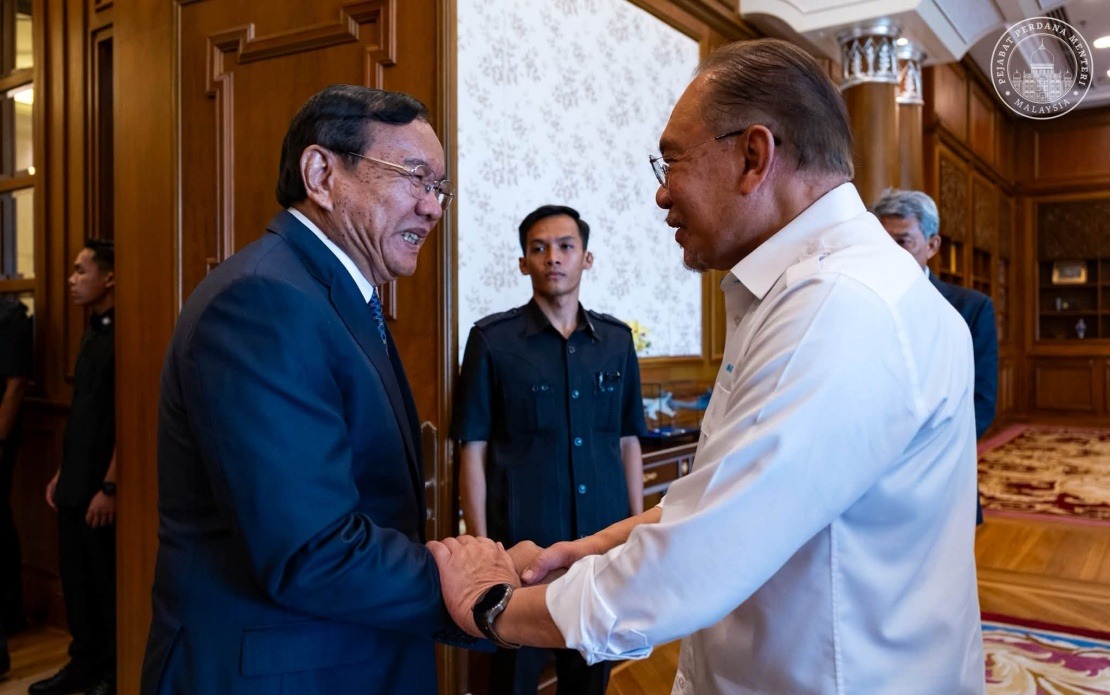
Prime Minister Datuk Seri Anwar Ibrahim has announced a comprehensive framework for strengthened cooperation between Malaysia and Cambodia across multiple strategic sectors, marking a significant step in the regional partnership as the two nations prepare for a landmark diplomatic milestone. The commitment was articulated following a meeting with Cambodian Deputy Prime Minister and Minister of Foreign Affairs and International Cooperation Prak Sokhonn, who arrived in Malaysia for an official two-day visit aimed at advancing bilateral relations and addressing shared challenges.
The scope of the renewed partnership extends far beyond traditional diplomatic engagement, encompassing the emerging digital economy and artificial intelligence sectors that increasingly shape regional competitiveness. Both nations recognise the strategic importance of positioning themselves at the forefront of technological advancement in Southeast Asia, where AI and digital innovation are becoming crucial drivers of economic growth and national development. This focus reflects a broader regional trend as ASEAN members seek to harness digital transformation while maintaining local control over their respective economies and technological futures.
Critically, the bilateral agenda includes deliberate efforts to strengthen the halal industry, an area where Malaysia's established expertise and global market position can serve as a model for Cambodian development. The halal certification and production standards that Malaysia has cultivated over decades represent significant competitive advantages, and knowledge transfer in this domain could substantially benefit Cambodia's agro-industry and food manufacturing sectors. For Malaysian stakeholders, this cooperation opens new market opportunities while positioning Malaysian halal expertise as a central pillar of regional economic integration.
Food security emerged as another priority, underscoring how geopolitical and climate pressures have made agricultural cooperation increasingly vital across Southeast Asia. Both nations face vulnerabilities to supply chain disruptions and climate variability, making coordinated approaches to agricultural productivity and distribution networks essential for regional stability. Malaysia's experience with agricultural modernisation and diversified food sources provides relevant lessons for Cambodia, while Cambodia's agricultural potential could complement Malaysian food security strategies.
The dialogue also addressed human capital development, recognising that sustainable regional prosperity depends on investing in education, vocational training, and professional expertise. This dimension suggests concrete initiatives in skills development, exchange programmes, and institutional partnerships that could create long-term mutual benefits. For Malaysia, such programmes position the nation as a centre of excellence while expanding influence across Cambodia's professional and academic spheres.
Combating cross-border crime was identified as a shared responsibility requiring enhanced coordination between the two nations' security and law enforcement agencies. This reflects mounting concerns about transnational criminal networks, human trafficking, and drug smuggling that threaten both countries' stability and development prospects. Regional cooperation in this area directly supports Malaysia's internal security objectives while demonstrating commitment to ASEAN-wide peace and security frameworks.
The Deputy Prime Minister's visit occurs concurrently with the Third Malaysia-Cambodia Joint Commission for Bilateral Cooperation (JCBC) meeting scheduled for August 4, an institutional mechanism that formalises the consultation and implementation of bilateral agreements. These structured dialogues ensure that commitments translate into concrete policy outcomes rather than remaining aspirational statements. The JCBC provides a transparent framework for monitoring progress and addressing impediments to cooperation across agreed sectors.
Looking ahead, both nations emphasised that their partnership serves as important preparation for the 70th anniversary of diplomatic relations in 2027, an occasion that will inevitably prompt reflection on the historical trajectory and future direction of Malaysia-Cambodia ties. This long diplomatic history provides a foundation of institutional knowledge and cultural understanding that facilitates deeper contemporary engagement. The anniversary will likely become a focal point for elevated bilateral activities and potentially significant new initiatives that cement the relationship's importance to both nations' regional strategies.
As ASEAN member states navigating an increasingly multipolar and competitive regional environment, Malaysia and Cambodia share fundamental interests in preserving peace, maintaining regional unity, and realising the ASEAN Community Vision 2045. This framework articulates a vision of regional integration built on enhanced connectivity, sustainable development, and collective prosperity. Both nations recognise that their bilateral cooperation contributes directly to these overarching regional objectives, making their partnership strategically significant beyond the bilateral context.
For Malaysia specifically, this engagement reflects a broader Southeast Asian strategy that prioritises deepening ties with neighbouring nations while maintaining strategic autonomy. The emphasis on digital economy and AI development aligns with Malaysia's aspirations to position itself as a regional technology hub. Similarly, the focus on halal industry cooperation reinforces Malaysia's unique market positioning and allows the nation to leverage its competitive advantages in partnership frameworks.
The commitment to continued growth in Malaysia-Cambodia relations, as expressed by Prime Minister Anwar, signals confidence in the bilateral relationship's trajectory despite regional complexities. Both nations have indicated openness to expanding cooperation into new domains as mutual interests evolve and opportunities emerge. This forward-looking stance suggests that the relationship will continue to deepen across multiple dimensions in the coming years, with structured mechanisms ensuring that political commitments translate into tangible economic and social benefits for both populations.

