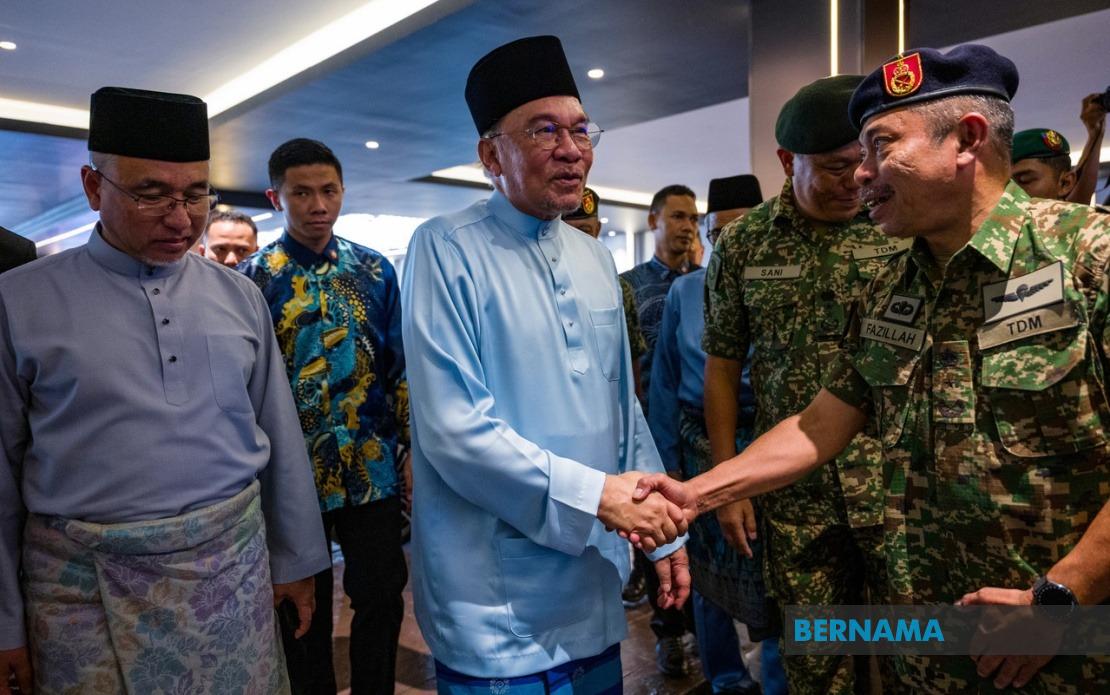
Prime Minister Datuk Seri Anwar Ibrahim's proposal to expand defence spending in the 2027 budget represents a significant statement of governmental resolve to transform the Malaysian Armed Forces into a more capable and contemporary institution. The initiative, unveiled during the Semarak Kenegaraan Programme held at Terendak Camp in Melaka, underscores the administration's prioritisation of national defence capabilities at a time when regional security dynamics continue to evolve.
Chief of Defence Force General Tan Sri Malek Razak Sulaiman responded positively to the budgetary commitment, emphasising that enhanced financial resources would directly strengthen the force's development trajectory and operational readiness. The military leadership's acknowledgment reflects broader recognition within defence circles that sustained investment is essential for maintaining the MAF's deterrent posture and ability to respond to emerging security challenges across land, sea, and air domains.
The increased allocation will specifically target the modernisation of military assets and equipment as part of the MAF's Future Force strategic development initiative. This framework represents a long-term roadmap for transitioning the armed forces from aging platforms and systems towards more integrated, technologically advanced capabilities that align with contemporary defence standards in the region. By investing in hardware upgrades, Malaysia positions itself to address potential security threats more effectively while enhancing interoperability with allied forces.
Beyond procurement and equipment upgrades, the government has committed to substantial improvements in military personnel welfare. The budget expansion will fund the construction of new housing quarters for service members and their families, addressing longstanding accommodation shortages that have affected morale and retention within the force. Additionally, the government plans to construct a dedicated military hospital and maintain essential utilities including water supply across defence installations, recognising that basic infrastructure quality directly impacts operational effectiveness and personnel satisfaction.
Anwar, who concurrently serves as Finance Minister, framed the defence investment as integral to broader national security strategy. His dual role positions him to navigate the balance between competing budgetary demands and defence requirements, suggesting that the government views military modernisation as sufficiently important to warrant prioritisation within fiscal constraints. This perspective reflects growing regional concern about security challenges, from maritime surveillance needs to emerging technological threats.
The timing of this announcement carries particular significance for Southeast Asian security architecture. Malaysia's geographical position along critical maritime trade routes and its experience managing complex security challenges make its defence posture relevant beyond national borders. Enhanced MAF capabilities contribute to regional stability and complement ongoing cooperative defence arrangements with neighbouring states and international partners.
The proposed simplification and acceleration of promotion mechanisms for MAF and Royal Malaysia Police personnel signals additional commitment to institutional modernisation. Streamlining career progression pathways typically improves retention of skilled officers and encourages merit-based advancement, potentially creating a more professional and motivated military establishment. Alignment with other public service promotion schemes suggests efforts to standardise procedures across security agencies, improving administrative efficiency and institutional coherence.
Military personnel welfare improvements carry strategic implications beyond morale enhancement. Better housing, healthcare facilities, and living conditions reduce the distraction of personal hardship and enable service members to concentrate on training and operational duties. Historical experience across defence establishments demonstrates that personnel welfare directly correlates with organisational effectiveness, unit cohesion, and the ability to attract and retain quality candidates in a competitive employment market.
The defence investment plan also reflects Malaysian government awareness of the regional security environment. As countries throughout Southeast Asia modernise their military capabilities and technology competition intensifies globally, Malaysia cannot afford to allow its defence infrastructure to become outdated. The commitment to systematic modernisation through structured planning, rather than ad hoc procurement, indicates more sophisticated approach to defence management than merely allocating larger budgets without strategic direction.
For Malaysian citizens, the modernisation programme has multiple implications. Enhanced military capabilities contribute to national security and stability, which underpin economic confidence and foreign investment. Improved defence infrastructure also generates domestic employment through construction and manufacturing contracts. Additionally, the focus on personnel welfare demonstrates government recognition that military service demands sacrifice and warrants commensurate support for those who undertake such responsibilities.
The defence budget increase must be contextualised within Malaysia's broader fiscal environment and competing development priorities. Successful implementation requires careful project management, transparent procurement processes, and regular accountability mechanisms to ensure funds achieve intended modernisation objectives. The government's commitment will ultimately be measured not merely by budgetary announcements but by tangible improvements in equipment capability, infrastructure quality, and personnel satisfaction.
Looking forward, the success of this defence initiative depends on sustained political commitment across multiple budget cycles, since meaningful military modernisation requires decades rather than individual fiscal years. The announcement by Anwar and endorsement by military leadership suggest bipartisan recognition of defence importance, potentially providing the continuity necessary for comprehensive force transformation. Regional observers will monitor implementation progress as indicator of Malaysia's broader strategic direction and security preparedness.

