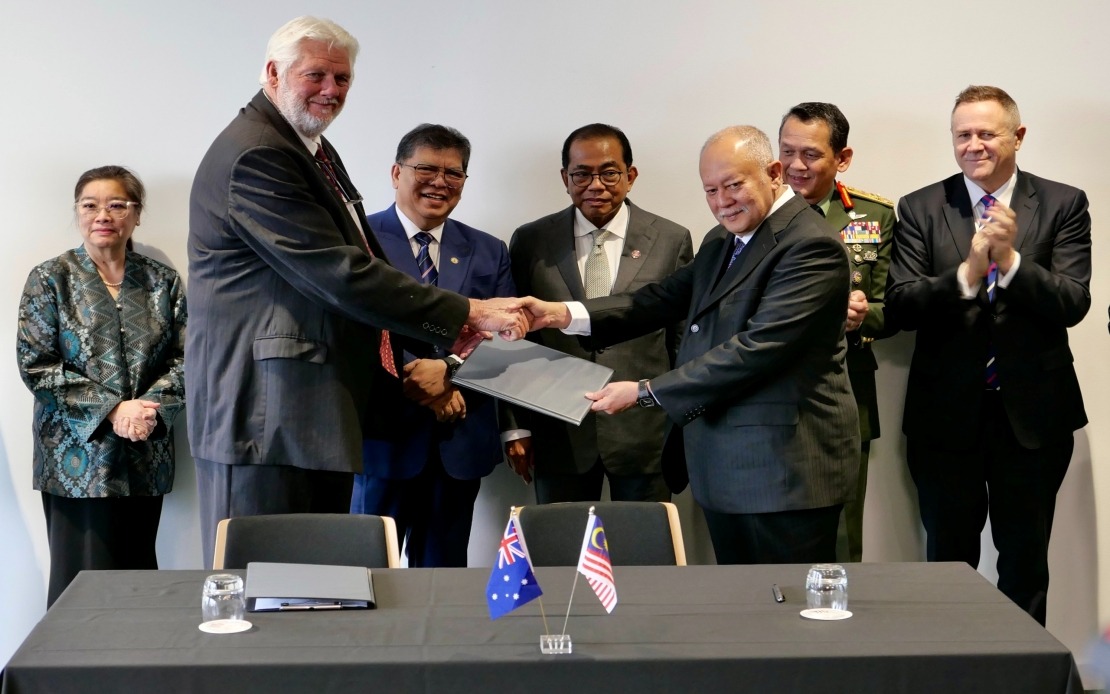
Malaysia has taken a significant stride in developing indigenous defence manufacturing capabilities through a strategic partnership between homegrown defence contractor Weststar Defence Industries Sdn Bhd and Australian rocket technology firm Rocket Technologies International Pty Ltd (RTI). The collaboration, announced during Defence Minister Datuk Seri Mohamed Khaled Nordin's visit to Australia this week, represents a watershed moment for the nation's ambitions to reduce reliance on foreign defence suppliers and cultivate domestic expertise in advanced weapons systems.
The partnership carries substantial strategic weight within Malaysia's broader defence modernisation agenda. By establishing a production facility on Malaysian soil, Weststar will commence rocket manufacturing operations within the next two years, with plans to transition into missile production thereafter. This timeline reflects both the ambition and pragmatism underpinning the venture—immediate capacity building in the near term, coupled with escalating technological complexity as local teams gain proficiency. For a country seeking to assert greater autonomy over critical defence decisions, this capability represents far more than procurement efficiency; it embodies the principle of self-reliance in matters of national security.
The agreement aligns precisely with Malaysia's National Defence Industry Policy (DIPN), a framework designed to cultivate homegrown expertise and manufacturing prowess in defence systems development. Rather than perpetuating the traditional model where Malaysia purchases finished defence products from international suppliers, this policy seeks to nurture the entire value chain—from research and design through to production and maintenance. The Weststar-RTI partnership demonstrates how international collaboration, when structured thoughtfully, can accelerate domestic capability without surrendering sovereignty over strategic assets. Malaysian engineers and technicians will gain hands-on experience in rocket and missile production, knowledge that becomes embedded within the nation's institutional fabric.
Beyond the immediate manufacturing dimension, the partnership positions Malaysia within RTI's global supply chain ecosystem. This integration opens pathways for Malaysian defence companies to service international clients, transforming the nation from a passive consumer into an active participant in the global defence trade. Such participation generates economic returns through employment, technology transfer, and export opportunities, but it also enhances Malaysia's geopolitical standing. Countries with advanced defence manufacturing capabilities command greater respect in regional security discussions and possess genuine leverage in bilateral negotiations.
During his working visit to Australia, Mohamed Khaled underscored the mutual benefits flowing from this arrangement. He emphasized that the investment promises substantial economic returns for Malaysia's defence sector while simultaneously strengthening sovereign defence capabilities for future generations. This framing bridges two sometimes-competing imperatives: commercial viability and strategic necessity. The Defence Minister also acknowledged Australia's governmental support for the collaboration, reflecting the diplomatic groundwork that enabled the deal. Defence partnerships of this sensitivity require careful navigation through government approvals, export control regulations, and technology transfer protocols—all of which Australia's defence establishment facilitated.
The Defence Minister's delegation visit to the University of Southern Queensland's Institute for Space, Defence and Advanced Technologies (ISDAT) illuminated the broader strategic context. Malaysian officials, including Royal Malaysian Air Force chief General Tan Sri Muhamad Norazlan Aris and Universiti Pertahanan Nasional Malaysia vice-chancellor Lt Gen Datuk Wira Arman Rumaizi Ahmad, toured laboratories dedicated to advanced composite manufacturing and hypersonics research. These facilities, developed through industry-academia partnerships involving companies like RTI, exemplify how cutting-edge defence technologies emerge from collaborative ecosystems blending academic research with commercial innovation. Malaysia's own defence establishment increasingly recognizes that indigenous capability development requires nurturing similar synergies between universities, government research institutions, and private contractors.
The timing of this partnership reflects evolving regional security dynamics. Southeast Asia faces mounting pressure from strategic competition among major powers, from maritime disputes to emerging technologies that reshape military advantage. Malaysia, as a significant regional actor with substantial economic interests and territorial claims, cannot afford to remain dependent on external suppliers for critical defence systems. The Weststar-RTI arrangement provides leverage—Malaysian planners can now make sovereign decisions about force structure and capabilities rather than accepting whatever foreign suppliers offer. This autonomy extends to operational doctrine, maintenance schedules, and technology roadmaps, all of which gain flexibility when production occurs domestically.
Mohamed Khaled's bilateral engagement with Australian Deputy Prime Minister and Defence Minister Richard Marles signalled that this partnership sits within a broader architecture of Malaysia-Australia defence cooperation. The two nations share interests in maritime security, counterterrorism, and maintaining the rules-based international order within the Indo-Pacific region. Deepening defence ties through industrial partnerships complements traditional military cooperation like joint exercises and intelligence sharing. For Malaysia, expanding the relationship with Australia—a technologically advanced democracy with proven defence industrial capabilities—offers benefits extending well beyond rockets and missiles.
The parliamentary dimension of the visit, including meetings at Canberra's Parliament House with Speaker Tan Sri Johari Abdul and Australian Speaker Milton Dick, underscores that defence partnerships require political validation and sustained commitment. When legislatures engage with counterparts from partner nations, they reinforce the foundations upon which defence cooperation rests. Such interparlamentary dialogue, though often overshadowed by defence ministry announcements, proves crucial for maintaining bipartisan support and ensuring that partnerships survive changes in government.
For Malaysian industries beyond Weststar, the partnership creates spillover opportunities. As RTI establishes operations within Malaysia's defence manufacturing ecosystem, other local companies will gain access to supply chain opportunities, technical knowledge, and potential joint ventures. This multiplier effect—where a marquee partnership catalyzes broader sectoral development—represents the true value of strategic industrial collaboration. Over time, Malaysia's defence industrial base becomes more sophisticated, more internationally competitive, and more capable of developing indigenous technologies rather than merely assembling imported components.
The investment commitment by Weststar also sends a powerful signal to the broader Malaysian business community about the viability of defence manufacturing. A sector historically dominated by foreign multinationals demonstrates that Malaysian enterprises can compete effectively at the technological frontier. This confidence, once established, attracts capital, talent, and entrepreneurship to the defence sector—virtuous cycles that strengthen national capability across multiple dimensions.
Looking ahead, the success of this partnership will depend on sustained commitment from both Malaysian and Australian partners, effective technology transfer mechanisms, and the development of a skilled Malaysian workforce capable of managing increasingly complex manufacturing processes. The two-year timeline for commencing rocket production establishes a near-term benchmark against which progress can be measured. If achieved on schedule, the partnership will validate Malaysia's capacity to undertake high-technology industrial projects and vindicate the strategic logic underpinning the National Defence Industry Policy. Beyond the immediate bilateral relationship, it will send a broader message throughout Southeast Asia that smaller regional powers need not remain permanently dependent on external suppliers for critical defence capabilities.

