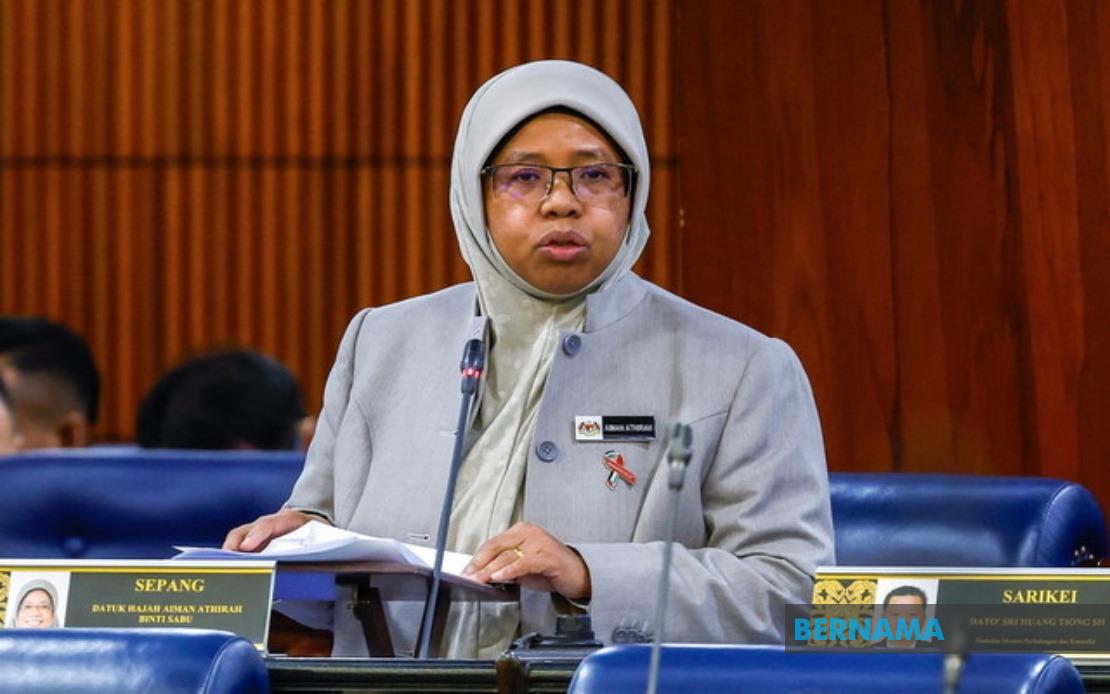
The Ministry of Housing and Local Government has given the go-ahead for nearly 600 development initiatives spanning Chinese new villages and Indian settlements nationwide, signalling continued government commitment to upgrading living standards in these historically distinct communities. Deputy Minister Datuk Aiman Athirah Sabu announced the approval of 573 projects in Chinese new villages alongside 21 initiatives in Indian villages, with combined expenditure totalling RM73 million for the current year. The announcement, delivered during parliamentary question time, provides crucial transparency on how federal resources are being distributed to address infrastructure gaps and housing challenges in these settlements.
Infrastructure projects form the backbone of the approved initiatives in Chinese new villages, with 366 such proposals gaining official sanction. Progress on these construction and maintenance works shows a mixed but advancing picture: roughly 40 percent of infrastructure projects have reached completion, affecting essential services like water supply, road rehabilitation, and drainage systems, while the remaining 218 continue progressing through various implementation stages. These infrastructure investments address longstanding complaints from residents in new village settlements, many of which were established decades ago and face deteriorating basic amenities. The completion rate indicates that while substantial work remains, momentum is building in delivering tangible improvements to daily living conditions.
The Housing Repair Assistance Programme represents the second major component of approved projects in Chinese new villages, with 197 applications approved for grant support. This scheme targets existing residential structures requiring maintenance and renovation work, recognising that many homes in these settlements have aged considerably and require targeted investment to remain safe and habitable. Of these approved applications, roughly one-quarter have secured the necessary repairs, while the remaining three-quarters are actively progressing, suggesting a pipeline of work that should yield visible improvements over the coming months. The programme's scale indicates widespread housing challenges across these communities, reflecting both the age of existing housing stock and household economic constraints that make private repairs difficult without government assistance.
A smaller but significant component involves the New Village Housing Construction Assistance Programme, which has approved 10 projects aimed at constructing entirely new residential units. Notably, none of these projects have yet commenced, indicating they remain in preliminary stages of planning or procurement. This delayed timeline raises questions about implementation bottlenecks and resource availability, though it also suggests careful preparation to ensure quality outcomes once construction begins. The presence of these projects in the pipeline signals recognition that some households require newly built accommodation rather than repairs to existing structures, addressing deeper housing deficits in certain settlements.
Indian village development receives separate but coordinated attention through parallel initiatives, with 21 approved projects spanning six states in the western corridor. These eighteen villages across Johor, Melaka, Selangor, Kuala Lumpur, Perak, and Negeri Sembilan face distinct challenges compared to Chinese new villages, often involving smaller, more dispersed settlements with particular infrastructure and safety concerns. The RM2 million allocated for these projects represents significantly lower per-project investment than in Chinese new villages, reflecting either fewer villages involved or alternatively suggesting that Indian village development has historically received comparatively limited attention. Progress here shows five completed projects with thirteen under active construction, indicating reasonably strong implementation momentum, though two projects remain stuck in procurement phases and another awaits planning approvals.
The historical funding context reveals stark disparities in resource allocation to these two communities types. Since 2023, the government channelled RM328.9 million toward Chinese new village development, benefiting residents across 613 settlements nationwide. This represents sustained, multi-year commitment to a specific community group, with substantial cumulative investment flowing through established programmes and channels. By contrast, special allocations specifically for Indian villages only commenced in 2025, suggesting these communities are receiving formal, dedicated national attention for the first time through structured government programmes. This recent initiation raises important questions about why Indian village development required a separate initiative rather than being integrated earlier into mainstream community development frameworks.
The 2025 funding architecture for Indian villages reveals coordination between multiple government agencies and programmes, demonstrating an attempt to consolidate resources and avoid duplication. The Ministry of Housing and Local Government has allocated RM10 million through its standard budget processes, supporting 54 projects across 50 identified Indian villages. Simultaneously, the Malaysian Indian Transformation Unit channels an additional RM5 million through the Indian Community Socioeconomic Development Programme, bringing total dedicated allocation to RM15 million. This bifurcated approach, while totalling substantial resources, introduces complexity in implementation and risks fragmented oversight if coordination mechanisms remain weak. The involvement of multiple agencies, while reflecting whole-of-government commitment, also creates potential for programme overlap or gaps depending on how responsibilities are delineated.
The scale of intended beneficiary reach demonstrates administrative ambition, with 22,144 recipients across 50 Indian villages targeted through 87 distinct projects in the initial phase. This represents substantial deployment of human and financial resources, though the average project value of approximately RM172,000 suggests modest individual allocations that may address only discrete infrastructure components rather than comprehensive village transformations. The number of villages identified—50 across the entire country—implies that many Indian settlements remain outside the current scope, raising questions about selection criteria and whether the most pressing development needs have been prioritised. Expanding these programmes will depend on successful initial implementation and demonstrated outcomes that justify additional phases of funding.
The parliamentary response demonstrates growing political attention to developmental disparities affecting minority community settlements, with opposition lawmakers raising these concerns and government officials increasingly required to account for allocation and outcomes. The question posed by S. Kesavan represents broader civil society expectations that these historically marginalised communities receive equitable development attention comparable to other settlement types. Both the scale of recent approvals and the introduction of dedicated Indian village funding suggest responsiveness to these political pressures, though implementation remains critical in translating approvals into tangible improvements in residents' lives.
For Malaysian policymakers and development practitioners, these approvals illustrate continuing challenges in delivering equitable infrastructure and housing outcomes across diverse settlement types and geographic regions. The projects represent incremental but meaningful progress in addressing accumulated deficits in these communities, though the pipeline of uncompleted work and newly initiated programmes suggests that sustained funding and attention will remain necessary for years ahead. Successful delivery of these 594 projects could serve as a foundation for demonstrating whether coordinated, adequately funded development programmes can effectively upgrade living standards in historically underserved settlements, with implications for future community development policy across Southeast Asia.

