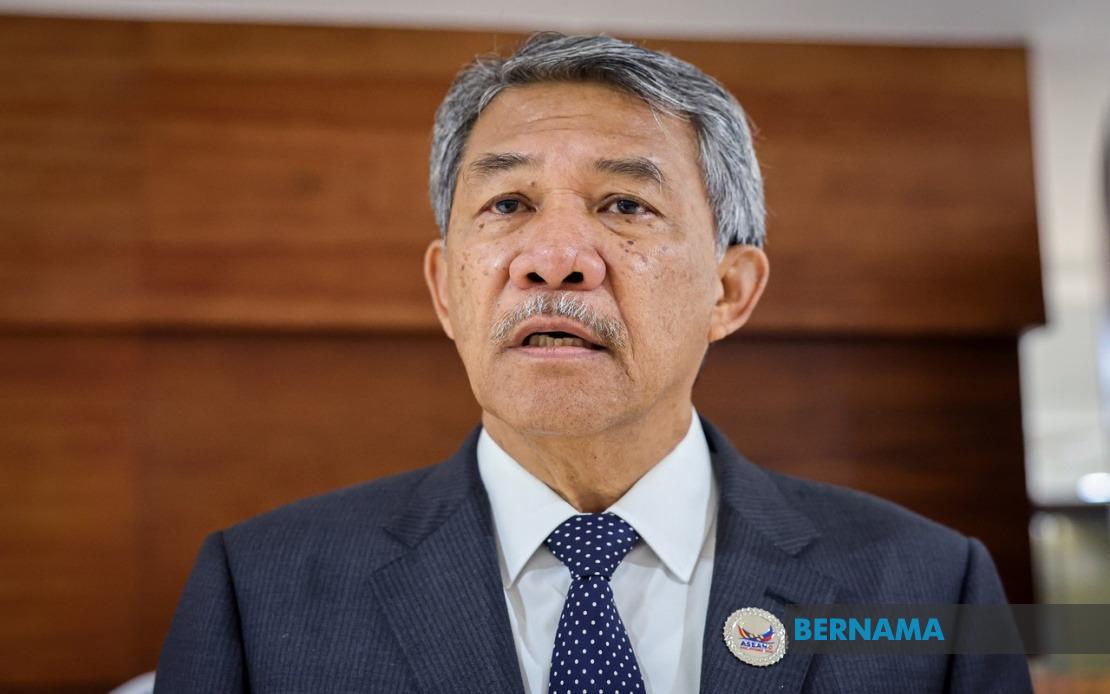
ASEAN member states have conferred upon Malaysia a significant diplomatic responsibility by appointing it as the country coordinator for relations with Turkey, following the bloc's formal acceptance of Ankara as a new Dialogue Partner. The decision emerged from deliberations during the 59th ASEAN Foreign Ministers Meeting and related Post-Ministerial Conference proceedings held in Manila, with Foreign Minister Datuk Seri Mohamad Hasan confirming the developments to reporters. This appointment positions Malaysia as the primary liaison between the ten-member regional bloc and Turkey, a strategic positioning that underscores Kuala Lumpur's central role in ASEAN's diplomatic architecture.
The acceptance of Turkey as a Dialogue Partner represents a significant expansion of ASEAN's international engagement framework. Dialogue Partners occupy an important tier within ASEAN's institutional structure, maintaining formal consultative relationships with the bloc while falling short of full membership or participation in its most exclusive forums. This status enables Turkey to engage with ASEAN on matters of mutual interest while respecting the boundaries that define the bloc's internal decision-making processes. Malaysia's role in shepherding Turkey's accession underscores the trust member states place in its diplomatic credentials and negotiating prowess.
The path to Turkey's acceptance involved rigorous institutional procedures reflective of ASEAN's carefully managed approach to expanding its partnership network. Mohamad explained that the proposal underwent examination at multiple levels within ASEAN's bureaucratic hierarchy, including scrutiny by the secretariat, foreign ministers, and senior officials, before reaching the plenary for final approval. This layered review process reflects ASEAN's commitment to upholding established criteria for accepting new partners, ensuring that enlargement decisions align with the bloc's strategic interests and institutional capacity. The moratorium on new memberships and Dialogue Partners, which ASEAN maintains, demonstrates the organisation's deliberate approach to growth.
Malaysia's position as ASEAN Chair in 2025 provided the impetus for the Turkey proposal, with the country successfully leveraging its rotating leadership to advance this diplomatic initiative. As chair, Malaysia exercises considerable agenda-setting power and can champion policies aligned with its foreign policy priorities. Turkey's acceptance during Malaysia's tenure reflects a convergence of interests, potentially signalling Kuala Lumpur's intention to deepen Southeast Asia's connections with Middle Eastern and Eastern Mediterranean powers. This strategic positioning may yield dividends for Malaysian foreign policy objectives in the coming years.
The broader context of Turkey's engagement with ASEAN reflects global geopolitical realignments. Turkey, straddling Europe and Asia, has increasingly sought to strengthen ties with Indo-Pacific nations as part of its strategic diversification. For ASEAN, accepting Turkey as a Dialogue Partner signals openness to partnerships beyond its traditional Western and Asian partners, acknowledging Turkey's potential contributions to regional security discussions and economic cooperation. The decision reflects both ASEAN's institutional maturity and its recognition that effective regional architecture requires dialogue with powers beyond the immediate neighborhood.
During the same plenary session, ASEAN also extended membership in the ASEAN Regional Forum to the United Kingdom, demonstrating concurrent efforts to broaden the bloc's partnership network. The ARF, established in 1994, provides a framework for dialogue on security and political issues, and Britain's addition represents another step toward deepening engagement with extra-regional powers. These parallel developments suggest ASEAN is actively repositioning itself within emerging global security architectures, particularly as traditional alignments shift and new security challenges emerge across the Indo-Pacific region.
Discussions at the 59th AMM extended beyond partnership expansion to encompass broader strategic questions facing ASEAN. Member states engaged substantially on the implementation of ASEAN Community Vision 2045, the bloc's long-term development roadmap aimed at deeper integration across economic, political-security, and socio-cultural dimensions. ASEAN Secretary-General Dr Kao Kim Hourn provided updates on progress toward these ambitious targets, highlighting achievements and identifying areas requiring accelerated effort. This internal focus demonstrates that despite expanding external partnerships, ASEAN remains committed to consolidating its institutional foundations.
A critical theme emerging from the plenary session concerned ASEAN's strategic autonomy amidst global uncertainty. Mohamad articulated the bloc's determination to maintain its centrality in regional affairs, emphasising that preserving ASEAN's agency and influence constitutes the organisation's fundamental strength. In an era of great power competition and shifting geopolitical alignments, ASEAN centrality represents the principle that regional member states, not external powers, should determine the trajectory of Southeast Asian development. This commitment requires constant vigilance against attempts to marginalise ASEAN or subordinate its decision-making to external pressures.
The geopolitical and geo-economic landscape facing ASEAN has become increasingly uncertain, with trade tensions, technological competition, and military posturing creating novel challenges. Member states recognise that navigating these currents demands solidarity and strategic clarity. ASEAN's capacity to operate as a unified bloc, rather than allowing external powers to divide member states into competing camps, depends on institutional cohesion and shared commitment to the association's foundational principles. The discussions at the AMM reflected acknowledgment that these principles require contemporary reaffirmation as new challenges emerge.
Malaysia's appointment as ASEAN-Turkey coordinator carries practical implications for bilateral relations between Kuala Lumpur and Ankara. As coordinator, Malaysia will facilitate dialogue, coordinate positions within ASEAN regarding Turkish interests, and serve as the primary communication channel between the bloc and Ankara's government. This role enhances Malaysia's diplomatic portfolio and provides opportunities to deepen engagement with Turkey across security, economic, and cultural domains. For Malaysian businesses and policymakers, Turkey's elevated status within ASEAN frameworks opens avenues for cooperation on issues ranging from trade facilitation to defence and technology collaboration.
The elevation of Turkey's status also reflects broader recognition within ASEAN of the Middle East's growing relevance to Southeast Asian security. Turkish interests in maritime security, counterterrorism, and defence technology align with concerns shared by several ASEAN members. Through formal Dialogue Partner status, Turkey gains legitimate channels to contribute to discussions on these shared challenges. Similarly, ASEAN members gain access to Turkish expertise and perspectives on regions and issues of mutual concern, enriching the bloc's collective strategic understanding.
Looking forward, Malaysia's coordinatorship will require careful navigation of ASEAN consensus-building requirements while accommodating Turkish interests and perspectives. The role demands diplomatic skill in translating between ASEAN's collective voice and Turkish national interests, particularly in forums where decisions require unanimity or substantial agreement. Malaysia's experience in managing such balancing acts, honed through multiple ASEAN chairmanships and involvement in regional mechanisms, positions it well for this responsibility. The appointment signals confidence among member states in Malaysian diplomatic competence and institutional knowledge.
These developments at the 59th AMM illustrate ASEAN's continuing evolution as a regional institution. The bloc demonstrates capacity for institutional growth and adaptation while maintaining fidelity to founding principles of sovereignty, non-interference, and consensus-based decision-making. As ASEAN enters an era characterised by intensified great power competition and technological disruption, its ability to expand partnerships selectively while preserving core strategic autonomy will prove decisive in determining regional outcomes. Malaysia's appointment as ASEAN-Turkey coordinator represents one facet of this broader institutional adaptation.

