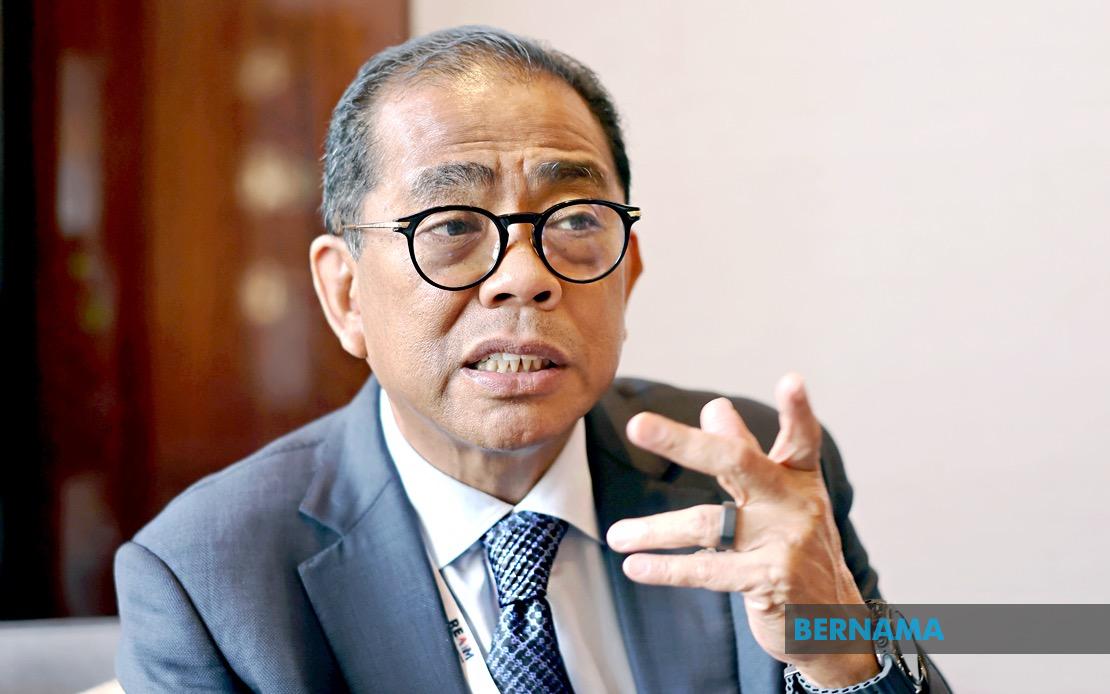
Malaysia and Vietnam are intensifying their defence partnership through an expanded array of military and strategic initiatives, marking another significant step in their bilateral relationship. Defence Minister Datuk Seri Mohamed Khaled Nordin underscored this commitment during his recent official visit to Vietnam, where he engaged with Vietnamese Minister of National Defence Gen Phan Van Giang to chart the future direction of their defence engagement.
The two-day mission, which commenced with a courtesy call on Vietnamese Prime Minister Le Minh Hung, reflects the high-level political priority both nations attach to their security relationship. This visit builds upon the foundation established by the Memorandum of Understanding on Defence Cooperation signed in November 2023, demonstrating that the partnership has moved beyond symbolic gestures into concrete implementation. The timing and substance of Mohamed Khaled's engagement underscore a deliberate effort to operationalise commitments made earlier and to identify new areas where Malaysia and Vietnam can collaborate to their mutual benefit.
The scope of defence cooperation discussed during the bilateral meeting spans an impressively broad range of contemporary security challenges. Beyond traditional military training and intelligence sharing, the discussions encompassed maritime domain awareness—a particularly sensitive topic in Southeast Asia given the region's dependence on open sea lanes and contested territorial claims. The inclusion of submarine rescue operations reflects the growing sophistication of naval operations in the region, whilst the emphasis on artificial intelligence indicates both nations are positioning themselves to harness emerging technologies for defence purposes. Additionally, the framework addresses grey zone activities, a term increasingly used to describe military actions that fall below the threshold of traditional armed conflict, such as coast guard confrontations and cyber operations.
Mohamed Khaled's proposal to strengthen the cooperation mechanism through a High-Level Committee represents an administrative innovation designed to enhance the efficiency and coordination of bilateral defence initiatives. Such institutional arrangements typically include regular meetings between senior defence officials, clearly defined working groups, and established protocols for resolving disputes or addressing implementation challenges. For Malaysia, this approach aligns with its broader strategy of building robust mechanisms within ASEAN that can withstand political fluctuations and ensure continuity in security cooperation.
The defence collaboration between Malaysia and Vietnam carries significant implications for regional stability in Southeast Asia. Both nations share a stake in maintaining freedom of navigation and upholding international law in contested waters. Vietnam, as a Southeast Asian state with direct interests in the South China Sea, and Malaysia, as a country with significant maritime claims and a position adjacent to critical shipping routes, find natural complementarity in their security concerns. Intelligence sharing and maritime awareness coordination between Kuala Lumpur and Hanoi can provide valuable insights and early warning systems that benefit the broader regional security architecture.
On the sensitive matter of the South China Sea, Mohamed Khaled emphasised Malaysia's position that peace and stability must be preserved through dialogue, diplomacy, and adherence to international law. The statement supporting efforts to conclude an effective and meaningful Code of Conduct reflects Malaysia's pragmatic approach to managing competing interests in the region. Rather than adopting confrontational stances, Malaysia advocates for multilateral mechanisms that establish clear rules and reduce the likelihood of accidental escalation. This approach resonates with Vietnam's own experience navigating complex great power dynamics whilst maintaining strategic flexibility.
Central to Malaysian strategic thinking is the principle of ASEAN centrality and unity. Mohamed Khaled's articulation of this principle during his discussions in Vietnam underscores Malaysia's conviction that regional institutions must remain the primary forums for addressing transnational challenges. By strengthening bilateral defence ties with individual ASEAN members like Vietnam, Malaysia simultaneously reinforces the collective capacity of the bloc to maintain its influence and relevance in regional affairs. This paradoxical combination of strengthening bilateral partnerships whilst upholding multilateral frameworks represents a sophisticated balancing act that characterises ASEAN diplomacy.
The defence cooperation framework also encompasses military training and capacity building, with both sides committing to coordinate courses and training programmes for military officers. Such exchanges serve multiple purposes beyond the immediate transfer of expertise. They foster personal relationships between military establishments, create shared understandings of strategic challenges, and build interoperability that enhances operational effectiveness should the two nations need to coordinate responses to regional crises. The emphasis on technical cooperation and training reflects a recognition that military modernisation requires not just equipment acquisition but also institutional development and human capital enhancement.
Maritime security features prominently in the Malaysia-Vietnam defence agenda, reflecting the outsized importance of sea-based commerce and security in both nations' strategic calculations. Malaysia, as a major trading nation dependent on maritime commerce passing through its waters, faces particular vulnerabilities to piracy, smuggling, and potential interference with critical shipping lanes. Vietnam's substantial coastline and fishing interests similarly make maritime security a priority. Cooperation in this domain could include coordinated patrols, information sharing on suspicious vessels, joint training exercises, and harmonised approaches to maritime law enforcement.
The defence white paper principle of competent partnership that guides Malaysia's defence diplomacy emphasises building relationships with capable defence establishments that can contribute meaningfully to regional security. Vietnam, with its substantial military forces and strategic position, clearly qualifies as such a partner. The alignment of Malaysia's National Defence Strategic Plan 2026-2030 with these bilateral initiatives indicates that defence ministry officials have integrated this partnership into long-term strategic planning rather than treating it as an ad hoc engagement.
Looking forward, the institutionalisation of Malaysia-Vietnam defence cooperation through the High-Level Committee and other mechanisms suggests both countries anticipate a sustained and deepening relationship. For Malaysia, this partnership complements its defence ties with other ASEAN members and major powers, contributing to a diversified security architecture that reduces dependence on any single ally. The partnership also demonstrates Malaysia's capacity to develop strategic relationships based on shared interests rather than historical grievances or ideological alignment, reflecting a mature approach to regional security.
The Malaysian defence ministry's framing of this visit within the context of national sovereignty and regional stability indicates the seriousness with which both governments regard the partnership. By explicitly connecting bilateral defence diplomacy to the broader strategic objectives outlined in national defence documents, Malaysian officials signal that this is not merely ceremonial engagement but part of a comprehensive strategy to strengthen national security posture. This comprehensive approach—linking bilateral partnerships, multilateral frameworks, and long-term strategic planning—positions Malaysia to navigate the increasingly complex security environment of Southeast Asia with greater confidence and capability.

