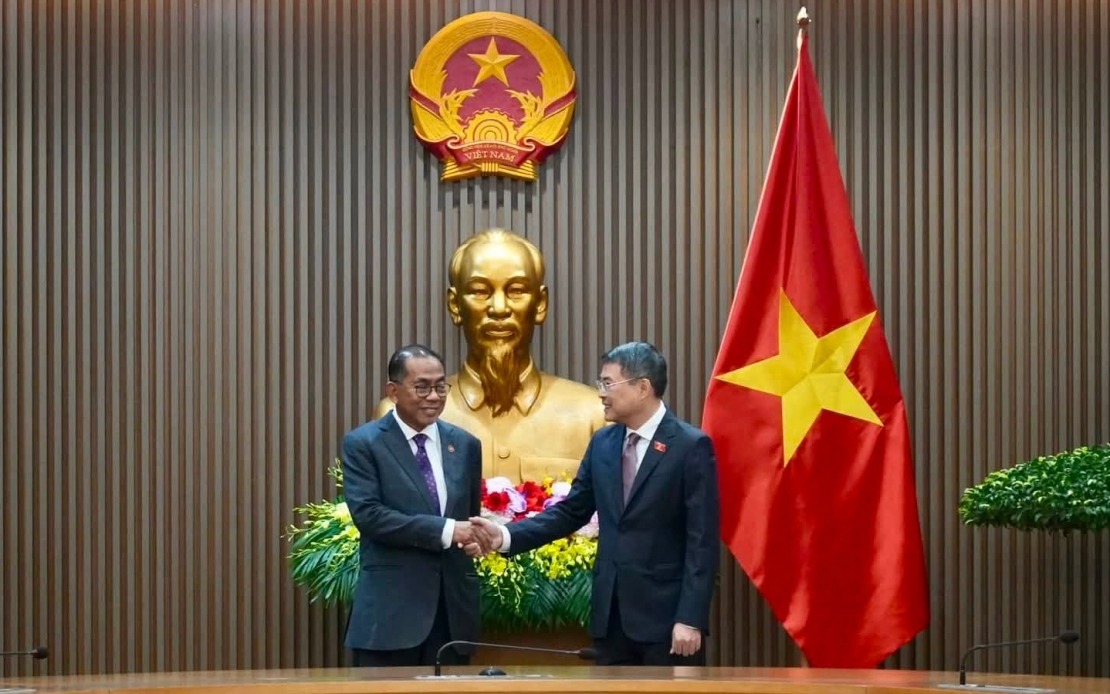
Malaysia and Vietnam have reaffirmed their commitment to broadening defence cooperation, with senior officials agreeing to pursue enhanced collaboration across multiple strategic domains. During an official visit to Vietnam, Defence Minister Datuk Seri Mohamed Khaled Nordin held discussions with Vietnamese Prime Minister Lê Minh Hưng that centred on elevating the bilateral defence relationship to address contemporary security priorities affecting both nations and the broader Southeast Asian region.
The two countries identified maritime security as a key area for expanded engagement, reflecting the critical importance of securing shipping lanes and managing maritime claims in waters that remain strategically vital for regional commerce and stability. Cooperation will extend beyond traditional naval exercises to encompass capacity-building initiatives, information-sharing frameworks, and coordinated responses to transnational maritime challenges that transcend individual national borders. This focus aligns with Malaysia's own security interests, given its extensive coastlines and role as a gateway for international shipping through the Strait of Malacca.
Capability development emerged as another cornerstone of the renewed partnership. Both defence establishments plan to pursue joint training programmes, personnel exchanges, and knowledge transfer arrangements designed to modernise military readiness and operational effectiveness. Such initiatives allow resource-constrained militaries to benefit from shared expertise without duplicating expensive infrastructure investments, a particularly valuable approach for nations navigating fiscal pressures while maintaining credible deterrence postures.
Technology cooperation and defence industry linkages represent areas of growing significance as both nations seek to develop indigenous capacity and reduce dependency on external suppliers. The discussions acknowledged how advancements in defence technology increasingly shape strategic outcomes, with both countries recognising the mutual benefit of collaborative research and development initiatives that could position Southeast Asian defence industries more competitively within regional and global markets.
Mohammed Khaled characterised Vietnam as a trusted and reliable partner, language reflecting the depth of institutional relationships built over decades of diplomatic engagement. Malaysia's defence establishment views Vietnam as a nation with aligned strategic perspectives, particularly regarding ASEAN unity and the primacy of dialogue-based conflict resolution. This alignment proves significant given regional tensions and the necessity for ASEAN cohesion in managing great power competition without fragmenting along ideological or strategic lines.
The discussion encompassed the complex security environment increasingly defining Asia-Pacific dynamics. Competition among major powers creates pressures that could strain regional stability, while so-called grey zone activities—aggressive actions that fall short of conventional military conflict—pose challenges for which traditional deterrence frameworks prove inadequate. Both nations recognised the necessity of building collective resilience through ASEAN mechanisms that can address these ambiguous threats while maintaining diplomatic channels.
Cyberspace emerged as a domain requiring urgent collaborative attention. As military systems, critical infrastructure, and civilian networks become increasingly digitalised, vulnerabilities multiply exponentially. Malaysia and Vietnam committed to sharing intelligence on cyber threats, developing joint defensive capabilities, and establishing protocols for rapid coordination during cyber incidents that could affect regional stability. The proliferation of state-sponsored cyber operations and criminal networks exploiting digital vulnerabilities creates threats transcending traditional military domains.
The spectre of cognitive warfare—the manipulation of information to influence perceptions and decision-making—reflects how modern conflict extends into the domain of narrative and perception. Both governments acknowledged this emerging threat category and the importance of building societal resilience against information manipulation campaigns, a challenge that democracies and authoritarian systems alike must confront as technology enables unprecedented reach and sophistication in influence operations.
Artificial intelligence capabilities present both opportunities and challenges for regional security architecture. Malaysia and Vietnam recognised AI's potential to enhance military capabilities while simultaneously creating novel vulnerabilities and ethical dilemmas. Cooperation on AI governance and responsible military AI development could position ASEAN as a voice advocating balanced approaches that harness technological benefits while maintaining human agency in critical decision-making.
Supply chain disruptions highlighted during the talks reflect how globalised defence industries have created new dependencies and vulnerabilities. Regional conflicts, protectionist trade policies, and geopolitical tensions can impede access to critical defence components, creating strategic exposure. Bilateral cooperation offers opportunities to diversify sourcing, develop alternative supply pathways, and build redundancy into critical military logistics systems.
The Memorandum of Understanding on Defence Cooperation signed in 2023 provides a comprehensive framework guiding the relationship forward. Rather than ad hoc initiatives, this structured instrument enables systematic progression across multiple domains while providing mechanisms for regular consultation and adaptive management as circumstances evolve. For Malaysian policymakers, the arrangement demonstrates how bilateral partnerships complement ASEAN multilateral frameworks in addressing shared security imperatives.
Mohammed Khaled emphasised ASEAN's collective responsibility for enhancing regional resilience, acknowledging that individual nation defence capabilities alone prove insufficient for addressing interconnected security challenges. This perspective positions Malaysia-Vietnam cooperation not as narrow bilateral competition for regional influence but as contributions to broader ASEAN stability architecture. The approach reflects recognition that sustainable regional security requires institutional frameworks transcending individual power calculations.
The timing of this announcement carries significance given evolving geopolitical pressures on Southeast Asia. As major powers intensify strategic competition in the region, ASEAN solidarity and mechanisms for peaceful conflict resolution become increasingly valuable. Malaysia's defence partnership deepening with Vietnam signals commitment to strengthening regional institutions and diplomatic channels as counterweights to destabilising pressures, ultimately serving Malaysian interests in maintaining a stable environment for economic development and social progress.

