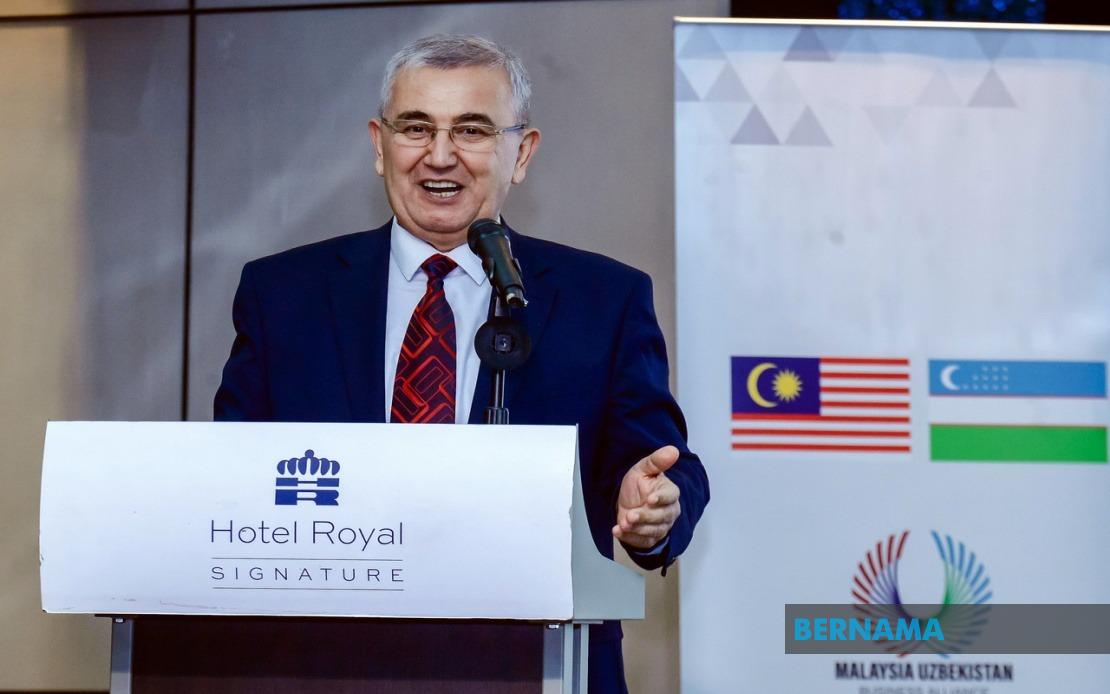
Malaysia and Uzbekistan are positioning themselves to become strategic agricultural partners in an increasingly complex global food security landscape, leveraging complementary strengths across smart farming, aquaculture innovation, and digital transformation. The partnership represents a deliberate effort by both nations to address mounting pressures on food systems while building export-oriented agribusiness platforms that extend regional influence across Central Asia. Uzbekistan Ambassador to Malaysia Dr Karomidin Gadoyev underscored the significance of this alignment, noting that agricultural cooperation has featured prominently in high-level diplomatic exchanges between the two countries, including Prime Minister Datuk Seri Anwar Ibrahim's visit to Uzbekistan in May 2024 and President Shavkat Mirziyoyev's visit to Malaysia the previous February.
The recent visit by Malaysia's Agriculture and Food Security Minister Datuk Seri Mohamad Sabu to Uzbekistan has catalysed a fresh momentum in bilateral agricultural engagement. This ministerial-level interaction signals both governments' commitment to moving beyond rhetorical declarations into concrete operational frameworks. The foundation for expanded collaboration rests on a clear division of comparative advantages: Malaysia brings sophisticated expertise in paddy cultivation, modern aquaculture systems, fisheries management, precision agriculture technologies, and research infrastructure through institutions like the Malaysian Agricultural Research and Development Institute (MARDI). Uzbekistan, conversely, contributes proven capabilities in irrigation efficiency, horticultural production, large-scale food processing operations, and the capacity to serve as a regional distribution gateway across Central Asia's vast markets.
Food security considerations have assumed heightened urgency in both nations' strategic thinking, particularly given global supply chain vulnerabilities and the necessity to enhance productive capacity amid growing populations. Malaysia recognises that strengthening agricultural ties with Uzbekistan diversifies its food import dependencies while opening export corridors for value-added agritech solutions. For Uzbekistan, whose population approaches 40 million inhabitants within a double-landlocked geography, the partnership addresses acute domestic demand for seafood and agricultural innovation. Both countries view digital technologies and artificial intelligence not as optional enhancements but as essential mechanisms for driving productivity gains, reducing resource wastage, and building climate-resilient food systems that can withstand future shocks.
The technological dimension of this partnership is particularly noteworthy. Malaysian drone manufacturer Miracule has already established an agricultural drone showroom in Uzbekistan, with plans to assemble advanced equipment locally—a development that epitomises the knowledge transfer and light manufacturing relocation occurring across Southeast Asia and Central Asia. Drones represent a practical application of precision agriculture, enabling targeted pesticide application, crop monitoring, and yield optimisation across vast agricultural territories. The integration of Malaysian expertise in biofloc technology demonstrates another concrete avenue for cooperation; this aquaculture innovation reduces feed costs by approximately 30 per cent while simultaneously boosting productivity and minimising production expenses. For a landlocked nation seeking to capitalise on growing seafood consumption, biofloc systems offer a sustainable pathway to shrimp farming and fish production without dependence on coastal resources.
The aquaculture sector emerges as a particularly strategic focal point for bilateral cooperation. Uzbekistan's substantial population combined with rising living standards among urban consumers has generated robust demand for high-quality protein sources. Malaysian companies are already exploring significant investments in shrimp farming and fisheries ventures throughout Uzbekistan, recognising both immediate market opportunities and the region's potential as a processing and distribution hub. This commercial activity, supported by governmental frameworks and institutional partnerships, demonstrates how agricultural cooperation transcends mere diplomatic symbolism to generate tangible business expansion and employment creation across both economies.
Bilateral agri-food trade figures underscore the relationship's economic substance. Current annual trade reached more than RM338 million in 2025, with palm oil and palm oil-derived products constituting the predominant component of Malaysia's export portfolio to Uzbekistan. Yet both nations view these figures as merely representing the visible edge of a substantially larger untapped opportunity. Ambassador Gadoyev expressed confidence that agri-food commerce could potentially double or even triple within five to ten years through systematic market development. Malaysia possesses the infrastructure and expertise to position itself as a regional processing hub, potentially establishing palm oil refineries in Uzbekistan or nearby Central Asian territories to produce finished consumer products and industrial ingredients for distribution across the region. Such value-chain positioning would generate higher margins than crude commodity exports while anchoring deeper economic integration.
Uzbekistan's agricultural output—particularly premium fresh fruits, dried fruit products, and processed food items—possesses considerable export potential within Asian markets if quality standards, logistics networks, and market access can be enhanced through Malaysian partnership. The nation produces substantial quantities of melons, grapes, pomegranates, apricots, and cotton, representing significant agricultural wealth. Malaysian expertise in agricultural processing, packaging standards, and international market access could substantially amplify Uzbekistan's ability to penetrate higher-value market segments throughout East and Southeast Asia. This complementarity creates genuine win-win scenarios where Malaysian companies develop new sourcing opportunities while Uzbek producers access advanced technologies and distribution capabilities.
The participation of Uzbekistan in the Malaysia Agriculture, Horticulture and Agrotourism Exhibition (MAHA) 2026 represents an important platform for translating bilateral frameworks into widespread commercial networking and technology transfer. MAHA functions as Southeast Asia's premier agricultural exposition, attracting multinational corporations, research institutions, equipment manufacturers, and smallholder farmers seeking innovation adoption pathways. For Uzbekistan, exhibition participation provides premium exposure to Malaysian agribusiness stakeholders and regional importers interested in Central Asian agricultural products. The platform facilitates direct business-to-business interactions that frequently catalyse investment projects, equipment procurement arrangements, and joint venture formation.
Institutional collaboration through MARDI and other Malaysian research facilities represents the strategic scaffolding supporting this broader partnership. Research-level engagement generates intellectual property flows, technology standardisation protocols, and capacity-building initiatives that produce durable competitive advantages. Uzbekistan's integration into Malaysian agricultural research networks positions Central Asian nations to adopt best-practice methodologies, participate in collaborative crop improvement initiatives, and benchmark productivity metrics against regional standards. Such institutional embedding creates dependencies and complementarities that sustain partnership momentum irrespective of short-term political fluctuations.
The strategic architecture underlying Malaysia-Uzbekistan agricultural cooperation extends beyond immediate bilateral commerce to encompass broader geopolitical considerations. Both nations occupy positions of consequence within their respective regional contexts—Malaysia as a developed economy and established Southeast Asian leader, Uzbekistan as Central Asia's most populous nation and a gateway between East and West. Agricultural partnership strengthens diplomatic relationships, creates constituencies for expanded engagement across other sectors, and demonstrates mutual commitment to prosperity-building rather than zero-sum competition. For Malaysian businesses, access to Central Asian markets through Uzbekistan mitigates concentration risk associated with over-dependence on traditional Southeast Asian markets. For Uzbekistan, deepening ties with developed Southeast Asian economies provides technology access, management expertise, and capital pathways that accelerate modernisation objectives.
Climate considerations increasingly shape agricultural strategy in both regions. Uzbekistan faces significant water scarcity challenges within its arid geography, making irrigation efficiency technologies imported from Malaysia strategically vital for environmental sustainability and long-term food production viability. Malaysia's experience managing tropical agriculture within high-rainfall environments offers valuable insights for optimising crop resilience amid changing precipitation patterns. Both nations recognise that agricultural innovation encompasses not merely productivity maximisation but environmental stewardship, resource conservation, and adaptation to climatic variability. This shared sustainability imperative creates additional common ground beyond purely commercial motivations.

