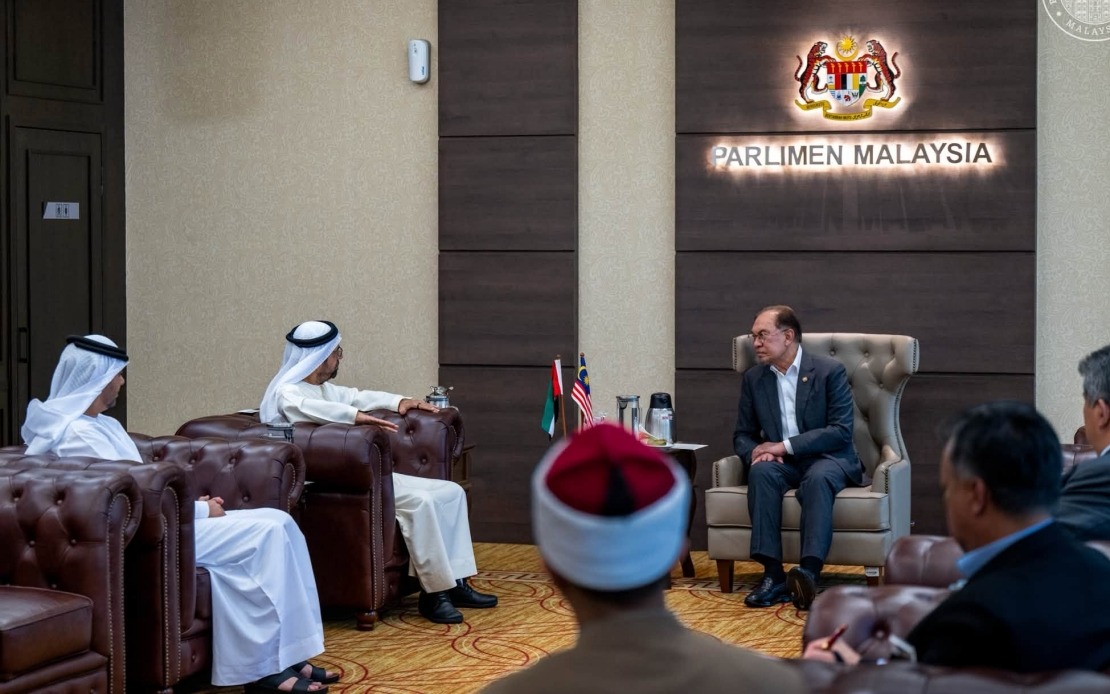
Prime Minister Datuk Seri Anwar Ibrahim has underscored Malaysia's determination to deepen its partnership with the United Arab Emirates by identifying new avenues for mutual strategic engagement. The commitment was reinforced during a meeting between Anwar and Dr Ali Rashid Al Nuaimi, chairman of the Defence, Interior and Foreign Affairs Committee of the UAE's Federal National Council, at the Parliament building in Kuala Lumpur. The dialogue reflects both nations' ongoing interest in leveraging their complementary strengths for regional advantage.
The bilateral engagement carries particular significance given the evolving geopolitical landscape across the Middle East and Asia-Pacific. Malaysia and the UAE, while geographically distant, share strategic interests rooted in maritime commerce, energy security, and counterterrorism cooperation. The UAE's prominence as a regional economic hub and its diplomatic footprint across the Muslim world align with Malaysia's own aspirations to expand its influence as a moderate voice within the Islamic community and the broader Non-Aligned Movement.
During their discussions, both sides examined the implications of heightened tensions between the United States and Iran, a subject of considerable concern throughout the Gulf region and Southeast Asia. The current standoff threatens shipping lanes critical to global commerce and regional stability, including the strategic Strait of Hormuz through which considerable volumes of petroleum destined for Asian markets transit annually. For Malaysia, maintaining balanced relations with all major powers whilst ensuring freedom of navigation remains a delicate balancing act, and the UAE's perspective on managing these tensions proved valuable to the exchange.
The conversation illuminated how both nations view artificial intelligence as a transformative force reshaping governance and defence capabilities. Anwar particularly noted his appreciation for the UAE's pioneering approach in requiring AI literacy training for government ministers and senior officials. This institutional commitment reflects recognition that technological change is now integral to policymaking and strategic planning, a lesson increasingly relevant to Malaysia as it pursues its own digital transformation agenda.
Malaysia's growing interest in AI governance frameworks is not surprising given the nation's digital economy ambitions and the need to ensure its administrative apparatus remains competitive. The UAE model, whereby leadership receives mandatory technological instruction, provides a concrete blueprint that Malaysian policymakers could adapt to local contexts. Such capacity-building initiatives become especially pertinent as artificial intelligence systems increasingly influence resource allocation, public service delivery, and national security assessments.
The bilateral relationship between Malaysia and the UAE has matured considerably since formal diplomatic ties were established. Trade relations, though modest compared to Malaysia's commerce with some other partners, encompass sectors ranging from petrochemicals to financial services. The UAE's substantial sovereign wealth funds and investment appetite have made it an attractive destination for Malaysian firms seeking regional expansion, while Malaysian expertise in Islamic finance and halal certification remains valued by Emirati counterparts.
Defence cooperation represents another pillar of the partnership. Both nations participate in regional maritime security initiatives and share concerns about maritime piracy, human trafficking, and transnational organised crime. The UAE's technological sophistication and Malaysia's geographic position at the crossroads of critical sea lanes create natural synergies for intelligence sharing and joint training exercises, areas where the bilateral relationship continues to evolve.
Anwar's emphasis on mutual benefit and regional stability reflects Malaysia's broader strategic orientation under his administration. The government has sought to position Malaysia as a neutral arbiter capable of maintaining productive relationships with diverse partners—a posture that requires continuous diplomatic engagement with both regional and global stakeholders. The UAE visit at parliamentary level signals sustained institutional interest rather than episodic engagement.
The commitment to deepening cooperation also addresses longer-term challenges facing both nations. Climate change, food security, and water scarcity are emerging pressures in the Gulf region, while Southeast Asia faces distinct environmental pressures centred on deforestation and marine ecosystem degradation. Collaborative research and technology transfer in these domains could yield tangible benefits beyond traditional diplomatic courtesies.
Looking ahead, the bilateral relationship appears poised for incremental expansion. Planned visits, trade delegations, and sectoral partnerships will likely materialise in coming months. For Malaysian stakeholders monitoring Middle Eastern developments, the strengthened Malaysia-UAE nexus offers potential advantages in accessing Gulf capital markets and geopolitical intelligence whilst enhancing Malaysia's own diplomatic profile within Islamic and Non-Aligned circles. The emphasis on technology cooperation, particularly artificial intelligence, signals both nations recognise that 21st-century strategic partnerships must rest upon innovation and human capital development alongside traditional pillars of commerce and security.

