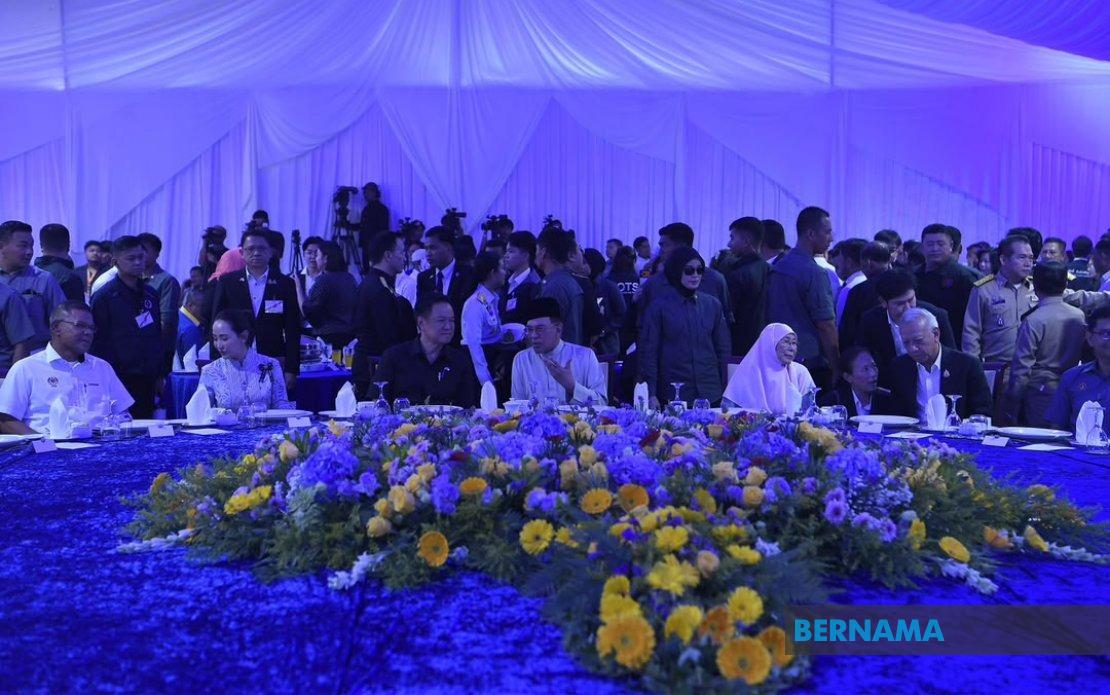
Prime Minister Datuk Seri Anwar Ibrahim joined Thai Prime Minister Anutin Charnvirakul on July 10 to formally inaugurate a new highway connecting Malaysia's Bukit Kayu Hitam Immigration, Customs, Quarantine and Security (ICQS) Complex with Thailand's corresponding Sadao Customs, Immigration and Quarantine (CIQ) facility. The ceremonial launch represents a significant infrastructure milestone for both nations and underscores their commitment to deepening cross-border integration within the broader Southeast Asian framework.
The new thoroughfare will become operational for all motorists beginning at 6 am Malaysia time on July 11, marking the transition to a modernised border crossing arrangement. Simultaneously, the existing land crossing that previously served the Bukit Kayu Hitam and Danok checkpoints will cease operations at midnight on the same date, concluding decades of service at that particular border junction. This coordinated changeover reflects extensive planning and coordination between Malaysian and Thai authorities to ensure seamless transition and minimal disruption to cross-border commerce and travel.
According to a statement from Malaysia's Home Ministry (KDN), the new road epitomises the robust partnership between Kuala Lumpur and Bangkok in advancing shared strategic interests. The infrastructure development transcends mere physical connectivity; it embodies both governments' determination to foster diplomatic relations, facilitate integrated border management, and catalyse economic activity in frontier regions that have historically lagged behind more central areas. The completion of this project demonstrates how bilateral commitment can translate into tangible outcomes benefiting ordinary citizens and businesses on both sides of the border.
The new crossing carries particular significance within the context of the ASEAN Connectivity initiative, a regional agenda aimed at knitting together the member states through improved transportation networks, trade corridors, and people-to-people exchanges. By upgrading the Malaysia-Thailand border infrastructure, the two countries are actively contributing to the realisation of this broader vision, which seeks to position Southeast Asia as a more seamlessly integrated economic and political space. Malaysian readers and businesses should note that enhanced connectivity along this strategic route could translate into faster cargo movements, reduced border clearance times, and improved access to Thai markets.
The Home Ministry highlighted that the modernised border infrastructure will yield multifaceted advantages for both nations. Enhanced cross-border cooperation mechanisms built into the new facilities promise to streamline security protocols while maintaining rigorous standards. The integration of contemporary control systems and coordinated procedures between Malaysian and Thai enforcement agencies represents a pragmatic approach to balancing facilitation with security—a challenge that border authorities across Southeast Asia increasingly grapple with as trade and travel volumes expand.
Beyond security considerations, the new road is positioned as a catalyst for economic development in Kedah and southern Thailand's border provinces. Logistics operators and traders utilising this corridor should benefit from reduced transit times and improved predictability in crossing procedures. The Home Ministry specifically noted that the development aligns with efforts to stimulate growth in frontier areas and strengthen supply chain efficiency, factors increasingly important as Southeast Asian economies deepen their integration with global markets and each other.
The new crossing also functions as a cornerstone of Malaysia's participation in the ASEAN North-South Economic Corridor, an initiative designed to promote prosperity and connectivity across the region's mainland component. For Malaysian exporters and investors targeting Thai and wider Indochinese markets, this infrastructure enhancement removes a persistent bottleneck that has constrained regional commerce. The reduction in border friction costs—a crucial factor in determining the competitiveness of regional supply chains—should gradually benefit producers and consumers across the corridor.
The Home Ministry situated this development within the broader Malaysia MADANI framework, the government's aspirational agenda for national development centred on prosperity, security, and wellbeing. Border management modernisation constitutes a key operational pillar of this vision, reflecting recognition that national prosperity increasingly depends on seamless integration with regional neighbours and global value chains. The adoption of contemporary technology and international best practices in border administration represents the operational translation of these policy aspirations into concrete institutional change.
The project's completion required extensive collaboration between Malaysian and Thai ministries, customs and immigration departments, quarantine authorities, and various enforcement agencies. This inter-agency coordination and bilateral cooperation sets a noteworthy example for other ASEAN border crossing developments, demonstrating how patient diplomacy and technical collaboration can overcome the inherent complexities of cross-border infrastructure projects. The successful handoff from the Danok crossing to the new Sadao facility signals administrative capability and maturity on both sides.
Looking forward, the new road is expected to anchor a new phase in Malaysia-Thailand bilateral relations characterised by deeper economic integration and more efficient border governance. For Malaysian businesses engaged in trade with Thailand, the crossing promises operational benefits. For tourists, the modernised facilities should enhance travel experience and encourage greater people-to-people exchange. The symbolism of replacing an aging crossing with state-of-the-art infrastructure carries weight beyond mere convenience, signalling both nations' commitment to contemporary standards and forward-looking cooperation.
The initiative also reflects broader regional trends in Southeast Asian infrastructure development. As ASEAN members compete for investment and seek to position themselves within global supply chains, border crossing efficiency has become a tangible competitive factor. Nations that modernise their frontier infrastructure gain advantages in attracting logistics hubs, manufacturing facilities, and regional headquarters. Malaysia's investment in upgrading the Bukit Kayu Hitam-Sadao crossing positions the country as border-friendly and business-responsive, potentially influencing foreign investment location decisions.
The Home Ministry expressed confidence that the new crossing will inaugurate an era of enhanced Malaysia-Thailand cooperation and contribute to cross-border prosperity. Both governments have committed to continued improvements in border management through ongoing technology adoption and international strategic engagement. For regional observers and businesses operating across Southeast Asia, the Bukit Kayu Hitam-Sadao crossing represents a concrete benchmark of how bilateral relations can generate infrastructure improvements that benefit broader regional integration objectives.

