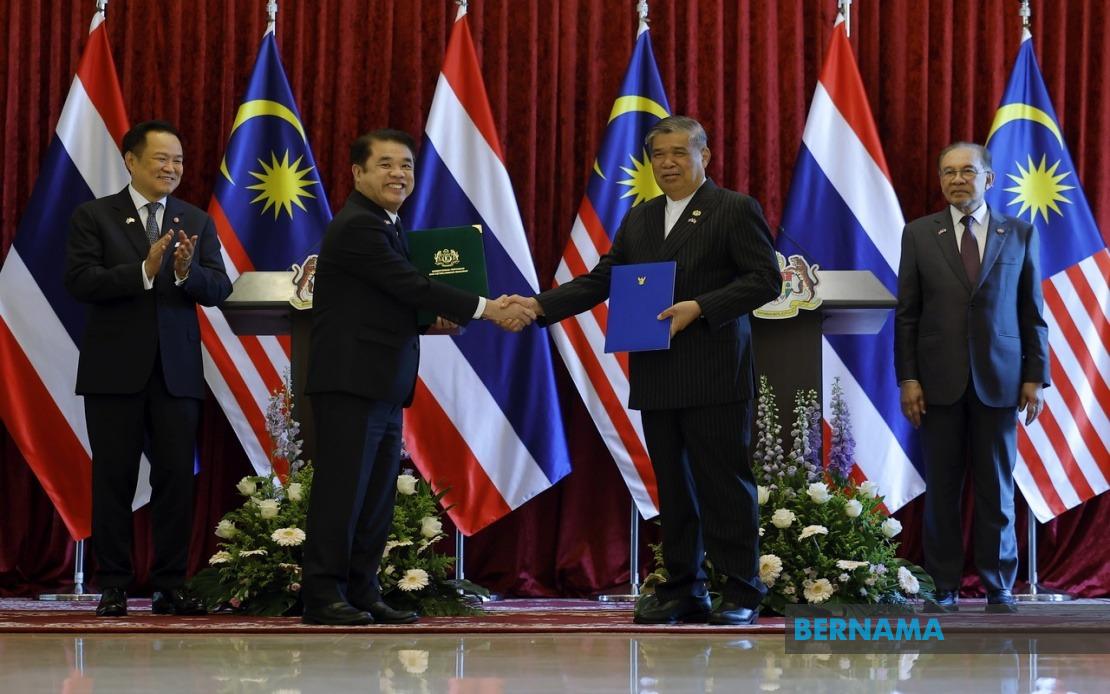
Malaysia and Thailand have cleared a significant hurdle in their agricultural relationship by resolving longstanding fisheries market access disagreements and committing to operationalise a comprehensive agricultural cooperation framework within seven days. The breakthrough came during the first official visit to Malaysia by Thai Prime Minister Anutin Charnvirakul, with the memorandum of understanding formally exchanged at a ceremony in Putrajaya on July 9. Prime Minister Datuk Seri Anwar Ibrahim and Anutin jointly witnessed the signing between Malaysia's Agriculture and Food Security Minister Datuk Seri Mohamad Sabu and Thai Agriculture Minister Suriya Juangroongruangkit, underscoring the political significance both nations attach to deepening agricultural ties.
The acceleration of the agreement's implementation represents a meaningful compromise in bilateral negotiations. Thai officials had initially sought a one-and-a-half-month timeline for the MoU to take effect, but Malaysian and Thai agricultural ministers negotiated the arrangement down to just one week. This expedited schedule reflects both capitals' recognition that food security and agricultural trade constitute strategic imperatives in an increasingly volatile global commodities environment. For Malaysia, swift activation of the framework addresses domestic concerns about supply chain resilience and export market access. For Thailand, the agreement provides clearer pathways for agricultural products to reach Malaysian consumers and businesses.
Resolution of the fisheries market access question carries particular significance given the sector's economic weight in both economies. Thailand's fishing industry is globally significant, while Malaysia maintains substantial aquaculture and capture fishery operations throughout peninsular and east Malaysian waters. The outstanding disputes centred on regulatory requirements and product standards that had complicated bilateral trade in fish and shellfish products. By establishing mutually acceptable protocols through this framework, both nations create predictability for commercial operators and reduce the friction that can arise from inconsistent or opaque import procedures. The agreement essentially codifies a shared commitment to addressing market access challenges through structured ministerial engagement rather than allowing disputes to fester and escalate.
The new MoU establishes a comprehensive architecture for agricultural cooperation extending well beyond fisheries. Provisions encompass crop production, livestock management, and agricultural trade facilitation, alongside critical enabling mechanisms including research and development collaboration, capacity building initiatives, and harmonised biosecurity protocols. Sanitary and phytosanitary measures—technical standards governing food safety and plant health—represent an especially significant component, as divergent SPS requirements have historically complicated Southeast Asian agricultural trade. By establishing coordinated approaches in these areas, Malaysia and Thailand create a template for deeper regional agricultural integration whilst maintaining rigorous food safety standards essential for consumer protection and export market access.
The institutional framework underpinning the agreement deserves particular attention. Rather than creating ad-hoc working arrangements, the MoU establishes a structured mechanism for regular communication and coordination between relevant Malaysian and Thai authorities. This systematic approach addresses a longstanding challenge in ASEAN agricultural trade: the lack of consistent, transparent channels for resolving technical disputes and regulatory misalignments. By formalising regular engagement through established structures, both countries reduce transaction costs for businesses navigating bilateral agricultural commerce and create accountability for government agencies responsible for implementation. Such institutional development often proves as valuable as the substantive provisions themselves.
Bilateral agricultural and agri-food trade between Malaysia and Thailand has demonstrated robust expansion, reaching RM20.33 billion across the twelve-month period from January through December 2025. This substantial trading relationship reflects deep integration of agricultural value chains across borders, with Malaysian businesses heavily dependent on Thai suppliers for meat and meat-based products whilst Thai importers represent crucial markets for Malaysian coffee, cocoa, tea, spices, and processed food items. The scale of this commercial relationship means that trade friction, however technical in origin, carries meaningful economic consequences for producers, processors, traders, and consumers on both sides. The newly activated MoU thus addresses real commercial pressures affecting thousands of businesses throughout both nations' agricultural sectors.
Context for this agreement includes Malaysia's previous tightening of import controls on Thai fisheries products implemented on June 1. That decision required Certificates of Analysis for barramundi imports and imposed temporary restrictions on five specific shrimp species. Whilst presented as food safety measures, such import controls can create substantial commercial disruption for affected producers and traders. The MoU's resolution of market access issues suggests that Malaysia's earlier restrictions, whilst motivated by legitimate regulatory concerns, ultimately proved counterproductive to bilateral trade expansion. By establishing more transparent and predictable regulatory frameworks, both nations now possess mechanisms to address legitimate safety and quality concerns without resorting to blunt import restrictions that lack clear resolution pathways.
The timing of this agricultural cooperation breakthrough aligns with broader efforts by Malaysia and Thailand to deepen bilateral engagement. Prime Minister Anwar and Anutin held bilateral talks the previous week focusing on trade, investment, agricultural cooperation, and regional security matters. This sequencing—substantive agricultural negotiations followed by high-level political endorsement—reflects deliberate diplomatic strategy. Agricultural cooperation, though technical in nature, carries symbolic weight in Southeast Asian diplomacy, signalling to regional and international audiences that two major agricultural producers are coordinating their development strategies and creating opportunities for enhanced food security across the region. Such moves also strengthen ASEAN's collective position in international agricultural negotiations and trade discussions.
For Malaysian consumers and businesses, the implications of this agreement extend beyond bilateral commerce. Enhanced agricultural cooperation with Thailand supports Malaysia's broader food security objectives by strengthening supply chains for critical protein sources and specialty agricultural products. Thailand's agricultural sector possesses particular comparative advantages in tropical fruits, processed meat products, and aquaculture outputs where Malaysian demand remains substantial. Conversely, Malaysian agricultural exports, particularly value-added processed foods and specialty crops, benefit from Thailand's growing middle-class consumer base and its role as a regional distribution hub. The MoU essentially signals that both governments recognise food security not as zero-sum competition but as an opportunity for mutual benefit through expanded trade and coordinated development policies.
The agreement also carries implications for ASEAN's broader agricultural integration agenda. Malaysia and Thailand, as two relatively developed agricultural economies with significant trade volumes, often set precedents that smaller ASEAN members subsequently adopt. Successful resolution of technical trade barriers and establishment of functioning dispute-resolution mechanisms within the Malaysia-Thailand relationship potentially create templates for broader ASEAN agricultural cooperation. Such regional standardisation around biosecurity protocols, phytosanitary measures, and trade facilitation procedures could eventually reduce friction across the entire Southeast Asian agricultural trading system, benefiting producers and consumers throughout the bloc.
Looking forward, the real test of this agreement lies in implementation. Agreements on paper represent important political commitments, but genuine benefits emerge only when government agencies, private sector operators, and consumers experience smoother trade flows and improved market access. The structured coordination mechanisms established through the MoU will require consistent political support, adequate funding for implementing agencies, and genuine commitment to resolving disputes through established channels rather than reverting to unilateral trade restrictions. Malaysian and Thai officials will need to demonstrate that the framework functions as intended, building confidence among business communities on both sides that bilateral agricultural commerce has genuinely become more predictable and less prone to sudden disruptions.

