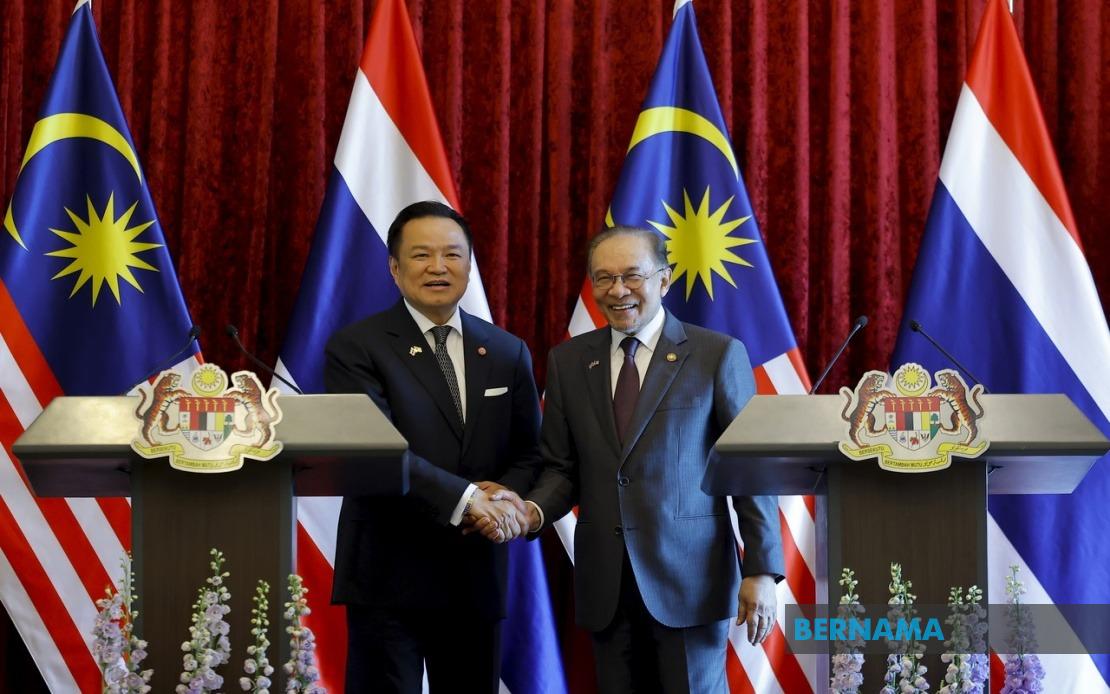
Prime Minister Datuk Seri Anwar Ibrahim and Thailand's Prime Minister Anutin Charnvirakul have charted an ambitious roadmap for deepening economic ties between the two neighbouring nations, culminating in a bilateral trade target of USD30 billion by 2027. The two leaders concluded substantive discussions in Putrajaya on July 9, emerging with a framework encompassing accelerated border infrastructure development, the creation of special border economic zones, and measures to simplify immigration and customs processing. This fresh momentum underscores a shared recognition that Malaysia and Thailand, despite their geographical proximity and historical connections, possess untapped potential across economic, cultural, and strategic dimensions.
The cornerstone of this renewed engagement lies in the tangible commitment to expedite border connectivity initiatives that have languished in planning stages or moved at a glacial pace. By concentrating resources on specific cross-border infrastructure projects, both governments aim to reduce transit times, lower logistics costs, and create seamless movement corridors that benefit business operators and ordinary citizens alike. The emphasis on accelerating these projects signals a departure from the incremental approach that has characterised previous cooperation phases, reflecting a sense of urgency to capitalise on regional economic opportunities as competition for investment intensifies across Southeast Asia.
The planned establishment of special border economic zones represents a particularly strategic element of this partnership. These designated areas, typically offering preferential tax treatment, simplified regulations, and enhanced infrastructure, have proven effective in other border regions by attracting manufacturing, processing, and trading operations that leverage the complementary strengths of neighbouring economies. For Malaysia, such zones along the Thai border could facilitate deeper integration of supply chains, particularly in automotive components, electronics, and agro-industrial products where both nations possess existing comparative advantages. Thailand, similarly, stands to gain by positioning its northern border regions as attractive nodes within broader Southeast Asian manufacturing networks.
Simplifying immigration and customs procedures ranks equally crucial in this strategic partnership. Border bureaucracy has historically acted as a friction point, deterring smaller enterprises from engaging in cross-border commerce and inflating costs for larger operators. By implementing streamlined processing systems, potentially including digital documentation, pre-clearance mechanisms, and coordinated inspection protocols, both countries can significantly enhance the fluidity of people and goods movement. Such measures would prove particularly beneficial to Malaysian and Thai traders operating in regional markets, reducing the time companies spend navigating border checkpoints and enabling faster response to market opportunities.
Anwar's characterisation of the bilateral discussions as substantive and fruitful reflects the breadth of issues covered beyond border development. The two leaders appear to have engaged with the full spectrum of bilateral relations, addressing longstanding concerns whilst identifying fresh avenues for collaboration. This comprehensive approach suggests recognition that sustainable economic integration requires building trust across multiple sectors and addressing historical grievances or structural imbalances that might otherwise undermine narrower commercial initiatives.
The planned visit to Bukit Kayu Hitam and Sadao following the Putrajaya meetings holds particular symbolic and practical significance. By extending the bilateral engagement beyond the capital to border communities directly affected by cross-border dynamics, both leaders demonstrate commitment to ensuring that development benefits flow to peripheral regions rather than remaining concentrated in major urban centres. These communities possess frontline experience with border challenges and opportunities, offering invaluable perspectives that can inform implementation strategies for the various cooperative initiatives announced.
Anwar's emphasis on historical, cultural, economic, and investment dimensions reveals an understanding that bilateral relations function most effectively when grounded in multifaceted engagement rather than narrow commercial transactions. Malaysia and Thailand share substantial cultural affinities, particularly in the Islamic tradition and traditional crafts, alongside a shared interest in regional security and economic stability. By acknowledging these broader dimensions, the Malaysian government signals that economic cooperation exists within a larger context of civilisational proximity and mutual interest in regional prosperity.
The USD30 billion trade target by 2027 represents an ambitious but achievable goal, contingent upon successful implementation of the announced initiatives. Current bilateral trade volumes provide the baseline from which to measure progress, and the timescale of roughly three years allows sufficient time for border infrastructure improvements and regulatory reforms to bear fruit. Achievement of this milestone would position Malaysia and Thailand as exemplars of effective regional economic integration, potentially offering a replicable model for other Southeast Asian border partnerships.
For Malaysia specifically, deepening ties with Thailand holds strategic implications beyond immediate economic gains. Thailand constitutes a crucial gateway to broader Indochina and Myanmar markets, and enhanced connectivity would strengthen Malaysia's position as a commercial hub linking Southeast Asia's maritime and continental regions. Malaysian businesses operating in agribusiness, manufacturing, and services sectors would gain preferential access to Thai markets and supply networks, enhancing competitiveness across the region.
The commitment by Anutin Charnvirakul to strengthen bilateral ties through a border-focused visit reflects Thailand's recognition that its own development aspirations depend substantially on cultivating robust relationships with immediate neighbours. For Thailand's northern regions, particularly those facing economic marginalisation relative to Bangkok-centric development patterns, cross-border economic zones present opportunities for employment generation and infrastructure modernisation that national budgets alone might struggle to deliver.
Looking forward, the success of this cooperative framework will hinge on institutional mechanisms established to oversee implementation, secure necessary funding, and resolve inevitable bureaucratic obstacles. Both governments must designate clear responsibility across relevant ministries and agencies, establish timelines with accountability measures, and create mechanisms for addressing disputes or misunderstandings that might arise during the implementation phase. The political commitment demonstrated by top-level engagement provides a strong foundation, but translating this into tangible border improvements requires sustained focus at administrative levels.

