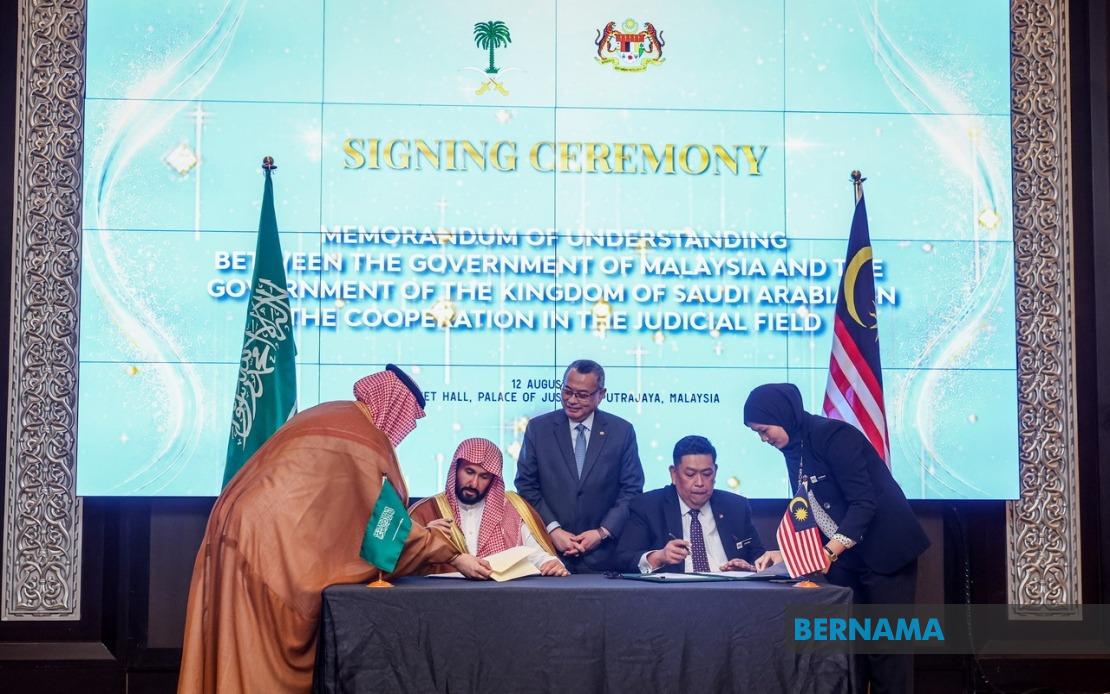
Malaysia and Saudi Arabia have taken a significant step forward in their bilateral relationship by formalising judicial cooperation through a memorandum of understanding signed in Putrajaya. The agreement, inked by Chief Registrar of the Federal Court Azhaniz Teh Azman Teh and Saudi Arabian Minister of Justice Sheikh Dr Waleed Mohammed Alsmani at the Palace of Justice, represents a structured commitment to enhancing the efficiency and effectiveness of both nations' judicial systems. The signing ceremony, which was witnessed by Chief Justice Tun Wan Ahmad Farid Wan Salleh, underscores the importance both governments place on strengthening institutional ties and fostering collaborative relationships that extend beyond traditional diplomatic channels.
The memorandum establishes a comprehensive framework that encompasses several key areas of judicial cooperation. Civil case management represents one primary focus, reflecting both nations' desire to share best practices in handling civil litigation and streamlining court procedures. The inclusion of judicial technology and digitalisation is particularly significant, as courts worldwide increasingly adopt digital infrastructure to improve access to justice and reduce case backlogs. Through this agreement, both the Malaysian and Saudi Arabian judiciaries commit to exchanging knowledge and practical experience in implementing technological solutions that make court systems more efficient and user-friendly.
A notable element of the cooperation framework involves the exchange of publicly available judicial information and institutional visits. This provision enables judges, court administrators, and legal professionals from both countries to observe each other's judicial processes firsthand and gain deeper insights into how their counterparts approach legal challenges. Regular exchanges, also outlined in the MoU, suggest an ongoing commitment rather than a one-time engagement, indicating that both nations view this relationship as a long-term investment in judicial excellence and capacity building.
The timing of this agreement during Sheikh Dr Waleed's official visit to Malaysia demonstrates the government's priority in deepening bilateral relations with the Kingdom. Saudi Arabia remains a crucial partner for Malaysia in economic, cultural, and strategic affairs, particularly given the significant Muslim populations in both nations and their shared Islamic heritage. The judicial cooperation MoU fits naturally within this broader framework of strengthened ties, reflecting mutual respect and a commitment to collaborative problem-solving on matters of governance and justice.
During the Saudi minister's visit, a detailed judicial dialogue session took place focusing on two issues of particular contemporary importance. Malaysia's judicial approach to handling sexual offences against children gained attention as a model worth studying, suggesting that the Malaysian judiciary has developed methodologies and frameworks that other nations find valuable. This recognition of Malaysia's expertise in protecting vulnerable populations speaks to the credibility and progressive stance of the Malaysian judicial system in addressing child protection matters through specialised legal approaches.
The e-Court system, Malaysia's platform for court digitalisation, also featured prominently in discussions between the delegations. This system represents a significant modernisation of Malaysian judicial administration, enabling parties to access court documents, file submissions, and participate in proceedings through digital channels. For Saudi Arabia, which is itself pursuing ambitious technological modernisation programmes across government sectors, the Malaysian e-Court system offers valuable insights into implementation strategies, challenges encountered, and lessons learned from deployment. This knowledge transfer potential demonstrates how regional judicial cooperation can accelerate adoption of best practices and help countries avoid pitfalls already encountered by their peers.
From Malaysia's perspective, this MoU carries several strategic implications. Strengthening judicial ties with Saudi Arabia enhances Malaysia's soft power and positions the Malaysian judiciary as a regional leader in legal innovation and practice. As Southeast Asian nations increasingly seek to upgrade their judicial systems and adopt international standards, demonstrating successful partnerships and technical expertise becomes valuable for Malaysia's regional standing. The agreement also facilitates the kind of professional networking that can improve Malaysia's judiciary's international reputation and create opportunities for Malaysian legal professionals to contribute to broader regional and international legal conversations.
The memorandum reflects a broader trend of Southeast Asian and Middle Eastern nations recognising the mutual benefits of judicial cooperation. As countries grapple with common challenges such as managing caseloads, protecting vulnerable populations, adapting to technological change, and maintaining rule of law in increasingly complex societies, sharing experiences and learning from peers becomes strategically important. Such cooperation also strengthens bilateral relationships by creating channels of communication and understanding that exist outside the realm of formal government-to-government negotiations.
For the Malaysian judiciary specifically, this agreement opens pathways for institutional learning that can translate into practical improvements. Understanding how different judicial systems approach similar problems and comparing methodologies can inspire reforms and innovations within Malaysia's own courts. The regular exchanges envisioned in the MoU create opportunities for Malaysian judges and court staff to interact with their Saudi counterparts, building relationships that facilitate problem-solving and collaboration on matters of mutual interest.
The MoU also carries significance for Malaysia's positioning within the Islamic world. As a Muslim-majority nation with a sophisticated legal system that blends civil law principles with Islamic jurisprudence, Malaysia represents a model of modern governance that other Muslim-majority nations observe. Strengthening judicial ties with Saudi Arabia, a leading voice in the Islamic world, enhances Malaysia's credibility and influence in regional and global conversations about law, governance, and justice. This cooperation demonstrates that Islamic nations can maintain strong institutional relationships while advancing shared interests in judicial modernisation and rule of law.
Looking forward, the practical implementation of this MoU will determine its true value. Regular judicial dialogues, institutional visits by judges and administrators, and systematic exchange of information will need to be prioritised to ensure the agreement translates from aspirational framework into tangible benefits. Malaysian and Saudi Arabian judicial authorities must establish clear mechanisms for ongoing communication, identify specific projects for collaborative work, and allocate resources necessary to sustain the partnership over time. The success of this initiative could serve as a template for Malaysia's judicial cooperation with other regional and international partners.

