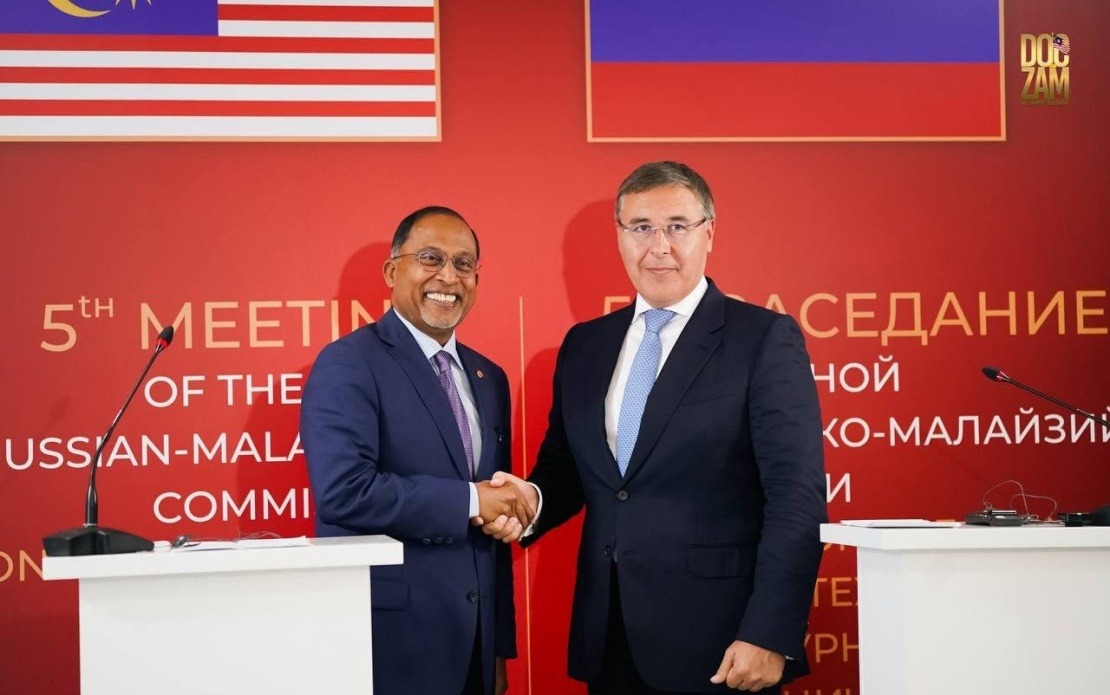
Malaysia and Russia have pledged to conclude their 2027 Joint Action Plan before the year ends, representing a significant step towards formalising their expanding partnership across multiple sectors. Higher Education Minister Datuk Seri Dr Zambry Abd Kadir announced the commitment following the Fifth Meeting of the Malaysia-Russia Joint Commission for Economic, Scientific, Technical and Cultural Cooperation, which took place in Vladivostok and was co-chaired by Zambry and Russian Minister of Science and Higher Education Valery Falkov. The finalisation of this roadmap signals both nations' determination to transform their longstanding diplomatic relationship into measurable outcomes that serve the interests of their respective populations.
The timing of this initiative reflects the broader diplomatic momentum established between Malaysia and Russia at the highest levels of government. The bilateral relationship has been reinvigorated through interactions between His Majesty Sultan Ibrahim, King of Malaysia, Russian President Vladimir Putin, and Prime Minister Datuk Seri Anwar Ibrahim, setting the political foundation for deeper institutional engagement. By channelling this goodwill into a structured action plan, both countries are attempting to move beyond ceremonial exchanges and create concrete mechanisms for sustained cooperation. This approach aligns with Malaysia's broader strategy of diversifying its international partnerships while maintaining strategic autonomy in the region.
In the critical domain of higher education and human development, Russia will continue providing 40 government scholarships annually to Malaysian students, a commitment that demonstrates Moscow's investment in developing Malaysia's intellectual capital. Beyond this established programme, the two countries have endorsed several ambitious new initiatives designed to strengthen academic and research linkages. The proposed Malaysia-Russia Rectors' Forum, scheduled for 2027, will bring together university leaders from both nations to explore collaborative opportunities. Simultaneously, efforts to expand the MAI-UniKL Russian Aerospace Programme signal recognition of Malaysia's growing expertise in aerospace technology and the potential for joint ventures in this high-value sector. These educational and research initiatives are particularly significant for Southeast Asia, as they create alternative pathways for talent development and technology transfer outside traditional Western-dominated academic networks.
The establishment of a Russia-Malaysia Youth Leadership Summer Camp represents an innovative approach to people-to-people diplomacy, fostering cross-cultural understanding among emerging leaders and decision-makers. Such programmes have historically proven effective in building long-term bilateral relationships by cultivating networks of individuals with sustained interest in bilateral cooperation. Through exposure to each other's societies, educational systems, and professional environments, participating youth are likely to become advocates for deeper Malaysia-Russia engagement throughout their careers. For Malaysia, which seeks to strengthen ties across diverse regions, such investments in generational continuity are strategic assets.
Trade and agricultural cooperation emerged as another crucial pillar of the bilateral agenda. Both nations discussed mechanisms to expand market access and strengthen commercial ties, with particular emphasis on fertiliser supply chains, including urea products essential for Malaysia's food security objectives. Russia's capacity as a major global fertiliser producer positions it as a natural supplier for Malaysian agriculture, especially given supply chain vulnerabilities exposed in recent years. By formalising cooperation in this sector, Malaysia can diversify its sources and reduce dependence on alternative suppliers, thereby enhancing the stability and cost-effectiveness of agricultural inputs critical to domestic farming communities.
The bilateral commitment to cooperation in strategic technological sectors underscores the geopolitical significance of the Malaysia-Russia partnership. Both countries have identified artificial intelligence, digital technology, and smart cities as priority areas, reflecting global recognition that technological dominance will shape 21st-century competition. Collaboration in information security and telecommunications is particularly relevant for Malaysia, which is developing its digital economy and requires robust cyber-security frameworks. The inclusion of renewable energy and liquefied natural gas in the partnership agenda demonstrates alignment with global energy transition imperatives, whilst exploration of nuclear energy cooperation signals long-term commitment to diversified energy sources, contingent upon compliance with respective regulatory frameworks.
Financial cooperation mechanisms have also received renewed attention, with Bank Negara Malaysia and the Bank of Russia establishing deeper institutional linkages. The exploration of Labuan's role as an international financial centre and ASEAN gateway is strategically significant, potentially positioning Malaysia as a financial intermediary for regional flows and investment from Russia and Central Asia. Discussions on Islamic finance cooperation are particularly noteworthy, as they acknowledge Malaysia's established expertise in Sharia-compliant financial instruments and Russia's emerging interest in accessing this expanding global market. Digital assets cooperation signals both nations' recognition of cryptocurrency and blockchain technologies' transformative potential, though implementation will require careful regulatory coordination.
The exchange of three cooperation agreements between Malaysian and Russian higher education institutions during the joint commission meeting demonstrates tangible institutional commitment. The partnerships involving Universiti Teknologi MARA and the National Research University Moscow Power Engineering Institute, along with collaborations between UiTM and the Institute of Experimental Medicine, and between Universiti Tun Hussein Onn Malaysia and the State University of Land Use Planning, reflect diverse complementarities in research and teaching excellence. These institutional relationships will create sustained channels for knowledge transfer, joint research projects, and student mobility programmes that extend far beyond government directives.
Malaysia's decision to host the sixth joint commission meeting in 2027 carries symbolic significance, as it coincides with the 60th anniversary of Malaysia-Russia diplomatic relations. This milestone provides an opportunity to reflect on six decades of engagement and recommit to shared objectives. The timing also allows both nations to present substantive achievements resulting from the 2027 joint action plan, demonstrating to domestic stakeholders and the international community that the partnership delivers tangible benefits. For Malaysia, hosting this high-profile event reinforces its position as a significant diplomatic player capable of managing complex international relationships.
The broadening of bilateral cooperation across industrial, healthcare, transport, green technology, climate change, creative economy, and space sectors reveals the comprehensive nature of Malaysia-Russia engagement. Healthcare cooperation is particularly relevant given shared interests in pharmaceutical development and medical research. Transport sector collaboration could facilitate technology transfer in rail and maritime fields, whilst creative economy partnerships may open Russian markets to Malaysian cultural products and vice versa. Space cooperation represents a frontier domain, with potential applications in satellite technology and Earth observation systems beneficial to both nations' development objectives.
From a Southeast Asian perspective, the Malaysia-Russia partnership carries regional implications. As ASEAN navigates great power competition and seeks to maintain strategic autonomy, Malaysia's demonstrated ability to develop multifaceted relationships with major powers including Russia contributes to regional diversification and reduces dependency on any single partner. The emphasis on mutual respect and benefit, reiterated by Zambry in his statement, reflects Malaysia's commitment to balanced diplomacy. By expanding cooperation across numerous sectors whilst maintaining ASEAN solidarity, Malaysia models an approach to external relations that other regional states may emulate.
The joint action plan also reflects broader global trends towards multipolar international relations. Russia, facing Western sanctions and international isolation in certain domains, views deepened engagement with Asian partners as essential for long-term prosperity and influence. Malaysia, meanwhile, recognises that sustained development requires engaging with diverse partners and learning from multiple sources of expertise and investment. This complementarity of interests creates a foundation for enduring cooperation despite geopolitical fluctuations elsewhere.
Looking forward, the success of the 2027 joint action plan will depend on consistent implementation, adequate resource allocation, and political support at all levels of both governments. Private sector engagement will be crucial, as many proposed initiatives require business participation beyond government coordination. Malaysian companies exploring opportunities in Russian markets, and vice versa, will determine whether bilateral cooperation generates genuine economic benefits. The mechanism for monitoring progress and resolving implementation challenges must be clearly defined to ensure accountability and sustained momentum.

