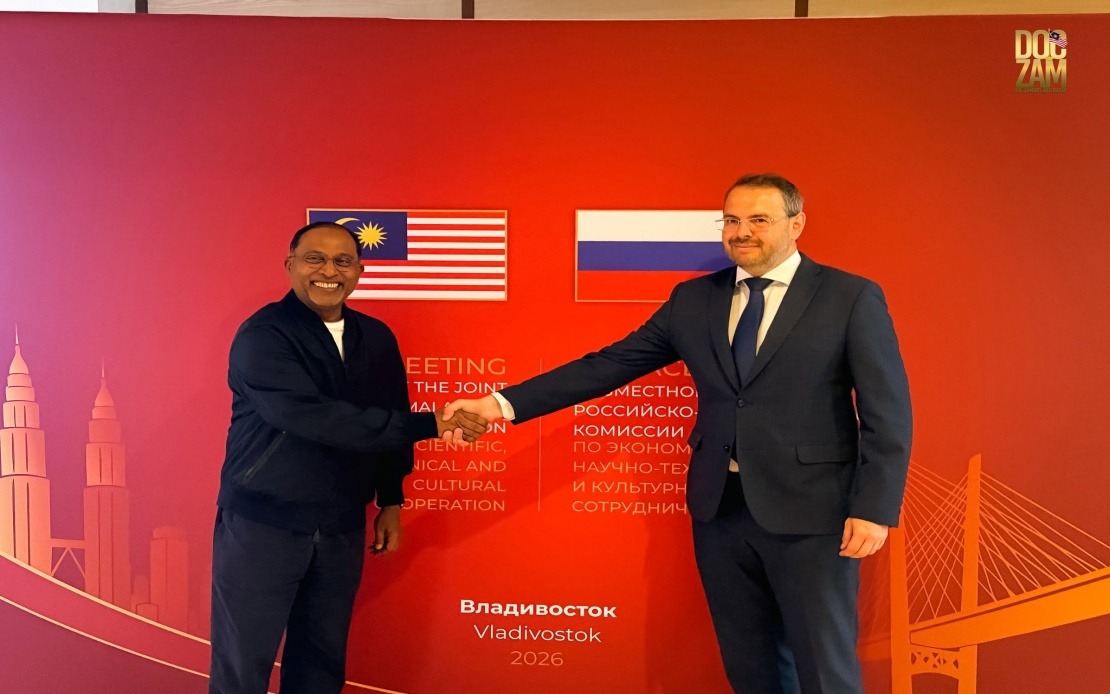
Malaysia and Russia are preparing to unlock fresh opportunities across education, technology and commerce as the Fifth Malaysia-Russia JC-ESTC Meeting convenes in Vladivostok this week. Higher Education Minister Datuk Seri Dr Zambry Abd Kadir, who is leading the Malaysian contingent, underscored the urgency of translating diplomatic goodwill into tangible economic and social benefits for both nations. The gathering, which runs through Saturday, August 15, represents a critical moment for recalibrating bilateral relations and identifying sectors where mutual strengths can generate measurable returns.
The agenda encompasses a notably broad sweep of bilateral priorities. Representatives from 17 Malaysian ministries and agencies will participate alongside their Russian counterparts, signalling the cross-sectoral nature of contemporary Malaysia-Russia engagement. Beyond traditional diplomatic discussion, the framework touches energy security, agricultural development, and cultural exchange—domains where Southeast Asian and Eurasian interests increasingly intersect. This institutional breadth reflects how bilateral partnerships in the modern era demand coordination across multiple government departments rather than remaining confined to foreign ministries.
Zambry has placed particular emphasis on higher education as a cornerstone of deeper ties. Malaysia intends to champion increased student and academic exchange, positioning educational mobility as a pathway to sustained people-to-people connections. Joint research initiatives between Malaysian and Russian universities could yield innovations in science and technology fields where both nations claim expertise. The minister characterised talent development in future-oriented sectors—including artificial intelligence, advanced materials, and renewable energy—as a strategic imperative, suggesting that educational cooperation serves larger geopolitical objectives of building technological self-reliance across both economies.
The JC-ESTC, established a decade ago in 2015, has provided the institutional scaffold for Malaysia-Russia cooperation but has historically faced criticism for producing agreements that remain largely declaratory. Zambry's framing of the mechanism as needing to be "action-oriented" and focused on "outcomes that bring direct benefits" signals recognition that previous iterations may have fallen short of implementation. This recalibration toward measurable results suggests frustration with a pattern of collaborative frameworks that generate headlines but limited follow-through, a perennial challenge in bilateral diplomacy across Asia-Pacific and beyond.
Trade and investment expansion emerged as another pillar of discussion. The Malaysian delegation arrives in Vladivostok amid broader economic headwinds affecting both economies, yet representatives appear optimistic about untapped potential. Russia's technological prowess in certain industrial sectors and Malaysia's position as a regional trade hub create the foundation for mutually beneficial commercial partnerships. The ministry of higher education's lead role in spearheading these discussions—rather than the trade ministry—suggests an understanding that innovation capacity and human capital development are now prerequisites for competitive advantage in investment decisions.
Zambry's reception by Russian Deputy Minister of Science and Higher Education Konstantin Mogilevsky upon arrival underscores Moscow's commitment to advancing the partnership. His subsequent co-chairmanship alongside Russian Minister of Science and Higher Education Valery Falkov indicates parity in the bilateral equation, a detail pregnant with significance for Malaysian stakeholders concerned about power dynamics in asymmetrical relationships. When smaller nations engage larger powers, ceremonial equality in meeting structures often translates into genuine diplomatic influence.
The minister explicitly acknowledged that Malaysia and Russia possess "complementary strengths," a formulation that avoids framing one party as dependent on the other. This language of mutual advantage proves crucial for domestic political consumption in Kuala Lumpur, where any perception of subordination to foreign powers generates public resistance. By articulating partnership as a pooling of distinct capabilities rather than Malaysia seeking Russian patronage or vice versa, Zambry positions the relationship as one between equals pursuing shared objectives in an increasingly multipolar world.
For Malaysian readers, the significance extends beyond ceremonial diplomacy. Russia's technological infrastructure in fields ranging from aerospace to nuclear energy represents potential sources of knowledge transfer and partnership. Conversely, Malaysia's experience in managing multicultural societies and developing halal industries offers Russian counterparts insights into emerging consumer markets and demographic management. These concrete areas of exchange—as opposed to vague commitments to "strengthen ties"—merit scrutiny as negotiations proceed.
The timing of this meeting carries regional implications. As Southeast Asia navigates great-power competition between Washington and Beijing, maintaining substantive ties with Moscow provides Malaysian policymakers with strategic flexibility. The JC-ESTC becomes not merely a bilateral channel but part of a larger portfolio of partnerships that allow countries like Malaysia to avoid exclusive alignment while extracting maximum benefit from multiple relationships. In this context, Zambry's emphasis on "mutual interests and respect" functions as coded language affirming non-alignment principles that resonate throughout Southeast Asian foreign policy.
Challenges, however, remain unspoken but real. Sanctions regimes affecting Russian technology transfer, divergent governance models, and geographic distance all complicate deepening cooperation. Previous Malaysian-Russian initiatives have sometimes stalled due to implementation gaps, unclear funding mechanisms, or shifting political priorities. Whether this Fifth JC-ESTC Meeting produces concrete outcomes—rather than further aspirational statements—will determine whether the relationship matures into substantive partnership or remains confined to ritualistic engagement.
Looking ahead, observers should monitor specific deliverables emerging from Vladivostok: signed memorandums of understanding identifying particular universities for collaboration, committed investment figures for joint ventures, and timelines for implementing agreed initiatives. The measure of success lies not in the cordiality of discussions but in whether Malaysian students find genuine opportunities in Russian institutions, whether Malaysian firms access Russian technology, and whether knowledge exchange produces innovations applicable to Southeast Asian development challenges. Zambry's emphasis on action over aspiration suggests the delegation understands this necessity, though the gap between ministerial rhetoric and bureaucratic implementation often proves cavernous.

