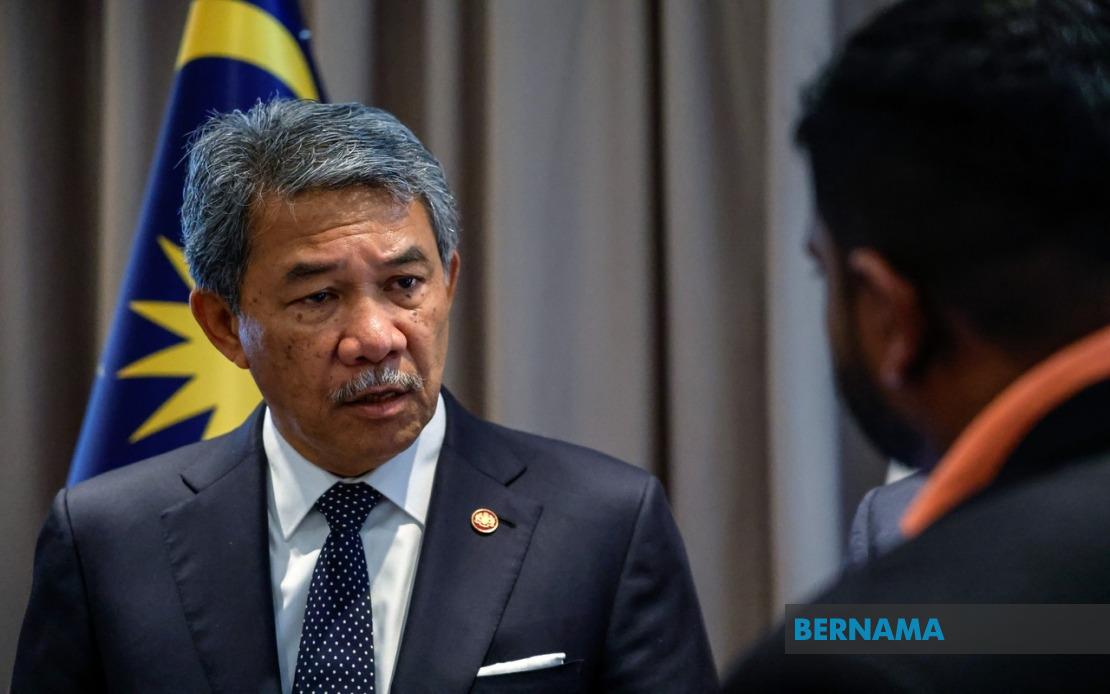
Malaysia and the Philippines have initiated coordinated action to resolve a pressing humanitarian and administrative challenge involving thousands of undocumented migrants detained across four immigration facilities in Sabah. The two nations held substantive discussions on accelerating repatriation procedures during the 9th Malaysia-Philippines Joint Commission Meeting held in Manila on August 18, with Malaysian Foreign Minister Datuk Seri Mohamad Hasan and Philippine Secretary of Foreign Affairs Ma. Theresa P. Lazaro jointly steering negotiations aimed at clearing overcrowded detention centres and reuniting migrants with their home nation.
The scale of the detention problem has become increasingly untenable for Malaysian authorities. More than 5,000 individuals of Philippine nationality currently languish in four separate immigration depots across Sabah, straining facility resources and raising concerns about sustainable management and humanitarian conditions. The Philippine Embassy in Kuala Lumpur has already completed preliminary screening that identified over 1,000 detainees as candidates for immediate repatriation, effectively creating an executable first phase of what both governments acknowledge must be a structured, ongoing operation.
During their discussions, Malaysian officials emphasised the urgency of the situation, stressing that the detention infrastructure simply cannot sustainably house such concentrated populations. Foreign Minister Mohamad articulated Malaysia's expectation that the Philippine government would demonstrate comparable urgency in receiving and processing its citizens, utilising available sea routes and alternative transportation channels to facilitate swift movement. The framing of this appeal reflects broader frustrations within Malaysia's immigration enforcement apparatus regarding burden-sharing in managing irregular migration flows across the region.
Parallel to repatriation logistics, both nations addressed a secondary but significant issue concerning the educational needs of migrant children in Sabah. Malaysia has committed to conducting a comprehensive assessment of whether continued schooling provisions should be extended to undocumented migrant children pending their repatriation. This represents a humanitarian concession, as educating children of irregular migrants creates operational complexity and potential precedent concerns. Critically, both governments have agreed that any educational infrastructure must operate under direct Philippine government administration rather than through private or informal channels, establishing a safeguard against unmonitored institutions that could operate without appropriate oversight or accountability mechanisms.
The detention centre challenge reflects underlying structural pressures within Southeast Asia's migration governance systems. Sabah, as Malaysia's eastern maritime gateway with proximity to the Philippines and Indonesia, has historically absorbed significant irregular migration flows. The concentration of Philippine nationals specifically underscores how labour migration pathways, family networks, and geographical proximity create persistent population movements that detention and repatriation systems struggle to manage efficiently. The identification of 1,000 individuals immediately eligible for return suggests administrative capacity limitations have previously constrained repatriation rates, rather than absence of candidates.
Beyond the bilateral migration discussion, Foreign Minister Mohamad seized the opportunity to address longstanding territorial sensitivities. When questioned about Sabah sovereignty claims recently revived by Philippine Senator Robin Padilla, who had called upon President Ferdinand Marcos Jr to reinvigorate historical Philippine territorial claims, Mohamad firmly restated Malaysia's position grounded in international legal frameworks. He emphasised that the United Nations, through a commission presented by the UN Secretary-General, has formally recognised Sabah as integral Malaysian territory, establishing what he characterised as settled international law requiring acceptance across the Asean community.
The invocation of UN recognition served multiple purposes within the diplomatic context. First, it established factual legal grounding for Malaysia's territorial sovereignty using the highest available international authority. Second, it implicitly urged the Philippines to prioritise constructive bilateral relations over historical grievances that Kuala Lumpur views as incompatible with contemporary international legal norms. The mention of Malaysia preparing a diplomatic note in response to Senator Padilla's statements indicated that while direct JCM discussion of Sabah claims did not occur, Malaysia remains vigilant against any suggestion of territorial revisionism and prepared to respond through formal diplomatic channels when warranted.
The Joint Commission Meeting itself represents the established institutional framework through which Malaysia and the Philippines manage their complex bilateral relationship. As the ninth such gathering, it reflects regularised high-level engagement addressing security, economic, cultural, and humanitarian dimensions of bilateral ties. The inclusion of migration management alongside territorial clarification within a single session demonstrates how contemporary state-to-state relations integrate diverse policy domains requiring coordinated attention from foreign ministries.
For Malaysia, expediting repatriation serves multiple objectives simultaneously. Operationally, it relieves pressure on detention infrastructure and allows immigration resources to be redeployed toward other priorities. Diplomatically, it positions Malaysia as pursuing pragmatic regional solutions to shared migration challenges rather than approaching the issue punitively. For the Philippines, accepting rapid repatriation of citizens represents acknowledgment of the irregular status while potentially creating political complications domestically, as returning migrants may face uncertain employment prospects and social reintegration challenges.
The Malaysian insistence on Philippine government management of any educational facilities reveals sophisticated understanding of how humanitarian provision can create unintended consequences. Unregulated private schools serving migrant populations could evolve into parallel institutional structures operating beyond state oversight, creating liability exposure for either nation. Direct Philippine government administration establishes clear accountability while potentially signalling that education constitutes temporary provision rather than permanent integration, reinforcing the repatriation objective.
The broader context of this agreement reflects Southeast Asian migration patterns that remain among the world's most significant. The Philippines generates continuous outflows toward wealthier regional neighbours, while Sabah's economic development attracts cross-border workers seeking income opportunities unavailable domestically. When these movements occur through irregular channels without proper documentation, they create humanitarian and administrative consequences precisely exemplified by Sabah's detention scenario. Both governments are attempting to manage this through negotiated repatriation rather than indefinite detention, though systemic pressures driving irregular migration remain unaddressed.
Moving forward, the success of this repatriation initiative depends substantially on Philippine government capacity and political willingness to receive returnees expeditiously. The identification of 1,000 immediate candidates provides a testable measure of both nations' commitment. Subsequent batches of remaining detainees, numbering over 4,000 individuals, will require continued screening and processing, suggesting this represents an opening phase rather than comprehensive resolution. The agreement on educational provision for children demonstrates both humanitarian sensitivity and pragmatic recognition that rapid repatriation involves complex family circumstances requiring thoughtful management.
Ultimately, Malaysia and the Philippines have signalled their intention to address a mutual challenge through structured cooperation rather than confrontation. The migration resolution encompasses both immediate operational steps and longer-term humanitarian considerations, while territorial sensitivities remain carefully managed through reference to established international legal frameworks. As Southeast Asia continues grappling with irregular migration and its consequences, this bilateral approach offers a model of constructive engagement, though the true measure of success will emerge only as repatriation proceeds and detention centre populations demonstrably decrease.

