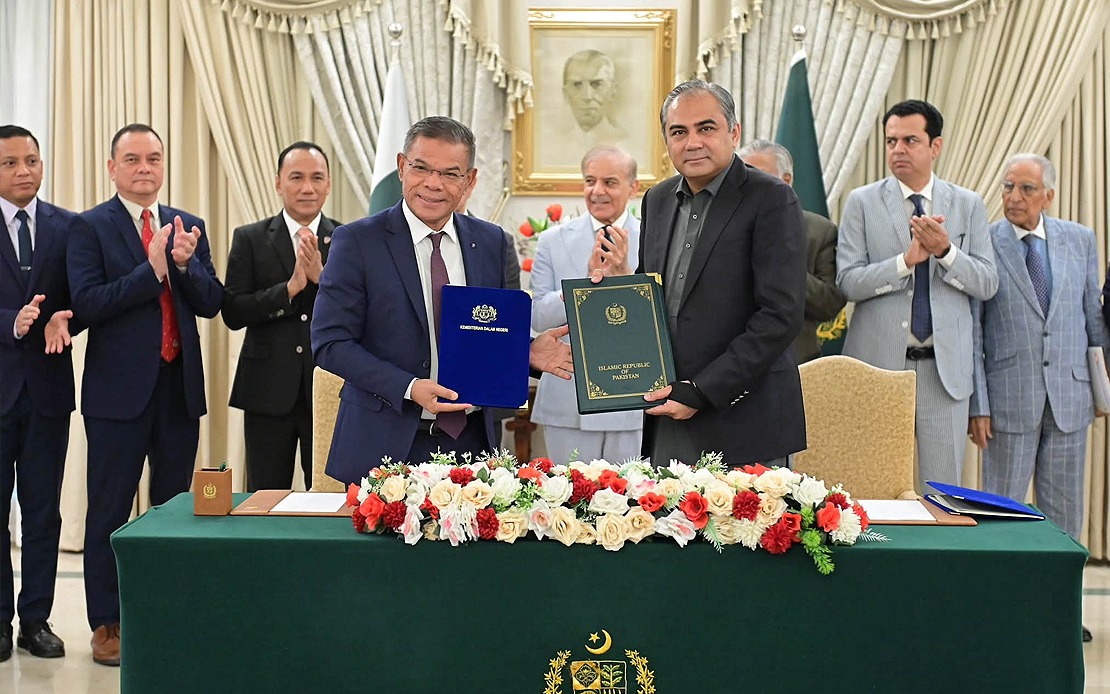
Malaysia and Pakistan have formalised bilateral cooperation on prisoner repatriation by signing the International Transfer of Prisoners (ITOP) Treaty, a significant development in their security and legal framework. The agreement was executed in Islamabad at the Prime Minister's Office, witnessed by Pakistani Prime Minister Muhammad Shehbaz Sharif, with Malaysian Home Minister Datuk Seri Saifuddin Nasution Ismail signing on behalf of Malaysia alongside Pakistan's Interior and Narcotics Control Minister Syed Mohsin Raza Naqvi.
The treaty represents a culmination of intensive diplomatic and legal work spanning multiple government agencies. Five negotiation rounds conducted since September 2025 involved Malaysia's Home Ministry, Foreign Ministry, Attorney General's Chambers, Prisons Department and Royal Malaysia Police. The Malaysian Cabinet formally approved the instrument on May 13, demonstrating the breadth of institutional coordination required to establish such international agreements.
At its core, the ITOP creates a mutual framework allowing Malaysian nationals incarcerated in Pakistan to be transferred to Malaysian facilities to complete their sentences, while symmetrically permitting Pakistani prisoners held in Malaysia to serve the remainder of their terms in their homeland. This reciprocal arrangement reflects modern international criminal justice principles that prioritise both nation-building and humanitarian considerations.
Home Minister Saifuddin Nasution emphasised that the agreement extends beyond mere prisoner logistics. He highlighted how transfer arrangements provide inmates opportunities to undergo rehabilitation programmes in environments culturally and socially aligned with their own societies. This consideration proves particularly significant for Southeast Asian countries like Malaysia, where cultural adaptation profoundly influences rehabilitation success rates and prisoner reintegration outcomes.
The treaty signals deepened Malaysia-Pakistan relations at a time when regional security concerns remain elevated across South and Southeast Asia. Prison transfers typically require robust institutional trust, standardised legal protections and diplomatic goodwill—elements that underscore both nations' commitment to expanding cooperation frameworks beyond traditional security channels.
For Malaysian expatriates facing criminal justice proceedings abroad, such agreements offer tangible reassurance regarding consular protection and eventual repatriation opportunities. Conversely, the treaty demonstrates Malaysia's willingness to participate in international prisoner exchange mechanisms, enhancing the country's standing within global criminal justice communities and facilitating compliance with international humanitarian standards.
The significance extends to regional precedent-setting. As Malaysia strengthens bilateral agreements with diverse nations across Asia and beyond, treaty frameworks like ITOP establish templates for neighbouring ASEAN members seeking comparable arrangements. The agreement potentially influences how Southeast Asian nations approach transnational criminal justice cooperation during an era of heightened people mobility and international crime challenges.
Pakistan's participation reflects broader South Asian engagement with Southeast Asian neighbours on security matters. The treaty acknowledges shared vulnerabilities regarding transnational crimes, terrorism-related offences and organised criminal networks that implicate nationals from both regions. By establishing transparent prisoner transfer mechanisms, both countries reduce incentives for clandestine cross-border criminal activities.
Minister Saifuddin Nasution characterised the treaty as adding a new legal instrument to Malaysia-Pakistan relations, which span decades of diplomatic engagement. This framing acknowledges that prisoner transfers constitute only one dimension of comprehensive bilateral cooperation encompassing defence, commerce, cultural exchange and religious dialogue. The ITOP therefore integrates into a broader architecture of institutionalised relations.
For Malaysian prisoners currently detained in Pakistan, the treaty creates potential pathways toward transfer approval, though individual cases would undergo separate assessment procedures. Similarly, Pakistani nationals serving sentences in Malaysian facilities gain formal recognition of their right to seek repatriation under defined conditions. These provisions align Malaysia with international best practices regarding prisoner rights while maintaining sovereign control over transfer determinations.
The agreement's emphasis on rehabilitation outcomes reflects contemporary penal philosophy prioritising prisoner reformation over purely punitive objectives. Malaysian and Pakistani correctional systems, though distinct institutionally, share interests in reducing recidivism and supporting successful community reintegration. Transfer arrangements amplify these objectives by positioning rehabilitation within culturally appropriate contexts.
Looking forward, the ITOP establishes mechanisms that may expand beyond initial implementation. Both countries may discover opportunities to enhance cooperation on related matters including prisoner welfare oversight, information sharing regarding offender behaviour and coordinated responses to transnational organised crime. Treaty frameworks frequently serve as foundations for deeper institutional linkages.
The signing ceremony's prominence—including Prime Minister Shehbaz's attendance—signals both governments view this agreement as politically significant rather than purely technical. Such high-level recognition reinforces commitment to implementation and demonstrates bilateral relations' strategic importance to both nations' foreign policy objectives.

