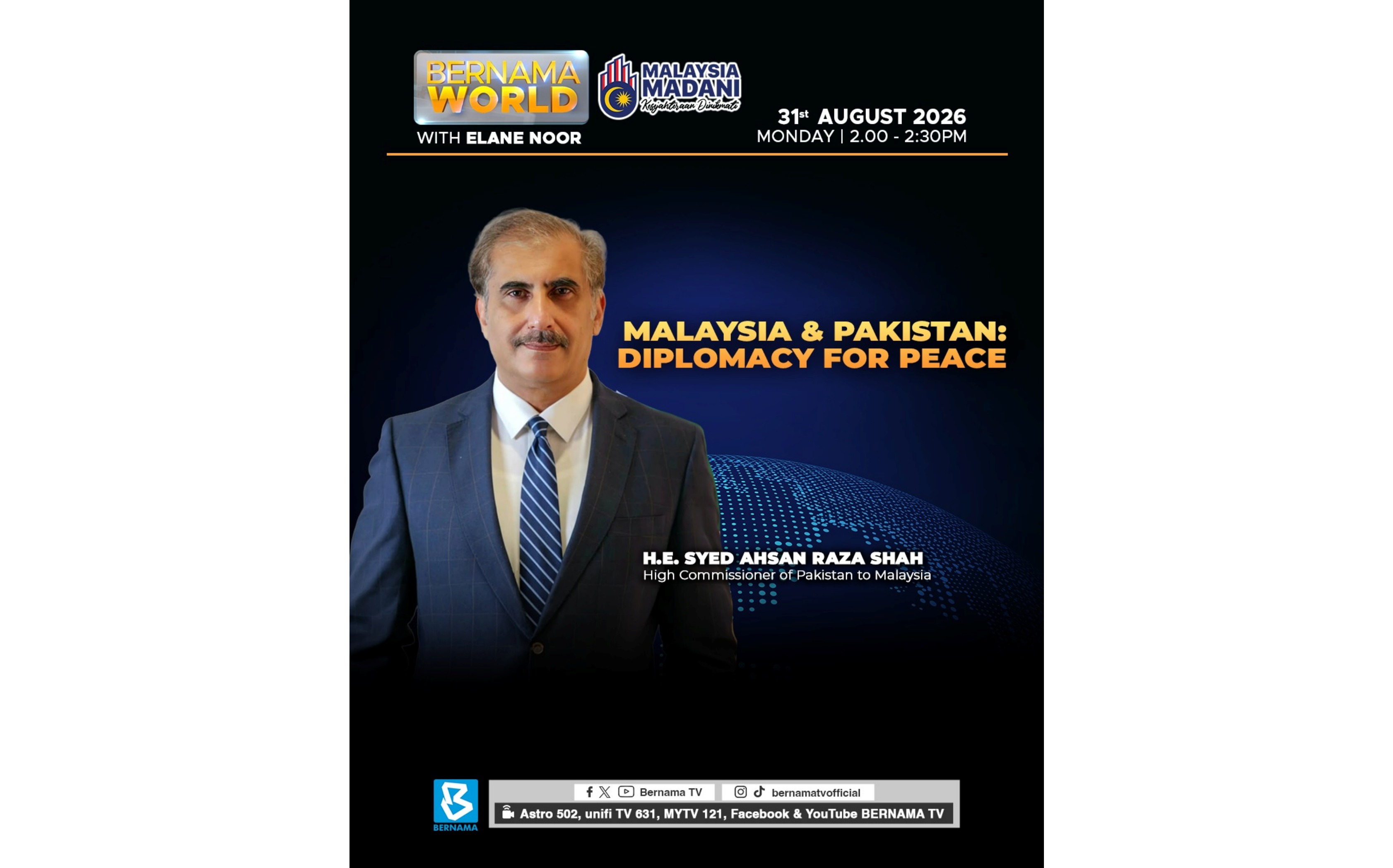
As regional tensions continue to destabilise international relations, Pakistan's High Commissioner to Malaysia Syed Ahsan Raza Shah has made a compelling case for deepened diplomatic collaboration between Kuala Lumpur and Islamabad. Speaking in an interview on Monday, Syed Ahsan characterised cooperation in conflict mediation as a "strategic necessity" for both nations, emphasising that their geographical positions and recent track records in facilitating peace processes place them in unique positions to shape regional stability.
The strategic rationale underpinning this proposal rests on both countries' demonstrated capacity to navigate complex international disputes. Malaysia, under Prime Minister Datuk Seri Anwar Ibrahim's leadership, intervened decisively when tensions between Thailand and Cambodia threatened ASEAN's unity and stability. When the regional grouping's established frameworks appeared inadequate to contain the escalating hostilities, Malaysia facilitated dialogue that culminated in a ceasefire and the subsequent Kuala Lumpur pact. This intervention showcased not merely diplomatic dexterity but also a willingness to invest political capital in preserving regional peace architecture.
Pakistan's mediation credentials, meanwhile, derive from its geographical proximity and historical relationships with key global actors. As Syed Ahsan explained, Pakistan's capacity to facilitate discussions between the United States and Iran stemmed from its unique position as both a neighbour to Tehran and a longstanding strategic partner of Washington. When US-Iran tensions reached an inflection point where neither side appeared willing to communicate directly, Pakistan's involvement proved instrumental in breaking the impasse. The resulting Islamabad accord represents tangible evidence of Islamabad's ability to operate as an honest broker between seemingly irreconcilable positions.
Both cases reveal a pattern worthy of examination by other regional powers. The High Commissioner stressed that contemporary conflict resolution demands flexibility and adaptation, particularly in what Prime Minister Anwar has termed "post-normal times." Traditional diplomatic playbooks prove inadequate when confronting novel configurations of power, competing ideologies, and transnational security challenges. Syed Ahsan contended that Malaysia and Pakistan must systematically exchange their methodologies, documenting what works and what fails, to develop a more robust framework for future interventions.
Central to effective mediation, according to Syed Ahsan's analysis, is the cultivation and maintenance of trust among disputants. Mediators cannot advance negotiations if either party questions their impartiality or suspects hidden agendas. This principle transcends technical diplomatic skill; it requires the mediator to demonstrate consistent honesty, transparency in communication, and genuine commitment to all parties' legitimate interests. Crucially, the mediator must appear both capable and trustworthy, a combination that cannot be manufactured through rhetoric alone but must be built through sustained engagement and demonstrated integrity.
The High Commissioner also outlined several practical principles that should guide mediators navigating intractable disputes. Rather than pursuing comprehensive settlements through marathon negotiations, he advocated for incremental progress achieved through multiple rounds of dialogue. This approach recognises that fundamental conflicts often resist immediate resolution; instead, mediators should identify areas of agreement, build momentum through successive achievements, and gradually expand the zone of consensus. Equally important is resilience in the face of rhetorical provocation and negotiating breakdowns. Mediators must remain steadfast and impartial even when talks stall or participants employ inflammatory language intended to derail proceedings.
Prime Minister Anwar Ibrahim's personal qualities have substantially contributed to Malaysia's recent diplomatic successes, according to Syed Ahsan's assessment. The High Commissioner highlighted Anwar's capacity to establish genuine personal rapport with international leaders across diverse political systems and cultural contexts. This interpersonal dimension of statecraft often receives insufficient attention in academic analyses of diplomacy, yet it fundamentally shapes negotiators' willingness to compromise and their perception of a mediator's bona fides. When leaders trust each other personally, they are more inclined to take risks, make concessions, and invest in reaching mutually acceptable outcomes.
Beyond bilateral cooperation, Syed Ahsan articulated a broader strategic concern motivating this proposal. Conflicts originating in one geographical region inevitably generate consequences elsewhere through multiple transmission mechanisms. Armed conflicts displace populations, creating refugee flows that destabilise neighbouring states. Economic disruption in one region reverberates through global supply chains, affecting distant economies. Security vacuums created by state collapse attract non-state actors whose activities threaten international stability. Fundamentally, modern conflicts transcend geographical boundaries, and Malaysia, as a maritime trading nation deeply integrated into global commerce, faces particular vulnerability to these spillover effects.
This systemic interconnection explains why Malaysia and Pakistan, despite their geographical distance, share compelling interests in regional and global peacemaking. Instability anywhere ultimately threatens prosperity everywhere. The Middle East remains crucial to Malaysian energy security and trade flows. Similarly, Pakistani territory and airspace hold significance for regional logistics networks affecting Southeast Asian commerce. Shared mediation capacity therefore constitutes a form of enlightened self-interest, whereby both nations invest in conflict prevention and resolution not merely as altruistic endeavours but as vital components of their national security and economic strategies.
The High Commissioner's appeal for formalised cooperation between Malaysia and Pakistan suggests recognition that ad hoc mediation efforts, however successful individually, cannot substitute for institutionalised mechanisms. Both countries might benefit from establishing joint working groups to study comparative approaches, train diplomatic personnel in shared best practices, and develop coordinated strategies for jointly offering mediation services in future disputes. Such institutionalisation would transform conflict resolution from occasional interventions into core competencies that both nations actively cultivate and deploy.
Looking forward, the proposal carries implications beyond bilateral Malaysia-Pakistan relations. It implicitly advocates for Southeast Asian and South Asian powers to assume greater responsibility for regional peacekeeping rather than deferring entirely to traditional great powers. This shift reflects broader trends toward multipolarity, whereby emerging middle powers must develop sophisticated diplomatic capacity to navigate complex international environments. Malaysia and Pakistan, as respected voices within ASEAN and the Organisation of Islamic Cooperation respectively, possess legitimacy and credibility that enables them to facilitate dialogues in which Western mediators might face resistance or suspicion.
The strategic necessity framing also reflects sobering realities about contemporary international relations. With great power competition intensifying, traditional conflict resolution mechanisms have become increasingly constrained by geopolitical rivalry. When the United Nations Security Council becomes paralysed by competing interests among permanent members, regional powers must shoulder responsibility for crisis management. Malaysia and Pakistan's willingness to develop enhanced mediation capacity addresses this institutional vacuum. By pooling expertise and coordinating efforts, they could establish themselves as preferred mediators in disputes where conventional international frameworks prove inadequate.

