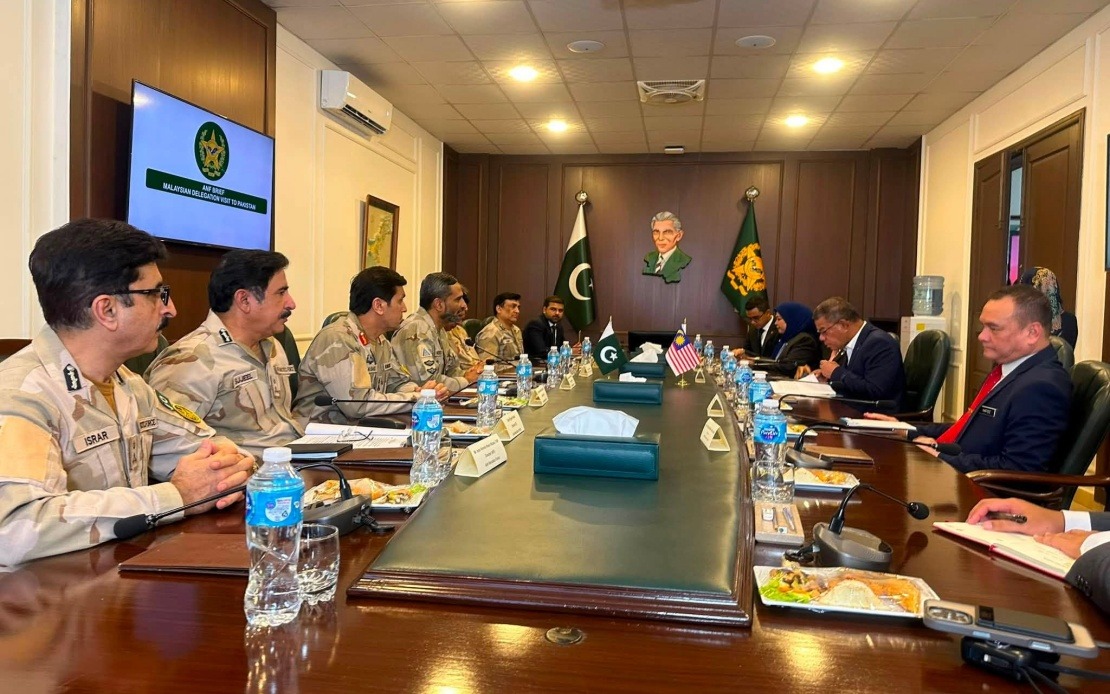
Malaysia and Pakistan are moving to solidify their anti-narcotics partnership through a new Memorandum of Understanding that will provide both countries with a structured mechanism for combating increasingly sophisticated drug smuggling operations. During a recent two-day official visit to Islamabad, Home Minister Datuk Seri Saifuddin Nasution Ismail outlined the proposal while meeting with senior Pakistani officials at the Anti-Narcotics Force headquarters, where he received a detailed briefing from its Director-General Major General Abdul Moeed on the country's current enforcement priorities and operational capacity.
The emerging framework comes at a critical juncture for Southeast Asian security. Drug trafficking has evolved dramatically over the past decade, with criminal syndicates increasingly deploying synthetic drugs such as methamphetamine alongside traditional narcotics, while orchestrating supply chains that span multiple continents and involve transnational organised crime networks operating with sophisticated logistics and money-laundering capabilities. These developments have transformed drug interdiction from a domestic law enforcement challenge into a complex regional and international security concern requiring coordinated responses across borders.
Pakistan's geographic position makes it a vital partner in this struggle. Sitting directly on Afghanistan's border, Pakistan confronts enormous volumes of narcotics flowing westward and southward from poppy-producing regions, while simultaneously serving as a transit point for drugs destined for markets across the Middle East, Europe, and increasingly, Asia. For Malaysia, this partnership is strategically important because trafficking routes that originate in Afghanistan and transit through Pakistan ultimately extend into East Asia and Southeast Asia, creating direct threats to Malaysian communities and requiring upstream intervention in source and transit countries.
Saifuddin Nasution emphasised that unilateral national approaches or even regional frameworks limited to ASEAN member states are insufficient to address the contemporary drug threat. The transnational dimension of modern trafficking networks means that enforcement agencies in individual nations or regional blocs cannot effectively interdict supplies without intelligence partnerships and coordinated operations extending to critical origin and transit countries. This represents a significant shift in Malaysian drug policy thinking, reflecting recognition that security challenges increasingly demand global rather than merely regional or national responses.
The substance of the proposed cooperation reflects this understanding. Beyond formalising agreements on paper, both countries plan to establish mechanisms for active intelligence sharing, coordinated intelligence-led operations that target supply chains before drugs reach Malaysian territory, and structured exchanges of training and expertise among their respective enforcement agencies. This operational focus distinguishes the new arrangement from purely symbolic undertakings, instead emphasising the practical dismantling of trafficking infrastructure through joint investigation teams and real-time information exchange.
The two nations already possess a foundation upon which to build this deepened engagement. Between 2012 and 2018, Malaysian and Pakistani authorities jointly coordinated more than 28 narcotics cases, demonstrating both institutional compatibility and proven capacity for effective collaboration. This established track record reduces implementation risks and suggests that upgrading the relationship through a formal MoU will enhance rather than fundamentally alter existing operational patterns. The challenge now lies in accelerating and expanding these efforts to address the growing sophistication of criminal networks and the rising volumes of synthetic drugs flooding global markets.
During his Islamabad visit, Saifuddin Nasution also met Pakistan's Interior and Narcotics Control Minister Syed Mohsin Raza Naqvi, and the two sides agreed to establish a Joint Working Group specifically tasked with advancing cooperation across security matters, narcotics control, and police training. This institutional structure will provide regular forums for addressing emerging challenges, sharing evolving intelligence assessments, and coordinating operational responses to trafficking threats. The meeting also witnessed the signing of the International Transfer of Prisoners Agreement, facilitating the movement of convicted traffickers between the two nations' prison systems and enabling sentences to be served in prisoners' home countries.
Beyond narcotics, the Home Minister's visit encompassed broader strategic and economic dimensions of the bilateral relationship. Discussions with Pakistan's Deputy Prime Minister and Foreign Minister Mohammad Ishaq Dar covered not only security cooperation but also regional stability, the role of dialogue in conflict resolution, and the need for Islamic nations to present unified approaches to contemporary geopolitical and economic challenges. These conversations reflect Malaysian policymaking that increasingly views security concerns within wider frameworks of diplomatic engagement and shared civilisational interests.
Economic cooperation featured prominently in the agenda, with both sides exploring enhanced trade and investment opportunities alongside discussions on food security. Pakistan's potential as a supplier of rice and meat products holds particular relevance for Malaysia, which imports substantial quantities of agricultural commodities to meet domestic demand. Facilitated market access and expanded trade ties could simultaneously strengthen economic linkages and create additional incentives for deepened security cooperation between the two nations. The talks also encompassed people-to-people engagement, with proposed visa facilitation measures designed to ease travel and cultural exchange.
The Malaysian delegation visited the headquarters of Pakistan's National Database and Registration Authority (NADRA) to examine identity management and civil registration systems. NADRA chairman Lt Gen Muhammad Munir Afsar provided detailed briefings on digital identity solutions, biometric technologies, e-government systems, border management capabilities, and passport data verification procedures. This technical exchange reflects Malaysian interest in adopting advanced identification and registration technologies to enhance both security functions and government service delivery efficiency. The visit signals that cooperation extends beyond traditional narcotics enforcement into complementary domains including cybersecurity, crisis management, and digital transformation.
For Malaysia, the NADRA exposure holds considerable significance given the Home Ministry's broader mandate encompassing national security, immigration, and public safety. Advanced identity management systems strengthen border security, facilitate more effective tracking of cross-border movement patterns, and enable better integration of law enforcement databases with immigration systems. Such technological capabilities prove particularly valuable in combating organised crime networks that exploit weaknesses in identity verification and border control procedures. The visit therefore represents investment in foundational infrastructure supporting long-term security enhancement.
The timing of this deepened Malaysia-Pakistan engagement reflects broader regional dynamics. Rising instability in Afghanistan, ongoing concerns about extremist networks exploiting drug-trafficking routes, and the demonstrable failure of unilateral drug control strategies have prompted governments across South Asia and Southeast Asia to pursue more intensive international cooperation. Malaysia's approach aligns with global trends toward recognising drug trafficking as a transnational security challenge requiring multilayered responses combining law enforcement, intelligence cooperation, border management, and development initiatives targeting drug production regions.
Saifuddin Nasution characterised the initiative as consistent with the MADANI Government's commitment to leveraging technology and digital transformation to enhance public sector effectiveness and security outcomes. This framing positions narcotics cooperation within broader modernisation agendas, suggesting that Malaysia views technological advancement and international partnership as complementary elements of a comprehensive security strategy. For Malaysian citizens and businesses, enhanced drug enforcement cooperation promises reduced trafficking volumes, safer communities, and more stable operating environments for commercial activity.

