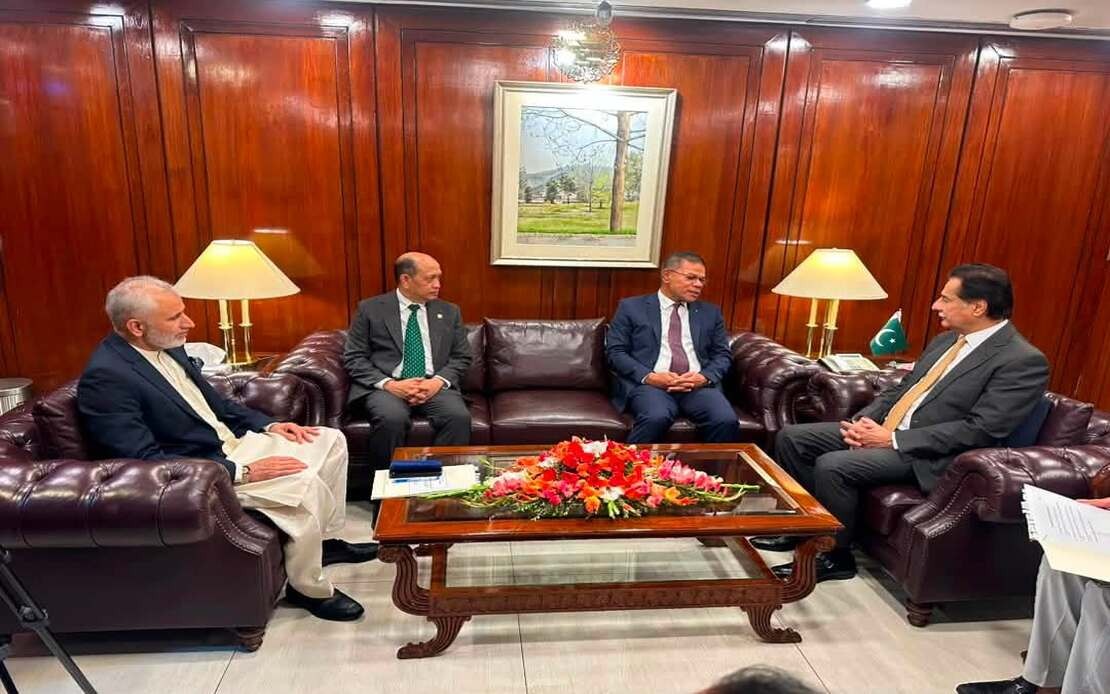
Malaysia and Pakistan have reaffirmed their commitment to resolving geopolitical challenges through dialogue, diplomacy, and peaceful engagement, according to discussions held between Malaysian Home Minister Datuk Seri Saifuddin Nasution Ismail and senior Pakistani parliamentary figures during an official visit to Islamabad. The emphasis on multilateral cooperation and constructive engagement signals both nations' determination to address mounting regional security concerns through institutional channels rather than confrontational approaches.
During the second day of his visit, Saifuddin Nasution held separate meetings with Sardar Ayaz Sadiq, Speaker of Pakistan's National Assembly, and Syed Yousaf Raza Gilan, Chairman of the Senate of Pakistan. These high-level interactions provided a platform for both sides to articulate their shared vision on maintaining peace and stability in South Asia and beyond, reflecting the strategic importance both governments place on sustained bilateral engagement at the leadership level.
The Malaysian minister highlighted his country's experience in leveraging institutional frameworks and regional mechanisms to preserve security and harmony. He specifically referenced ASEAN's role as a vehicle for promoting dialogue and cooperative solutions to transnational challenges. This reference carries particular weight, as Malaysia's experience navigating complex regional dynamics through consensus-building and non-confrontational diplomacy offers practical lessons applicable to South Asian contexts, where competing interests and historical tensions frequently escalate into policy deadlocks.
Central to the discussions was an examination of the Malaysia-Pakistan bilateral relationship itself. Both parties recognised the deep historical, cultural, and religious foundations underpinning their ties, which extend far beyond formal diplomatic channels. The bond between ordinary citizens of both nations—rooted in shared Islamic heritage and common development trajectories—provides resilient social capital that anchors government-to-government relations even during periods of regional instability or competing strategic interests.
A significant focus of the talks was the potential for strengthening parliamentary institutions as drivers of bilateral cooperation. Parliamentary diplomacy represents a distinct avenue for relationship-building, allowing legislators and assembly members from both countries to engage in substantive exchanges on policy matters, legislative priorities, and shared challenges. By institutionalising these connections, Malaysia and Pakistan aim to create durable mechanisms for dialogue that transcend individual administrations or short-term political fluctuations. Such parliamentary-level engagement can generate broader buy-in for cooperative initiatives and help build constituencies within both legislatures committed to maintaining friendly relations.
Saifuddin Nasution's visit to the Parliament Museum of Pakistan provided him with historical perspective on the evolution of parliamentary democracy in the country. Understanding Pakistan's constitutional journey—marked by periods of democratic governance, military intervention, and institutional reform—offers context for appreciating the fragility and value of democratic institutions in South Asia. For Malaysia, which has its own experience navigating democratic transitions and institutional challenges, this perspective underscores the importance of strengthening parliamentary systems as stabilising forces in the region.
The timing of these discussions reflects broader regional dynamics in South and Southeast Asia. Both nations operate within security environments characterised by great power competition, transnational terrorism, maritime disputes, and religious extremism. By articulating a shared commitment to dialogue-based solutions, Malaysia and Pakistan are positioning themselves as advocates for multilateralism and peaceful conflict resolution at a moment when unilateralist approaches and military posturing increasingly dominate international relations. This stance carries implications for ASEAN's strategic positioning and for how Southeast Asian nations navigate their relationships with South Asian counterparts.
For Malaysia specifically, deepening ties with Pakistan serves multiple objectives: it reinforces Malaysia's standing as a moderate Islamic-majority nation committed to interfaith harmony and regional stability; it strengthens ties with a significant Muslim-majority country in South Asia; and it potentially enhances Malaysia's ability to mediate or contribute to conflict resolution efforts should such opportunities arise. Pakistan, in turn, benefits from engaging with a successful Southeast Asian democracy that has managed religious diversity, maintained stable governance, and achieved relative prosperity—offering potential models for policy adaptation.
The emphasis on trust and mutual respect in bilateral relations reflects an understanding that sustainable partnerships require regular communication and demonstrated commitment to each other's legitimate interests and security concerns. Regular high-level visits, institutional exchanges, and dialogue mechanisms help prevent misunderstandings and build confidence. For two nations with significant maritime interests and growing economic interdependencies, maintaining robust communication channels is essential for managing potential friction points and capitalising on opportunities for cooperation in trade, defence, counterterrorism, and development.
Looking forward, the strengthening of Malaysia-Pakistan relations through parliamentary and institutional channels carries broader significance for South and Southeast Asian regional architecture. As both nations continue to grapple with complex security challenges and navigate great power competition, their commitment to dialogue and peaceful resolution of disputes provides a counterweight to more aggressive regional posturing. This orientation also aligns with ASEAN principles of non-interference, peaceful settlement of disputes, and respect for sovereignty, creating potential synergies in how both regions approach common challenges such as maritime security, counterterrorism, and climate resilience.

