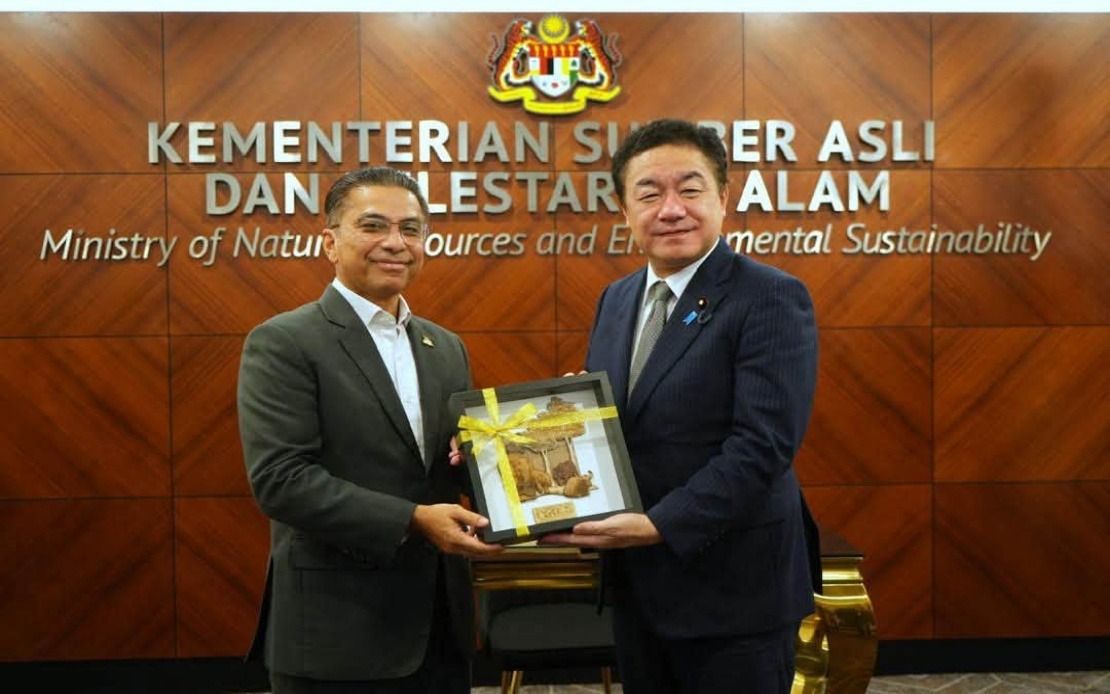
High-level talks between Malaysian and Japanese officials this week have reaffirmed the two countries' commitment to expanding cooperation across raw materials, clean energy technology, and climate mitigation efforts. The encounter at Putrajaya saw Japan's Parliamentary Vice-Minister of Economy, Trade and Industry Komori Takuo engage with Malaysia's Deputy Natural Resources and Environmental Sustainability Minister Syed Ibrahim Syed Noh, underscoring the importance both governments place on their strategic partnership as regional powers navigate complex global supply chain challenges and environmental transitions.
The meeting builds directly on momentum established during a bilateral summit in June, when leaders set the direction for deepening collaboration under the Malaysia-Japan Comprehensive Strategic Partnership framework. By convening at the ministerial level to review implementation progress, both sides demonstrate that cooperation extends beyond ceremonial agreements into actionable policy coordination. For Malaysia, such engagement reflects its positioning as a critical player in global supply chains for materials essential to modern technology and renewable energy infrastructure.
Rare earth elements have assumed heightened geopolitical significance as nations compete for secure access to materials fundamental to electronics manufacturing, renewable energy systems, and defence applications. Malaysia's decision to maintain a moratorium on exporting unprocessed REE—a policy position reaffirmed during this exchange—represents a deliberate strategy to capture greater economic value domestically. By insisting that processing and refining occur within Malaysian borders, the government aims to develop skilled workforces, establish industrial expertise, and create downstream industries rather than serving merely as a raw material supplier. Japan's sustained technical cooperation through the Japan International Cooperation Agency and the Japan Organisation for Metals and Energy Security becomes strategically important in enabling Malaysia to achieve this objective, providing expertise that transforms resource extraction into genuine industrial development.
The bilateral relationship extends meaningfully into climate finance and carbon markets, reflecting shifting global investment patterns. Both nations have moved toward finalising a Memorandum of Cooperation governing their participation in the Joint Crediting Mechanism, a framework established under Article 6.2 of the Paris Agreement. This mechanism permits countries to cooperate on emissions reduction projects and trade the resulting carbon credits, creating financial incentives for climate-friendly investments. For Malaysia, accessing Japanese capital and green technology expertise through this mechanism supports its Nationally Determined Contribution—the country's pledge to reduce greenhouse gas intensity and transition energy systems away from fossil fuels.
The convergence of materials security and climate action in these discussions reflects emerging international consensus that sustainable development and economic competitiveness increasingly overlap. Japan's advanced expertise in green technologies—from hydrogen production to renewable energy systems—complements Malaysia's abundant natural resources and strategic geographic position in Southeast Asia. Malaysian policymakers recognize that attracting Japanese investment in processing facilities and technology transfer strengthens the domestic industrial base while advancing climate objectives. Rather than competing, these priorities reinforce one another when structured through long-term partnerships.
Malaysia's emphasis on combining Japanese technological capacity with domestic resource potential signals pragmatic thinking about regional development. The country possesses significant rare earth deposits and renewable energy resources, yet realizing their full potential requires technical knowledge, capital investment, and market access that bilateral partnerships facilitate. Japanese companies, conversely, face resource constraints and seek reliable suppliers; cooperation with Malaysia provides security of supply for materials critical to their manufacturing sectors. This mutual dependency creates durable partnerships less vulnerable to sudden policy shifts or geopolitical realignment.
The carbon market cooperation carries particular importance for Malaysia's energy transition ambitions. Clean energy investments require massive capital deployment, and carbon credit mechanisms help finance projects that might otherwise appear economically marginal. Joint projects under the mechanism could span renewable energy installations, forest conservation initiatives, industrial efficiency improvements, and other emissions-reduction activities. Revenue from carbon credits provides ongoing returns that justify upfront infrastructure investments, accelerating the pace at which Malaysia can move away from coal-dependent power generation.
Beyond the bilateral dimension, these discussions hint at broader Southeast Asian positioning in global economic competition. As supply chains realign and countries reassess dependencies—particularly following pandemic disruptions and geopolitical tensions—middle powers like Malaysia attract renewed attention from developed economies seeking reliable partners. Japan's engagement reflects strategic interest in stabilizing relationships across Southeast Asia, diversifying its supply chains, and establishing green growth partnerships that align with its own climate commitments and technological strengths. For Malaysia, hosting such cooperation demonstrates the country's continued relevance in regional and global affairs despite frequent domestic political transitions.
The involvement of multiple Malaysian agencies—including the Foreign Ministry alongside natural resource authorities—indicates integrated approach to these partnerships. Climate action, materials security, and foreign relations no longer operate as separate domains but as interconnected policy challenges requiring coordinated responses. Japanese Ambassador Shikata Noriyuki's participation alongside METI officials similarly reflects Tokyo's whole-of-government approach to strategic partnerships. This institutional alignment increases the likelihood that stated commitments translate into implemented projects rather than remaining aspirational declarations.
Moving forward, the ministerial meeting's emphasis on finalising the Joint Crediting Mechanism agreement by year-end suggests concrete timelines for implementation. Such precision matters because it imposes accountability—success or failure becomes measurable. For Malaysian stakeholders in manufacturing, energy, and environmental sectors, clear pathways to Japanese technology transfer and carbon market participation create tangible opportunities. Investors can make decisions based on confirmed frameworks rather than speculative possibilities, accelerating project development cycles.
The broader context suggests that Malaysia's strategic positioning as a resource-rich nation with development ambitions aligns naturally with Japan's interests in securing supplies and expanding clean technology partnerships. Neither country faces inherent conflicts over these objectives; instead, they represent complementary needs. As Malaysia pursues higher-value processing of rare earth materials and Japan seeks reliable suppliers integrated into trusted partnerships, cooperative frameworks serve both interests. This alignment, combined with shared commitment to Paris Agreement targets, provides foundation for deepening collaboration across multiple sectors and timescales.

