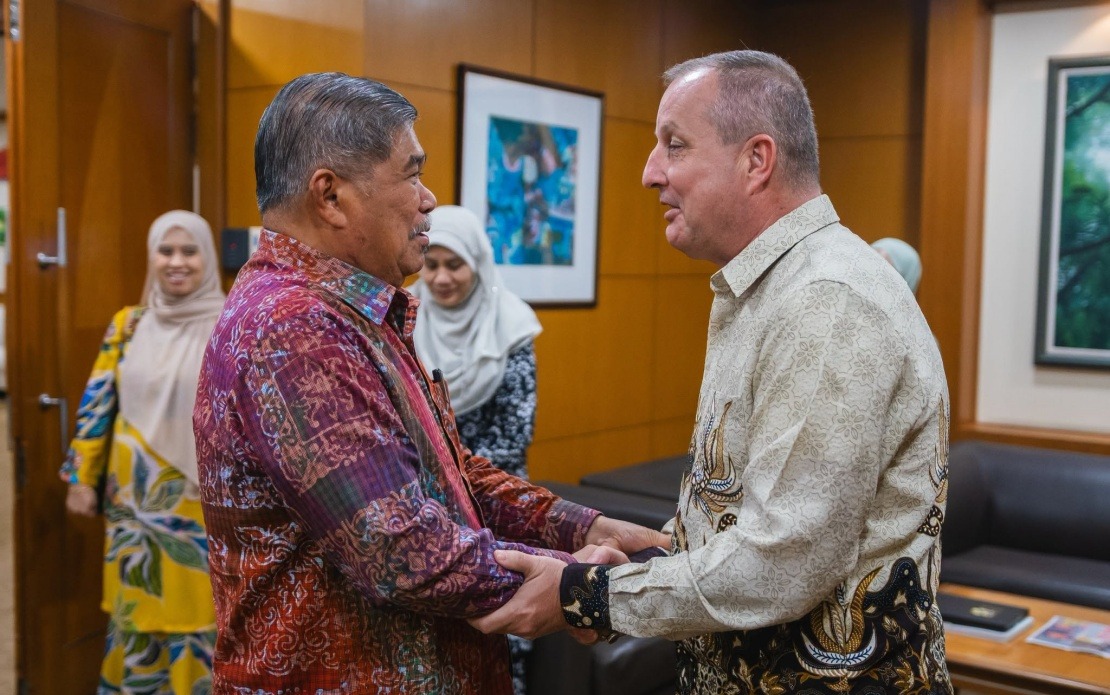
Malaysia and Hungary are moving to cement their agricultural partnership through a multifaceted approach that encompasses research collaboration, technology transfer, and expanded commercial ties in the agri-food sector. The two countries are signalling their commitment to shared prosperity in farming and food production at a time when regional food security concerns are mounting across Southeast Asia. Agriculture and Food Security Minister Datuk Seri Mohamad Sabu outlined these developments following a meeting with Hungarian Ambassador to Malaysia Dr. Sándor Sipos, underscoring the depth of engagement between Kuala Lumpur and Budapest in this critical economic domain.
The partnership is taking concrete shape through Hungary's confirmed participation in the Malaysian Agriculture, Horticulture and Agrotourism Exhibition (MAHA) 2026, a flagship event that attracts agri-business stakeholders from across the region. This decision signals Budapest's intent to establish a foothold in Malaysia's dynamic agricultural marketplace and to engage directly with local farmers, entrepreneurs, and policymakers. For Malaysia, the presence of Hungarian agricultural representatives provides an opportunity to explore technology and practices from one of Europe's most productive farming regions, thereby enriching the domestic agri-sector with international expertise and innovation.
At the institutional level, the two countries have initiated their first Malaysia-Hungary Joint Working Group (JWG) meeting, creating a formal mechanism for sustained dialogue and coordination on agricultural matters. This infrastructure is essential for translating political goodwill into tangible outcomes, as it provides a structured forum where both governments can identify shared priorities, resolve technical obstacles, and chart long-term collaboration strategies. Such frameworks typically prove invaluable in ensuring continuity across political transitions and in building institutional memory that transcends individual personalities or ministerial tenures.
Central to the partnership is burgeoning research collaboration between the Malaysian Agricultural Research and Development Institute (MARDI) and the Hungarian University of Agriculture and Life Sciences (MATE). These two premier research institutions are pooling expertise in genetics, selective breeding techniques, and the development of premium livestock products. The Erasmus+ Researcher exchange programme facilitates reciprocal visits and knowledge transfer, enabling scientists and technical specialists from both nations to work alongside their counterparts and absorb best practices firsthand. For Malaysia, this is particularly significant given the nation's ambitions to modernise its livestock sector and develop value-added agricultural products capable of commanding premium prices in regional and global markets.
The emphasis on genetics and breeding technology reflects a sophisticated approach to agricultural development. Rather than pursuing incremental improvements to existing farming methods, both countries recognise that genetic advancement offers pathways to higher productivity, disease resistance, and product quality. Malaysia's tropical climate and diverse agro-ecological zones present unique opportunities for developing crop varieties and livestock breeds tailored to Southeast Asian conditions, while Hungarian expertise in temperate-zone agriculture and advanced breeding protocols provides complementary knowledge that can be adapted and contextualised for Malaysian conditions.
The livestock dimension of this partnership holds particular significance for Malaysia's food security agenda. High-quality animal protein remains a cornerstone of national nutrition and household food security, and improvements in breeding technology, disease management, and feed efficiency can substantially enhance production while reducing environmental footprint per unit of output. Hungary's advanced practices in dairy farming, poultry production, and animal health management offer benchmarks and technologies that Malaysian producers can adopt and adapt, potentially raising productivity across the sector and reducing import dependence on certain animal products.
Trade and investment expansion forms the commercial backbone of this partnership. By facilitating flows of agri-food products, agricultural inputs, technology, and technical services between the two countries, both Malaysia and Hungary stand to benefit from comparative advantages and specialisation. Hungarian agricultural machinery, seeds, breeding stock, and processing technology may find markets in Malaysia and other Southeast Asian nations, while Malaysian tropical produce, processed agri-products, and complementary technologies can access European markets through Hungarian networks and distribution channels. This two-way flow of goods and services strengthens the commercial interdependence that underpins stable long-term political and economic relationships.
For Malaysian farmers, breeders, and agri-food entrepreneurs, this partnership opens avenues for skills development and market access. Through knowledge-sharing initiatives, exchange programmes, and joint research projects, Malaysian stakeholders can acquire techniques and insights from their Hungarian counterparts, thereby enhancing competitive positioning in domestic and regional markets. Similarly, Hungarian agri-businesses gain exposure to the dynamic Southeast Asian market and to potential investment or partnership opportunities in one of Asia's key emerging economies.
The partnership also addresses broader regional food security imperatives. Southeast Asia faces mounting pressure from population growth, climate variability, and competing demands on land and water resources. By pooling resources and expertise, Malaysia and Hungary can contribute to developing resilient, productive food systems less vulnerable to supply disruptions. Technologies developed through bilateral research collaboration may have applications beyond Malaysia and Hungary, potentially benefiting the wider ASEAN region and contributing to regional food self-sufficiency.
Minister Mohamad emphasised that the relationship will continue strengthening to support Malaysia's national agri-food development strategy. This reflects recognition that agricultural advancement is not a one-off achievement but an ongoing process requiring sustained investment, continuous learning, and adaptive management. By institutionalising cooperation with established partners like Hungary, Malaysia positions itself to maintain momentum in sectoral transformation and to access cutting-edge knowledge and technology as they emerge.
The timing of this partnership is strategically sound. As global agricultural markets face disruption from climate change, geopolitical tensions, and shifting trade patterns, bilateral and regional cooperation in food production becomes increasingly valuable. Malaysia's position as a major agricultural producer and exporter, combined with Hungary's advanced farming technologies and research capabilities, creates natural complementarities. This partnership exemplifies how cross-regional cooperation can address shared challenges while creating mutual economic benefit, serving as a model for deepened engagement between Asian and European agri-sectors in an interconnected global food system.

