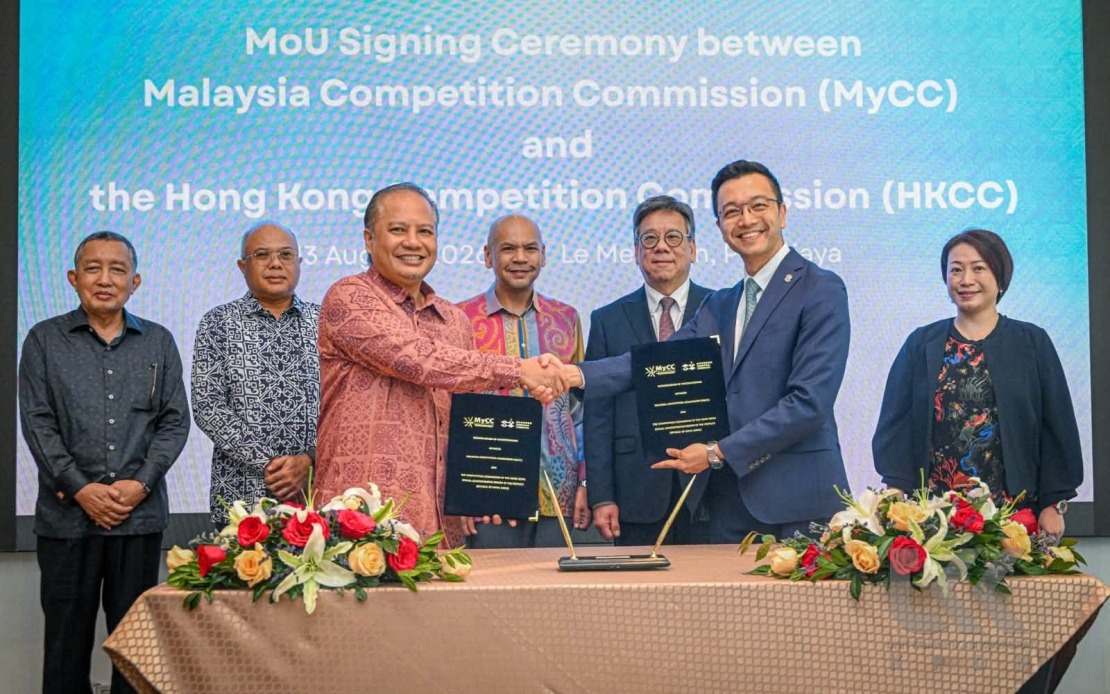
The Malaysia Competition Commission (MyCC) and Hong Kong Competition Commission (HKCC) have formalised a fresh partnership aimed at coordinating their efforts in policing anticompetitive behaviour and safeguarding fair market practices across both jurisdictions. The signing of the Memorandum of Understanding represents a strategic move to address the growing complexity of commercial activities that routinely span multiple borders in the modern Asian economy. Datuk Armizan Mohd Ali, the Minister overseeing the Domestic Trade and Cost of Living portfolio, highlighted the significance of this arrangement as part of a broader global engagement strategy.
This latest accord constitutes MyCC's fourth formal alliance with an international counterpart, following comparable agreements previously secured with the Türkiye Competition Authority, Korea Fair Trade Commission and the Philippine Competition Commission. The pattern of these relationships underscores Malaysia's determination to position itself as a credible participant in the international competition policy framework. By establishing institutional linkages with regulators in diverse geographic and economic contexts, MyCC expands its institutional capacity and deepens its practical understanding of enforcement methodologies applicable across different market structures and regulatory environments.
Minister Armizan framed the agreement within a conceptual context emphasising the interconnected nature of contemporary commerce. He underscored that in today's environment, competition matters frequently transcend national boundaries, engaging enterprises and organisations that operate simultaneously across multiple territories. This reality demands that regulatory authorities move beyond isolated domestic interventions and instead coordinate their investigative and enforcement strategies. The minister characterised such international cooperation as indispensable for navigating the enforcement challenges that emerge when market distortions involve actors positioned in different jurisdictions.
The cooperative framework encompasses systematic information sharing regarding significant developments in competition legislation and regulatory policy. Both authorities have committed to exchanging insights about legislative modifications and emerging trends in their respective markets. This knowledge transfer enables each regulator to understand the institutional and legal context within which the other operates, facilitating more nuanced cross-border investigations and reducing duplicative efforts. When authorities understand each other's legal frameworks and procedural requirements, they can coordinate enforcement actions more efficiently and identify patterns of anticompetitive conduct that might otherwise escape notice.
Beyond information exchange, the agreement provides for substantial capacity-building initiatives. Training programmes, workshops, and research collaborations will enable personnel from both commissions to develop specialised expertise in areas of mutual concern. Officer secondments represent a particularly valuable dimension of this arrangement, allowing staff from MyCC to embed themselves within HKCC operations and vice versa. These rotational assignments create opportunities for direct knowledge transfer and build personal relationships among enforcement professionals, which often prove crucial when complex cross-border investigations demand real-time coordination and mutual trust.
The partnership specifically targets cross-border competition challenges that neither authority could effectively address in isolation. When businesses operating in Malaysia simultaneously engage in conduct affecting Hong Kong markets, or vice versa, coordinated investigation and enforcement becomes essential. The MoU establishes channels through which both authorities can work bilaterally on matters affecting both jurisdictions, and also positions them to collaborate with other international counterparts when investigations involve additional territories. This multi-layered approach reflects the reality that modern anticompetitive schemes often implicate numerous countries simultaneously.
For Malaysian consumers and enterprises, this deepened relationship with Hong Kong carries practical implications. Stronger enforcement capabilities against cartels, abuse of dominance, and anticompetitive mergers should translate into more robust protection against unfair business practices that inflate costs or restrict market access. Malaysian exporters and service providers operating in Hong Kong gain reassurance that their legitimate competitive activities will not be subjected to inconsistent or contradictory enforcement actions. Conversely, Hong Kong businesses entering the Malaysian market can expect regulatory treatment informed by internationally recognised competition principles.
The broader strategic dimension reflects Malaysia's positioning within the regional economic architecture. Hong Kong remains a significant financial and trading hub, and regulatory alignment with its competition authorities strengthens Malaysia's credibility with other major Asian economies. As ASEAN continues deepening economic integration and attracting multinational investment, having well-coordinated competition enforcement regimes becomes increasingly important for maintaining investor confidence and market integrity. Minister Armizan's statement that KPDN will continue strengthening relationships with regional and international authorities signals Malaysia's commitment to this collaborative approach as a cornerstone of its economic governance strategy.
The stated objectives extend beyond enforcement to encompass institutional development. By engaging in structured cooperation with established competition authorities, MyCC gains access to best practices, technical expertise, and institutional innovations that might take years to develop independently. This knowledge absorption strengthens the institution's capacity to navigate evolving challenges, from digital platform regulation to supply chain oversight. The emphasis on keeping Malaysia's competition ecosystem dynamic and competitive reflects recognition that regulatory effectiveness ultimately serves consumer welfare and economic efficiency.
Looking forward, this MoU exemplifies how smaller jurisdictions can amplify their enforcement impact through strategic partnerships. Rather than viewing competition regulation as a zero-sum competitive activity between jurisdictions, contemporary approaches emphasise complementarity and coordination. Malaysia's approach of building a network of bilateral and multilateral relationships creates a web of cooperation that deters anticompetitive conduct across multiple markets simultaneously. For businesses operating regionally, such coordination means that circumventing competition rules by shifting operations between jurisdictions becomes increasingly difficult.
The agreement also reflects evolving international norms around competition policy transparency and institutional independence. By formalising cooperation with Hong Kong, MyCC signals to the broader international community that competition enforcement in Malaysia operates according to established professional standards and international best practices. This institutional credibility enhances Malaysia's reputation among trading partners and investors, supporting the country's broader economic objectives. As competition policy becomes increasingly central to how countries manage their economic relationships, being recognised as a competent and fair enforcer carries strategic weight.

