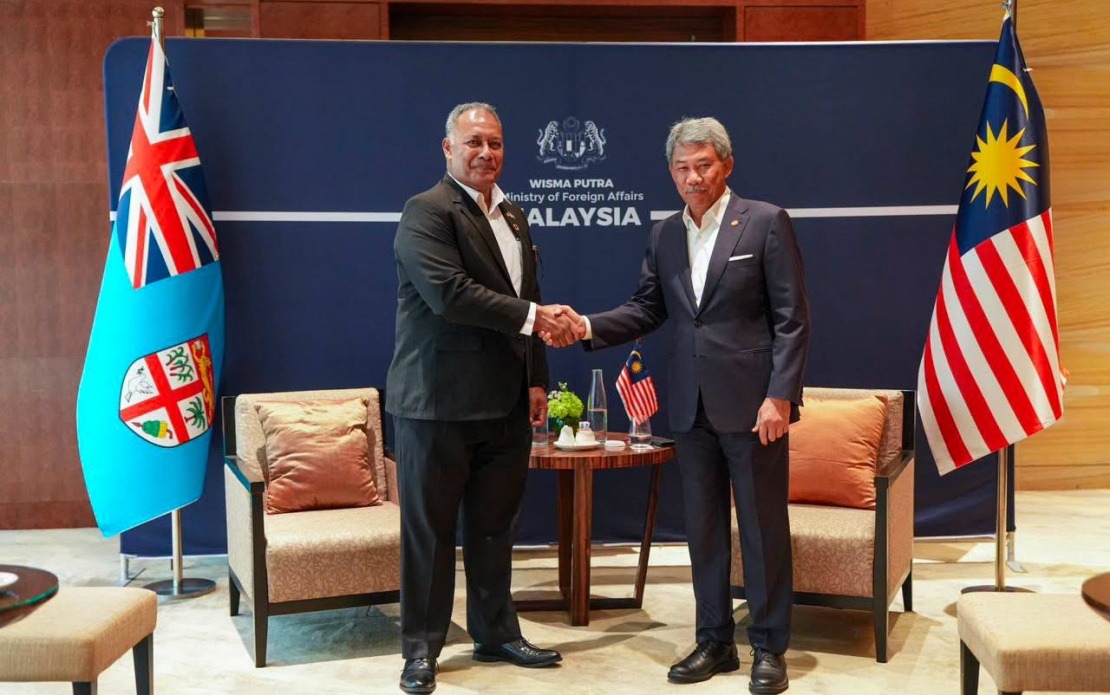
Malaysia and Fiji are charting a more ambitious course for their bilateral relationship, with Foreign Minister Datuk Seri Mohamad Hasan and Fijian Foreign and External Trade Minister Sakiasi Raisevu Ditoka committing to broader cooperation spanning multiple sectors during the latter's working visit to Kuala Lumpur this week. The two ministers held substantive discussions on Tuesday focusing on economic partnership, infrastructure development, and people-to-people exchanges that underscore both nations' desire to move beyond traditional diplomatic formalities.
The scope of cooperation identified by the Malaysian foreign affairs establishment encompasses critical areas reflective of regional development priorities. Trade and investment feature prominently in the framework, alongside initiatives in human capital development that speak to shared challenges in workforce competitiveness. Forestry cooperation indicates potential environmental stewardship collaboration, while renewable energy discussions align with global decarbonisation trends affecting island nations particularly vulnerable to climate shifts. Cultural exchanges round out the agenda, recognising that sustainable relationships require understanding beyond boardrooms.
Fiji's decision to reopen its High Commission in Kuala Lumpur on Monday, with Ditoka presiding over the ceremony, carries symbolic weight that should not be underestimated. The physical presence of diplomatic infrastructure signals Suva's commitment to deepening engagement with Southeast Asia's largest economy and its positioning within the Association of Southeast Asian Nations framework. For Malaysia, hosting a revitalised Fijian diplomatic mission represents an opportunity to strengthen connections with the Pacific island region more broadly, transcending bilateral ties to encompass broader geopolitical positioning in the Indo-Pacific.
Trade data reveals an imbalanced but substantial commercial relationship. Bilateral trade reached RM880.01 million (US$206.2 million) in 2025, with Malaysian exports dominating at RM867.92 million (US$203.41 million) compared to Fijian imports of merely RM12.09 million (US$2.80 million). This asymmetry presents both challenge and opportunity: while the figures demonstrate Malaysia's stronger economic capacity, they also suggest untapped potential for reciprocal trade expansion and value-added imports from Fiji that could address the current imbalance and deepen interdependence.
The ministerial discussions extended beyond bilateral matters to encompass regional and global concerns, indicating that Malaysia views its relationship with Fiji as part of a coherent strategy toward Pacific engagement. In an era when major powers compete for influence across the Indo-Pacific, Malaysia's deliberate strengthening of ties with island nations reflects sophisticated regional diplomacy. Southeast Asia's economic powerhouse recognises that lasting influence derives from genuine partnerships built on mutual benefit rather than extractive arrangements.
Ditoka's four-day visit, spanning August 9 to 12, demonstrates the structured approach both governments are taking toward institutional relationship-building. Such working visits, combining ceremonial elements with substantive policy discussions, serve multiple purposes: they provide platforms for candid exchanges on implementation of agreed frameworks, allow ministers to assess progress on previous commitments, and create space for identifying emerging opportunities neither party had previously contemplated.
For Malaysian stakeholders, the renewable energy cooperation dimension deserves particular attention. As Malaysia pursues its own clean energy transition amid regional decarbonisation pressures, partnering with Pacific island nations experiencing acute climate impacts could yield mutual benefits. Fiji's expertise in renewable technologies suited to island environments complements Malaysia's manufacturing capabilities and technological sophistication, potentially creating joint ventures or knowledge-transfer arrangements beneficial to both economies while contributing to regional climate resilience.
The forestry cooperation framework similarly warrants examination within Malaysia's broader sustainability commitments. While Malaysia balances economic development with environmental responsibility, exchange programmes and technical partnerships with Fiji could enhance forest management practices and strengthen Malaysia's credentials on environmental governance—increasingly important for international market access and investor confidence among environmentally conscious capital sources.
Human capital development initiatives represent perhaps the most enduring dimension of this partnership. Malaysian institutions from universities to vocational training centres possess significant capacity that could accommodate Fijian scholars and trainees, while creating networks that persist across decades. Alumni of Malaysian educational institutions frequently become influential figures in their home countries, amplifying Malaysia's soft power and creating constituencies favourably disposed toward expanded bilateral engagement.
The timing of this diplomatic offensive toward Fiji also reflects broader strategic recalibration. As regional powers jockey for influence in the Indo-Pacific, mid-sized economies like Malaysia gain advantage by cultivating diverse partnerships. Fiji's position as a significant voice within Pacific island forums and its role in regional organisations makes it a valuable partner for any nation seeking to exercise meaningful influence beyond traditional Southeast Asian boundaries. Malaysia's engagement demonstrates that ASEAN's reach and relevance extend naturally toward the Pacific.
Looking forward, success of this renewed partnership depends on translating ministerial commitment into concrete institutional mechanisms and sustained resource allocation. Trade promotion bodies must actively facilitate business-to-business connections, educational institutions must market programmes to Fijian students, and corporate entities must genuinely pursue investment opportunities rather than treating them as afterthoughts. The reopening of Fiji's diplomatic mission provides infrastructure; now both governments must ensure it becomes a vibrant hub for substantive engagement rather than a ceremonial outpost.
For Malaysia's regional positioning, this initiative signals confidence in a broader Indo-Pacific strategy that moves beyond traditional Southeast Asian preoccupations. It demonstrates that ASEAN nations need not cede Pacific engagement to dialogue partners, instead building their own networks of influence and cooperation. As geopolitical competition intensifies across Asia's maritime domain, Malaysia's deliberate cultivation of Pacific relationships through genuine partnership rather than zero-sum competition could yield dividends extending well beyond immediate commercial returns, ultimately enhancing its voice in regional forums and its ability to shape outcomes aligned with Malaysian interests.

