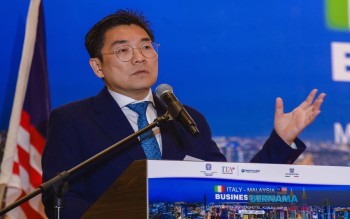
Malaysia and the European Union are pressing ahead with their free trade negotiations, having already settled five substantive chapters of the Malaysia-European Union Free Trade Agreement (MEUFTA) and setting an ambitious target of 2027 for final completion. The progress marks a significant step in deepening economic ties between the Southeast Asian nation and the world's largest single market, opening doors to expanded commerce in advanced manufacturing, renewable energy, and digital services.
The fourth round of talks, conducted in Kuala Lumpur from June 8 to 12, concluded three additional chapters covering Customs and Trade Facilitation, Trade Remedies, and Good Regulatory Practices, according to Investment, Trade and Industry Deputy Minister Sim Tze Tzin. Earlier negotiating rounds had already settled the transparency chapter during the second session and the small and medium enterprises chapter in the third. Negotiations will resume on September 21–25 in Brussels, Belgium, keeping the deal on track for its intended conclusion date.
The proposed agreement represents far more than a routine trade accord for Malaysia. Sim characterised it as a potential "game-changer" that would position Malaysia at the centre of the EU's economic sphere while unlocking investment and growth in cutting-edge sectors including high-technology services, renewable energy infrastructure, and digital commerce. For Malaysian companies, the pact promises expanded market access to nearly 450 million EU consumers, while also strengthening supply chains and industrial cooperation that could reshape the nation's manufacturing landscape.
The momentum behind these negotiations reflects broader strategic alignment. The initiative gained traction following Prime Minister Datuk Seri Anwar Ibrahim's official visit to Italy in July last year, where Italian Prime Minister Giorgia Meloni extended an invitation to formalise trade engagement. That diplomatic opening coincided with the Malaysia-Italy Business Mission held in Kuala Lumpur this month, underscoring how bilateral relations between Malaysia and individual EU member states are now underpinning the wider regional negotiation.
Malaysia's existing trade relationship with Italy illustrates the commercial potential at stake. Bilateral trade surged 14.2 per cent year-on-year to approximately RM17 billion (US$3.2 billion) in 2025, elevating Italy to Malaysia's fifth-largest trading partner within Europe. Malaysian exports to Italy—valued at RM7.6 billion and climbing 12.7 per cent annually—centre on agricultural commodities such as palm oil and processed palm products, alongside iron and steel, electrical and electronics (E&E) components, and industrial machinery. Simultaneously, Malaysian importers source high-value European goods including precision machinery, optical and scientific instruments, chemicals, and jewellery, creating a balanced and sophisticated trade relationship.
Italian investors have demonstrated sustained confidence in Malaysia as a manufacturing hub, with over 80 Italian enterprises having implemented projects worth US$442 million across food processing, chemicals, machinery production, and aerospace sectors. Sim attributed this investor interest to Malaysia's comprehensive industrial ecosystem and well-developed regional supply chains, which allow multinational firms to base production in the country while serving Southeast Asia efficiently. This infrastructure advantage—combining cost competitiveness with logistical sophistication—remains Malaysia's competitive edge in attracting capital-intensive manufacturing from advanced economies.
The convergence of Italian engineering prowess and Malaysian manufacturing capabilities creates particular opportunities. Sim highlighted complementarity in the E&E and machinery sectors, where both nations possess established expertise and production capacity. Italy's renowned competence in machine manufacturing and precision engineering aligns naturally with Malaysia's evolving capabilities in electronics and engineering, potentially driving joint ventures and cross-border supply chains that neither economy could develop independently.
Malaysia's semiconductor ambitions feature prominently in the trade negotiation context. The government has rolled out the New Investment Incentive Framework, effective since March this year, to channel capital into advanced semiconductor manufacturing, front-end fabrication activities, and integrated circuit design. The framework deploys tax incentives to attract both foreign direct investment and domestic expansion, deliberately positioning Malaysian firms to ascend the value chain rather than remaining locked in commodity production. Sim stressed that incentives apply equally to Malaysian and foreign enterprises, with the overarching goal of building world-class local semiconductor champions.
The timing of the MEUFTA negotiations coincides with Malaysia's pivot toward higher-value manufacturing and technology-driven growth. A functioning free trade agreement with the EU would remove tariff and non-tariff barriers precisely when Malaysia is investing heavily in semiconductor fabrication and specialised electronics. European machinery and component suppliers would gain duty-free access to Malaysian markets, while Malaysian E&E and semiconductor producers would secure preferential entry into European supply chains—a reciprocal arrangement that rewards both blocs for industrial deepening.
From a regional Southeast Asian perspective, the Malaysia-EU agreement carries spillover implications. Successful completion would establish a template for similar pacts between the EU and other ASEAN member states, potentially unlocking a broader framework for European-Southeast Asian commerce. It would also strengthen Malaysia's position within ASEAN by demonstrating the nation's diplomatic and negotiating capacity to secure economically advantageous partnerships with global powers, enhancing its standing as a regional economic leader alongside Singapore and Thailand.
The 2027 target represents an achievable but demanding timeline. With five chapters already resolved and the negotiating machinery now running at quarterly intervals, both sides have demonstrated sufficient alignment to justify confidence. However, sensitive topics typically encountered in modern trade talks—digital taxation, labour standards, environmental compliance, and investment protections—remain to be finalised. The September Brussels round will test whether this momentum can be sustained through the more contentious phases of negotiation.
For Malaysian businesses and policymakers, the unfolding MEUFTA represents a historic opportunity to reposition the nation within global value chains dominated by advanced economies. Successful completion would signal Malaysia's readiness to compete on quality and innovation rather than cost alone, underpinning the government's stated ambition to transform the economy into a high-income, technology-driven powerhouse by the early 2030s.

