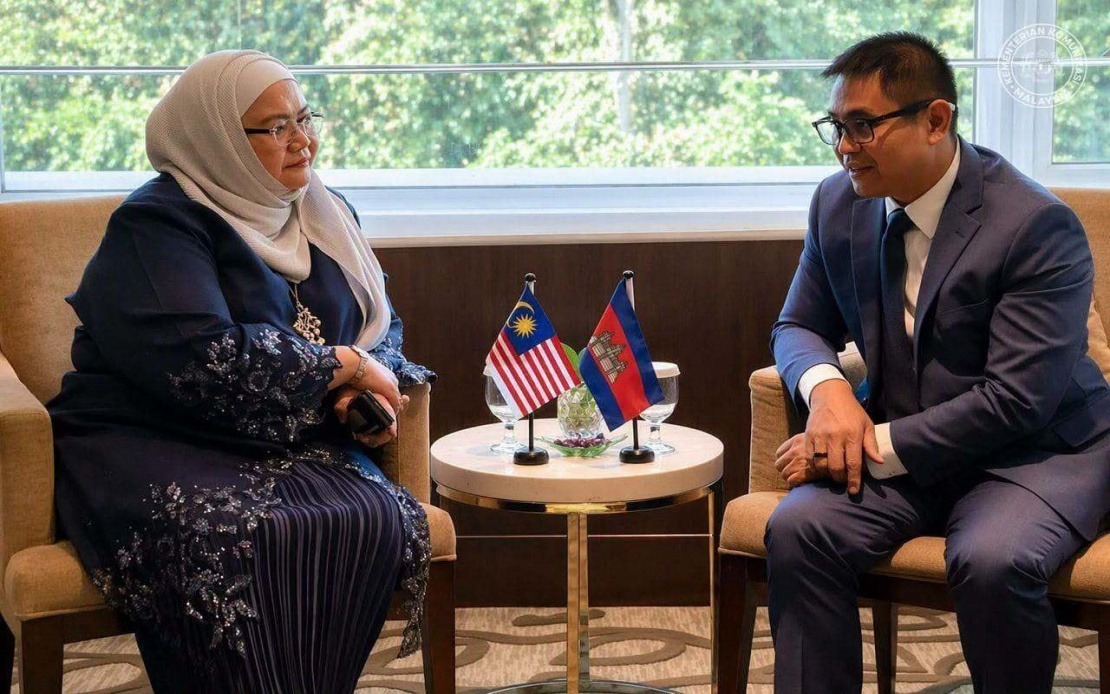
Malaysia and Cambodia have initiated formal discussions to operationalise their newly signed cooperation agreement on information and media development, marking a significant step in regional media collaboration. The two nations convened a bilateral meeting on the sidelines of the 23rd ASEAN Senior Officials Responsible for Information Meeting held in Bandar Seri Begawan, Brunei, to chart the implementation roadmap for the Memorandum of Understanding inked just days earlier. The framework, signed on June 20 by Communications Minister Datuk Fahmi Fadzil and Cambodian Information Minister Neth Pheaktra (represented by Secretary of State Prak Thaveak Amida), represents an ambitious commitment to reshape how both nations manage their media landscapes in an increasingly digital era.
Datuk Bahria Mohd Tamil, Malaysia's Deputy Secretary-General for Strategic Communications and Creative Industry, led the Malaysian delegation in these substantive discussions with Cambodia's representative Prak Thaveak Amida. The selection of such senior officials underscores the importance both governments attach to this bilateral relationship, particularly as media ecosystems across Southeast Asia face mounting pressures from misinformation, technological disruption, and the challenge of maintaining public trust. By positioning these talks within the formal ASEAN framework, Malaysia and Cambodia signal their intention to align their media development strategies with broader regional priorities, creating potential spillover benefits for other member states wrestling with similar challenges.
The discussions ranged across several interconnected domains that reflect contemporary concerns in information management across the region. Both delegations engaged in substantive exchanges regarding information exchange mechanisms, recognising that the digital age demands seamless, secure channels for sharing reliable news and verified data between governments and media institutions. Media development emerged as a central pillar, with both nations acknowledging the need to upgrade journalistic standards, invest in professional training, and support institutional capacity-building that enables journalists to operate effectively in an environment saturated with competing narratives and technological innovation. The emphasis on these practical dimensions suggests the two countries envision moving beyond rhetorical commitments toward concrete collaborative programmes.
Digital transformation occupies a particularly prominent place in the MoU framework, reflecting the reality that traditional media operations increasingly integrate with digital platforms in ways that blur previous boundaries. Malaysia and Cambodia recognised that modernising their media sectors requires coordinated approaches to technology adoption, data management, and the development of digital-native journalism practices. This aspect carries direct relevance for Malaysian media stakeholders, as successful implementation could establish regional best practices applicable across Southeast Asia's diverse media ecosystems. The urgency becomes apparent when considering how rapidly digital platforms shape public discourse in both nations, often outpacing regulatory frameworks designed for traditional broadcasting and print.
A critical focus of the bilateral discussions centred on information integrity and confronting the multifaceted challenges presented by the evolving media landscape. Both countries acknowledged that misinformation, disinformation, and coordinated information operations represent existential threats to democratic discourse and social cohesion. By treating information integrity as a shared concern rather than a purely domestic issue, Malaysia and Cambodia implicitly recognise that false narratives and manipulated content transcend borders, requiring collaborative detection, analysis, and counter-strategies. This represents a pragmatic acknowledgment that no single nation can effectively combat sophisticated information warfare operating across multiple platforms and languages simultaneously.
The broader context for these discussions extends back to National Journalists' Day celebrations in Penang, where Malaysian officials formalised preliminary negotiations with their Cambodian counterparts. This chronology demonstrates how ASEAN platforms and national commemorative events create valuable opportunities for bilateral engagement on substantive policy matters. For Malaysian readers and media professionals, the timeline suggests that momentum built during regional forums translates into actionable cooperation frameworks within weeks, not months. The compressed timeline also reflects genuine political will from both governments to advance these initiatives expeditiously rather than allowing such agreements to languish in bureaucratic limbo.
Malaysia's official statement emphasising its commitment to "strategic initiatives that will advance the information and media sectors while deepening the friendship between the two countries" operates on multiple levels. Superficially, it expresses standard diplomatic courtesy, yet it also signals Malaysia's confidence in its media development expertise and willingness to share institutional knowledge with a neighbouring nation. This positioning carries implications for Malaysia's broader regional leadership aspirations, particularly as ASEAN grapples with questions about how member states should approach media governance in an increasingly polarised information environment. By actively collaborating with Cambodia on these fronts, Malaysia demonstrates soft power capabilities that extend beyond economic or military dimensions.
The reference to information exchange and media development cooperation across "a wide range of media and communication-related fields" encompasses areas not explicitly detailed in public statements, suggesting the negotiators envisioned a comprehensive framework covering journalism training, regulatory harmonisation, technology transfer, and institutional cooperation. The breadth of this approach distinguishes the Malaysia-Cambodia agreement from narrower bilateral media arrangements typically limited to broadcasting or cultural content exchanges. For Malaysian media companies and news organisations, this expansion potentially opens pathways for expansion into Cambodia while creating reciprocal opportunities for Cambodian media entities to engage with Malaysian market dynamics and professional standards.
The implementation phase will determine whether these commitments materialise into tangible outcomes benefiting journalists, media organisations, and ultimately the publics served by both nations' information ecosystems. Critical questions remain regarding resource allocation, institutional responsibility, and mechanisms for measuring progress against agreed objectives. Malaysia's demonstrated experience in deploying strategic communications infrastructure and managing complex media environments could prove instrumental in helping Cambodia develop more sophisticated approaches to information management. Conversely, Cambodia's recent experience navigating the information landscape during significant political transitions may offer instructive lessons for Malaysian policymakers considering their own evolving challenges.
The timing of this bilateral engagement coincides with intensifying regional conversations about media literacy, platform regulation, and the role of governments in ensuring information quality. By establishing formal cooperation mechanisms now, Malaysia and Cambodia position themselves to influence ASEAN-wide discussions on these subjects rather than following consensus developed by other member states. This proactive stance reflects understanding that media development frameworks established today will shape information ecosystems throughout the 2020s and beyond. For Malaysian communications professionals and policy observers, monitoring how this MoU implementation unfolds offers valuable insights into the government's strategic priorities and operational capacity in advancing media development objectives across borders.
The bilateral meeting in Brunei represented more than routine diplomatic engagement; it established working relationships and identified specific areas requiring coordinated action. Both nations indicated willingness to move quickly from formal agreement to operational implementation, suggesting subsidiary working groups or technical committees will likely convene in coming months. Such institutional mechanisms enable sustained engagement beyond high-level political statements, creating channels where mid-level officials, media professionals, and technical experts can collaborate on practical challenges. For Malaysian readers observing these developments, the establishment of structured cooperation pathways offers reassurance that aspirational frameworks translate into substantive programmes with measurable impacts on media quality and institutional capacity across the region.

