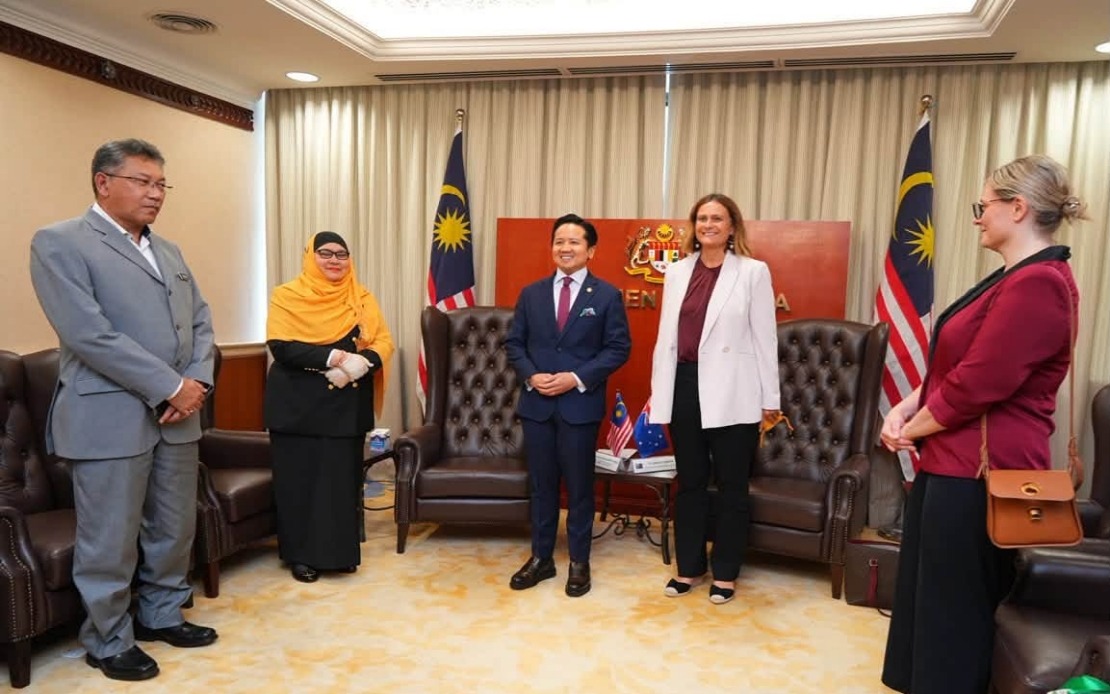
Malaysia and Australia have begun formal discussions on establishing deeper partnerships in the rare earth elements and critical minerals sectors, signalling a strategic shift towards building regional expertise in advanced manufacturing. The Natural Resources and Environmental Sustainability Ministry confirmed that Minister Datuk Seri Arthur Joseph Kurup and Australian High Commissioner to Malaysia Danielle Heinecke met at the Parliament building to chart out areas of mutual interest and complementary strengths in these strategically important industries.
The initiative represents a significant development for Malaysia's economic agenda, particularly in light of the government's commitment to the National Mineral Policy 3, which envisions a comprehensive domestic value chain spanning extraction through to value-added manufacturing. Rather than remaining dependent on exporting raw materials, Malaysia is positioning itself to capture greater economic value by developing downstream capabilities, with neodymium magnet production emerging as a priority area. Such magnets are essential components in electric vehicles, wind turbines, and renewable energy technologies—sectors that are experiencing explosive growth globally.
Australia's involvement in these discussions adds considerable weight to Malaysia's ambitions. The country possesses substantial reserves of critical minerals and has developed world-class technical expertise in processing and managing these resources sustainably. By leveraging Australian know-how, Malaysia can accelerate the development of its own manufacturing infrastructure while avoiding potential pitfalls associated with environmental and operational challenges that other nations have encountered in rare earth processing.
One particularly important dimension of the cooperation centres on the management of neutralisation underflow residue, a byproduct of rare earth processing that has historically presented environmental challenges. The exchange of best practices in handling this material reflects both nations' commitment to ensuring that resource development does not come at the cost of environmental degradation. This is especially relevant for Malaysia, where communities in mining-affected regions have raised concerns about contamination and long-term ecological impacts. By adopting tested approaches from Australia's experience, Malaysia can implement safeguards that protect its natural environment while pursuing industrial development.
The partnership also addresses broader environmental and climate imperatives that extend beyond minerals alone. Both countries acknowledged the importance of hazardous waste management and marine ecosystem conservation during their discussions, reflecting recognition that sustainable economic growth requires integrated environmental stewardship. This holistic approach is particularly salient for Malaysia, a nation with significant coastlines and marine biodiversity that faces mounting pressures from industrial expansion and climate change.
Climate financing emerged as another key discussion point, with Malaysia reaffirming its commitment to the United Nations Climate Change Conference agenda. As developing nations navigate the transition towards green economies, access to concessional financing for renewable energy projects and sustainable infrastructure remains a critical bottleneck. Australia's potential contribution to climate finance mechanisms could unlock funding for Malaysian projects that combine critical minerals processing with renewable energy generation—creating synergies that enhance overall sustainability.
The cooperation framework operates under the Malaysia-Australia Comprehensive Strategic Partnership established in 2021, which provides the institutional architecture for deepening bilateral engagement across multiple sectors. This existing partnership structure facilitates smoother coordination and reduces transaction costs for private sector actors seeking to engage in joint ventures or technology transfer arrangements. It signals to investors that both governments are committed to supporting collaborative initiatives, which can accelerate private investment flows into these emerging industries.
For Malaysia's broader economic strategy, developing a competitive neodymium magnet manufacturing sector carries implications that extend far beyond the minerals sector itself. The technology sector, automotive industry, and renewable energy producers all depend on reliable supplies of high-quality magnets. By building domestic production capacity, Malaysia can reduce supply chain vulnerabilities and position itself as a reliable supplier for regional and global markets. This is particularly important given rising geopolitical tensions that have disrupted critical mineral supply chains in recent years, creating opportunities for countries that can diversify global sourcing.
The timing of these discussions reflects shifting global dynamics around critical minerals security. Developed nations are increasingly concerned about supply chain concentration, particularly given China's dominance in rare earth processing. Malaysia's geographic location, existing industrial base, and commitment to sustainable practices make it an attractive alternative source for critical minerals and their processed derivatives. By capitalising on this moment, Malaysia can attract foreign direct investment and develop export markets that have previously been difficult to access due to environmental or geopolitical concerns.
Implementing these cooperation agreements will require significant coordination between government agencies, private enterprises, and research institutions. Malaysia's universities and technical institutes could play important roles in workforce development and process innovation, particularly if they establish collaborative research programs with Australian counterparts. Such capacity-building investments would create high-skilled employment opportunities and position Malaysia as a centre for critical minerals expertise in Southeast Asia.
The initiative also has implications for regional competitiveness. Other Southeast Asian nations with mineral endowments may view Malaysia's approach as a template for their own industrial development strategies. If Malaysia successfully executes this partnership and establishes competitive neodymium magnet manufacturing, it could consolidate the country's position as a manufacturing hub and technology leader in the region, attracting related industries and complementary investments.
Beyond the immediate commercial benefits, this cooperation reflects a shared commitment to responsible resource stewardship and sustainable development. Both countries are signalling to global markets and civil society that critical minerals can be produced in ways that respect environmental limits and community interests. This messaging is increasingly important as investors and multinational corporations face growing pressure to ensure ethical sourcing and environmentally sound practices throughout their supply chains.
Looking forward, the success of this partnership will depend on translating diplomatic agreements into concrete action. Both governments will need to establish clear timelines, allocate dedicated resources, and create enabling policy environments that encourage private sector participation. The coming months will be crucial in determining whether these discussions translate into joint ventures, technology transfer agreements, and infrastructure investments that genuinely transform Malaysia's rare earth and critical minerals sectors.

