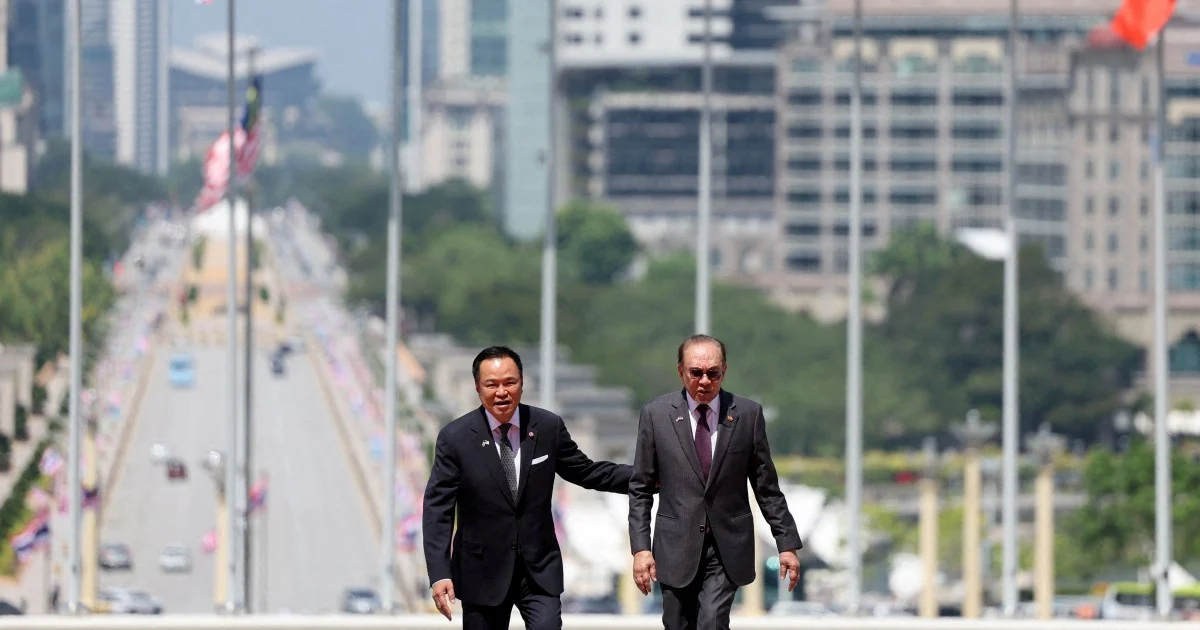
Malaysia's position on the protracted Myanmar crisis centres on the necessity of broad-based dialogue that incorporates all relevant parties, Prime Minister Datuk Seri Anwar Ibrahim declared during recent remarks in Putrajaya. The Malaysian leader's emphasis on inclusivity reflects a nuanced approach to regional diplomacy that recognises the complexity of Myanmar's internal political landscape and the need for solutions rooted in consultation rather than external pressure.
The Myanmar situation has remained volatile since the February 2021 military coup, which toppled the democratically elected government and triggered widespread international condemnation. The subsequent political instability has created humanitarian challenges, displaced populations, and fractures within the Association of Southeast Asian Nations (ASEAN), of which both Malaysia and Myanmar are members. Against this backdrop, Malaysia's call for inclusive engagement represents an attempt to chart a middle course that respects ASEAN's principle of non-interference while advocating for political dialogue.
Anwar's statement underscores Malaysia's broader commitment to resolving regional disputes through consensus-building mechanisms. By emphasising that Myanmar's people themselves must determine their nation's trajectory, the Prime Minister is effectively placing responsibility on internal stakeholders to forge a political settlement. This approach implicitly acknowledges the limits of external pressure and recognises that durable solutions typically emerge from negotiations among those most affected by the crisis.
The principle of allowing local populations to shape their own destiny carries particular significance in Southeast Asia, where post-colonial sensitivities about sovereignty and self-determination remain acute. Malaysia's advocacy for this approach aligns with broader ASEAN norms, which have historically prioritised regional stability and state sovereignty, even when member nations face internal governance challenges. However, this position also reflects the practical reality that sustainable political change requires buy-in from Myanmar's diverse political and ethnic communities, military factions, and civil society organisations.
Inclusive engagement, as Malaysia frames it, likely encompasses dialogue with military leadership, civilian political parties, ethnic armed organisations, and grassroots representatives. The fragmentation of Myanmar's opposition into multiple factions, coupled with the military's entrenched position, makes comprehensive dialogue extraordinarily difficult but strategically essential. Malaysia's emphasis on this approach signals awareness of these structural challenges and the recognition that excluding any significant stakeholder risks perpetuating conflict or creating new grievances.
For Malaysia specifically, the Myanmar crisis carries direct implications for regional security and ASEAN cohesion. The bloc's effectiveness depends on consensus-based decision-making, and Myanmar's internal turmoil has tested this framework severely. By promoting inclusive dialogue, Malaysia is essentially advocating for an approach that could theoretically preserve ASEAN's institutional integrity while supporting Myanmar's eventual political stabilisation. This positions Malaysia as a pragmatic voice focused on long-term regional harmony rather than short-term condemnation.
The humanitarian dimension of the Myanmar crisis cannot be overlooked in assessing Malaysia's diplomatic stance. Ongoing violence, economic collapse, and population displacement have created refugee flows affecting neighbouring countries, including Thailand and potentially Malaysia. Inclusive political dialogue leading to eventual stabilisation would alleviate pressure on regional host nations and reduce cross-border security complications that directly affect Malaysian interests.
Anwar's framing also reflects evolving thinking within Southeast Asian leadership about how to balance principle with pragmatism. The international community's isolation of Myanmar's military leadership has achieved limited results in pushing toward democratic transition. Malaysia's alternative emphasis on engagement rather than isolation suggests a belief that maintaining communication channels and creating space for negotiation may prove more effective than strategies focused on external pressure or sanctions.
The notion that Myanmar's people themselves must determine their future represents both a democratic principle and a practical acknowledgment that externally imposed solutions rarely take root successfully. This perspective recognises the rich fabric of Myanmar society—its ethnic minorities, religious communities, and competing political visions—which cannot be simplified into a Western template for democratic governance. Instead, Malaysians appear to be suggesting that Myanmar must chart a course reflecting its particular circumstances, culture, and historical experience.
Moving forward, Malaysia's advocacy for inclusive engagement will likely continue to shape how ASEAN collectively responds to developments in Myanmar. As ASEAN chair or during its tenure on regional bodies, Malaysia's diplomatic weight can influence whether the bloc prioritises isolation or dialogue, whether it amplifies international criticism or supports mediation initiatives. The practical challenge will be translating rhetorical commitments to inclusivity into concrete diplomatic mechanisms that can bridge Myanmar's fractured political landscape.
The emphasis on local determination also carries implications for how Malaysia frames its relationship with other regional partners, particularly major powers with distinct interests in Myanmar. By centring the agency of Myanmar's own people, Malaysia avoids being perceived as facilitating external control while maintaining room for constructive engagement with diverse international stakeholders. This diplomatic positioning protects Malaysian interests while advancing a vision of regional stability grounded in locally-owned solutions.

