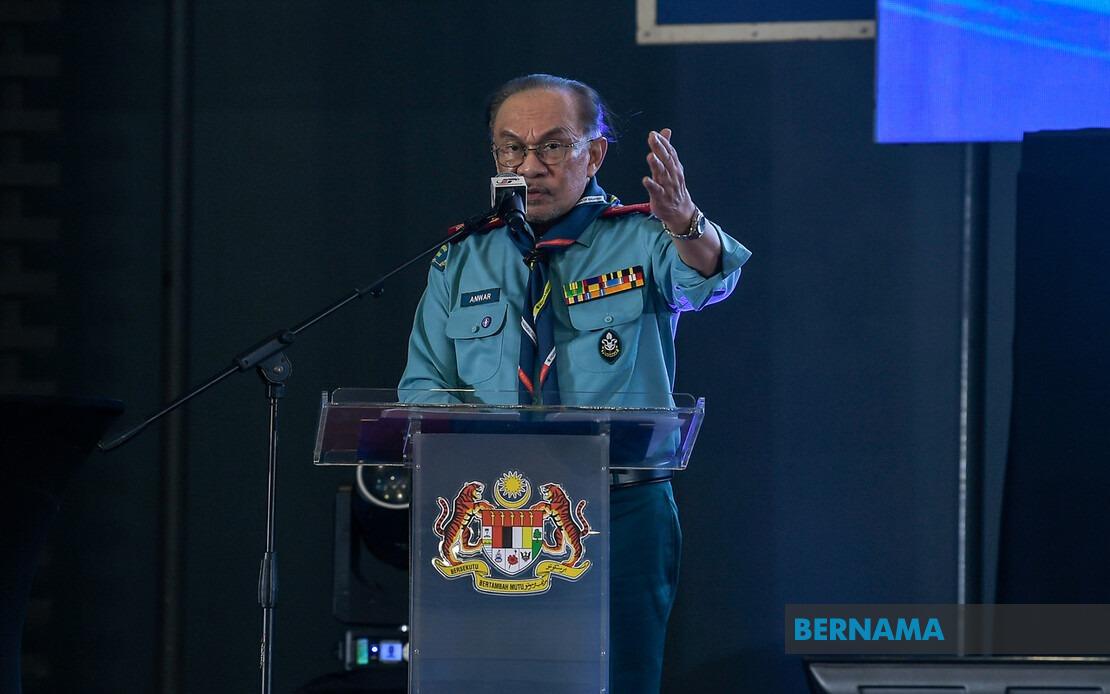
Prime Minister Datuk Seri Anwar Ibrahim has sought to defuse concerns about language policy in Malaysia, emphasising that efforts to reinforce Malay as the national language are entirely compatible with fostering proficiency in English, Mandarin, and Tamil among the population. Speaking at the Ambang Merdeka Sahabat MADANI 2026 programme at Universiti Teknologi MARA (UiTM) Permatang Pauh on August 29, Anwar presented a vision of linguistic pluralism that frames multilingual capability not as a threat to national cohesion but as a practical necessity for economic advancement and educational opportunity.
The Prime Minister's remarks come amid ongoing debates within Malaysia about the balance between strengthening the national language and maintaining competence in international and regional tongues. Anwar framed the challenge as fundamentally non-competitive, arguing that citizens need not sacrifice Malay proficiency to excel in other languages. His intervention suggests an attempt to bridge seemingly divergent camps in Malaysian education policy—those who prioritise Malay-medium instruction and those who advocate for stronger English and other language instruction in schools.
Anwar specifically highlighted English's emergence as a dominant global language that serves commercial, diplomatic, and technological functions across borders. Rather than positioning Malay and English as rivals, he suggested the education system should recognise English as complementary to Malay, enhancing rather than replacing the national language's central role. This framing aligns with Malaysia's economic positioning as a nation deeply integrated into global supply chains and financial networks where English remains the lingua franca of international business.
The Prime Minister gave particular weight to Mandarin's strategic importance for Malaysia, noting its status as a major economic language across the Asia-Pacific region. This observation reflects Malaysia's economic realities: China represents one of the nation's largest trading partners, while ethnic Chinese Malaysians constitute a significant portion of the business and professional class. By acknowledging Mandarin's utility, Anwar appeared to validate concerns within the Chinese Malaysian community about language education while simultaneously affirming that such competence need not diminish Malay language standards.
Anwar also recognised growing interest among Malaysians in Tamil proficiency, extending his linguistic inclusivity to encompass the concerns of the Indian Malaysian community. This tripartite recognition of Malay, Mandarin, and Tamil reflects Malaysia's multicultural composition and suggests a policy framework that respects the historical and cultural significance of multiple language communities rather than imposing monolingual standardisation.
The Prime Minister explicitly rejected what he termed a "zero-sum game" mentality regarding language learning, arguing instead that acquiring multiple languages represents an investment in human capital and individual opportunity. This framing redefines multilingualism from a cultural or identity issue into an economic and practical matter—children who master Malay while developing competence in other languages expand their employment prospects, educational access, and earning potential across different markets and sectors.
Beyond the technical question of language policy, Anwar deployed his remarks to address broader social cohesion concerns. He cautioned Malaysians against harbouring divisive attitudes along racial and communal lines, warning that national harmony cannot be assumed as permanently secure without deliberate, consistent effort to maintain unity. This connection between language policy and social stability reflects the sensitivity surrounding language issues in Malaysia's plural society, where linguistic preferences have historically intersected with ethnic identity and political mobilisation.
The Prime Minister emphasised that citizens must actively cultivate attitudes of mutual sharing, support, and collaboration across racial boundaries to ensure inclusive development benefits reach all communities equitably. His framing positions linguistic diversity not as an obstacle to national unity but as evidence of Malaysia's pluralistic character that demands intentional efforts to preserve social peace and ensure fair participation in economic growth.
Anwar's position reflects a pragmatic middle ground in Malaysian educational and cultural debates. Rather than championing Malay supremacy or acquiescing entirely to international pressure for English dominance, he articulated a vision where the national language maintains its constitutional status while other languages receive active encouragement as practical tools for economic participation and global engagement. This approach potentially appeals to multiple constituencies: those concerned about Malay's institutional position, those advocating for cosmopolitan education, and parents seeking maximum opportunity for their children.
The remarks carry implications for Malaysian education policy as schools navigate curriculum design, medium of instruction decisions, and language subject prioritisation. Universities like UiTM, which maintain specific mandates regarding Malay language use, may interpret Anwar's comments as providing political cover for maintaining such provisions while gradually expanding English and other language offerings. Secondary schools face questions about how aggressively to teach regional languages alongside international ones within finite instructional time.
For Malaysia's regional standing, Anwar's position potentially addresses criticisms from some quarters that Malaysian education produces graduates insufficiently prepared for global competition due to language limitations, while simultaneously reassuring those concerned about cultural preservation and national identity. By anchoring his argument to economic imperatives rather than cultural chauvinism, the Prime Minister suggests that multilingualism serves Malaysian national interests comprehensively.
The emphasis on preventing communal hostility particularly resonates given Malaysia's experience with language-related tensions in previous decades. By framing linguistic diversity as economically rational and developmentally necessary, rather than as competing claims to state support or cultural dominance, Anwar attempted to depoliticise a historically contentious domain. Whether this reframing successfully influences policy implementation across Malaysia's complex education bureaucracy and plural communities remains to be seen.

