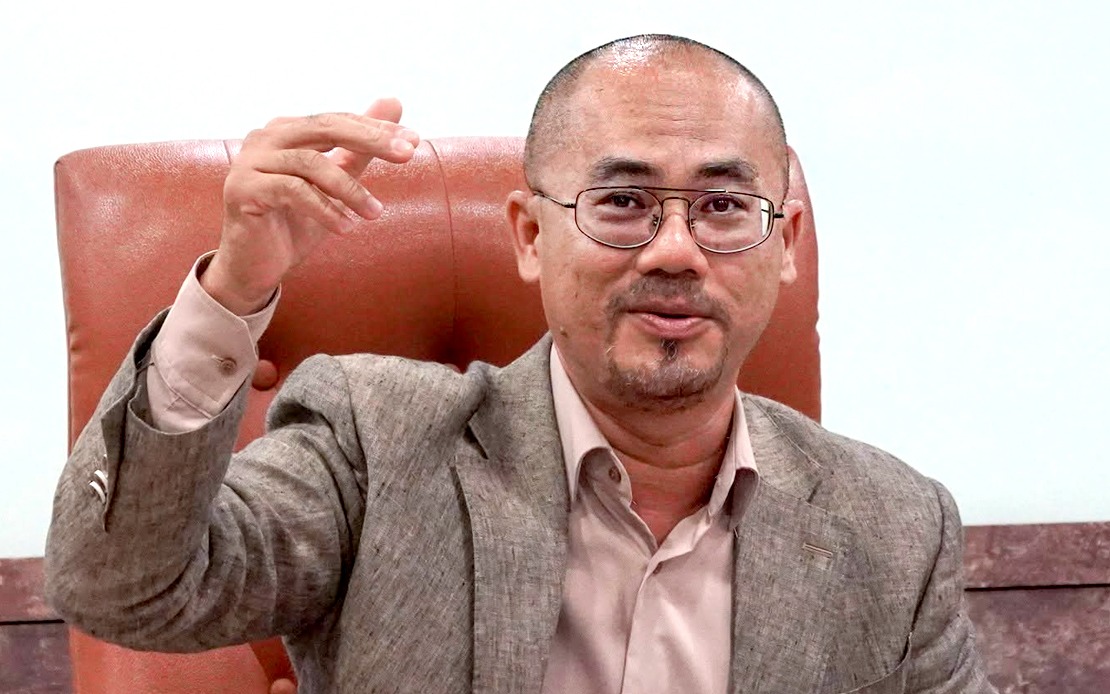
The Perak Islamic Religious and Malay Customs Council (MAIPk) has moved to extinguish a firestorm of speculation on social media by categorically denying that it ordered traders to vacate a commercial premises along Jalan Panglima Bukit Gantang Wahab in Ipoh. Instead, the council's leadership has provided a fuller account of the underlying operational difficulties that prompted recent administrative notices to the business community occupying the site. Syamsul Hazeman Md Salleh, the council's chief executive officer, disclosed that notices were issued not as an eviction mandate but as a clarification of MAIPk's institutional position regarding infrastructure failures and accumulated financial liabilities at the location.
The core issue confronting MAIPk stems from a substantial leak in the main water distribution pipeline serving the premises, compounded by approximately RM100,000 in unpaid water charges that have accumulated over an extended period. During an engagement session convened on July 14, Syamsul Hazeman explained to assembled traders that a temporary disconnection of water supply was necessary to facilitate urgent repair operations and to address the mounting debt. This procedural necessity has apparently been misrepresented in online commentary as an involuntary expulsion order, prompting the council to issue its clarification.
A crucial detail in MAIPk's account is the council's relatively recent acquisition of the land in 2024, after which inherited problems became apparent. Rather than resulting from current trader consumption patterns, the substantial arrears reflect longstanding systemic defects in the water infrastructure itself—specifically malfunctions within the primary pipeline that distributes water to the entire commercial complex. The traders themselves have been paying their respective water bills according to normal metering and consumption records, meaning they bear no responsibility for the arrears that have accrued from the structural failure of the main distribution system.
Syamsul Hazeman emphasized that the financial burden posed by these arrears extends beyond MAIPk's immediate capacity to resolve. The council cannot apply zakat funds—charitable contributions designated for religious and social purposes—or waqf endowment resources toward settling commercial water utility debts, as such applications would violate the religious and legal stipulations governing these dedicated funds. This constraint reflects the particular position occupied by Islamic religious councils in Malaysia's institutional landscape, where financial segregation between different fund categories is mandated by Islamic law and state regulation.
The resolution pathway remains complex and protracted. MAIPk has initiated discussions with the Perak Water Board to identify viable solutions to both the infrastructure deterioration and the accumulated debt. Simultaneously, the council is engaging the Perak state government for assistance and strategic guidance, recognizing that resolution of such matters requires coordination across multiple government entities and technical expertise beyond the council's remit. Syamsul Hazeman signaled cautious optimism that a resolution could eventually be reached, though he acknowledged the process would necessarily consume considerable time.
Once the outstanding water charges are definitively resolved and repair works completed, MAIPk intends to formalize new commercial arrangements with traders through refreshed lease agreements. This process of contract renewal will be conducted as an administrative reset rather than as a punitive measure. However, traders operating at the site will need to prepare for eventual displacement should the Perak state government proceed with its proposed construction of the Perak Islamic Religious Department Complex at this location. Syamsul Hazeman noted that the timing of this development initiative remains uncertain and subject to government decision-making, but he was explicit that traders would need to vacate when construction commences.
For Malaysia's small business community and the trader networks operating in commercial spaces managed by religious institutions, this situation illustrates the operational complexities that arise when Islamic councils assume stewardship of properties carrying pre-existing infrastructure liabilities. The inherited water debt problem, while technical in nature, has cascading implications for the businesses dependent on utility access. The dispute also highlights how administrative communications from institutional authorities can be rapidly misinterpreted and amplified through social media, creating public relations challenges that require swift and detailed clarification.
The broader context encompasses questions about asset transfer protocols and due diligence when Islamic councils acquire properties. MAIPk's discovery of substantial utilities debt only after assuming ownership suggests that property handover procedures may benefit from enhanced documentation and inspection standards. For traders already operating within such premises at the time of transfer, the unexpected emergence of large arrears they did not incur can feel like an institutional failure, even though MAIPk's position—that it inherited rather than created the problem—is legally accurate.
The involvement of the state government in seeking resolution reflects how infrastructure and utilities issues can intersect with religious institutional management in Malaysia's federal system. Water supply management typically falls under state purview, with the Perak Water Board being the primary service provider. This layering of responsibilities means that problems originating in the utility infrastructure must be negotiated across multiple bureaucratic entities, each with distinct mandates and funding mechanisms. MAIPk's efforts to coordinate with both the water board and state government represent a pragmatic acknowledgment of this institutional reality.
From a trader perspective, the situation presents both reassurance and uncertainty. The council has expressly denied eviction intentions, providing some stability for current operations once water supply is restored. However, the long-term viability of these commercial arrangements remains contingent on infrastructure repairs that are currently under negotiation and the eventual state government decision regarding the proposed Islamic Religious Department Complex. Traders may view this period as one of provisional tenure pending resolution of technical matters beyond their control.
The incident underscores how Islamic councils in Malaysia, increasingly tasked with managing not merely religious affairs but also significant property and commercial portfolios, must navigate complex operational challenges that blend infrastructure management, financial administration, and stakeholder relations. MAIPk's public clarification, delivered through formal media briefings, represents an institutional effort to restore confidence among traders and the public regarding the council's intentions and operational integrity during a period of significant infrastructure difficulty.

