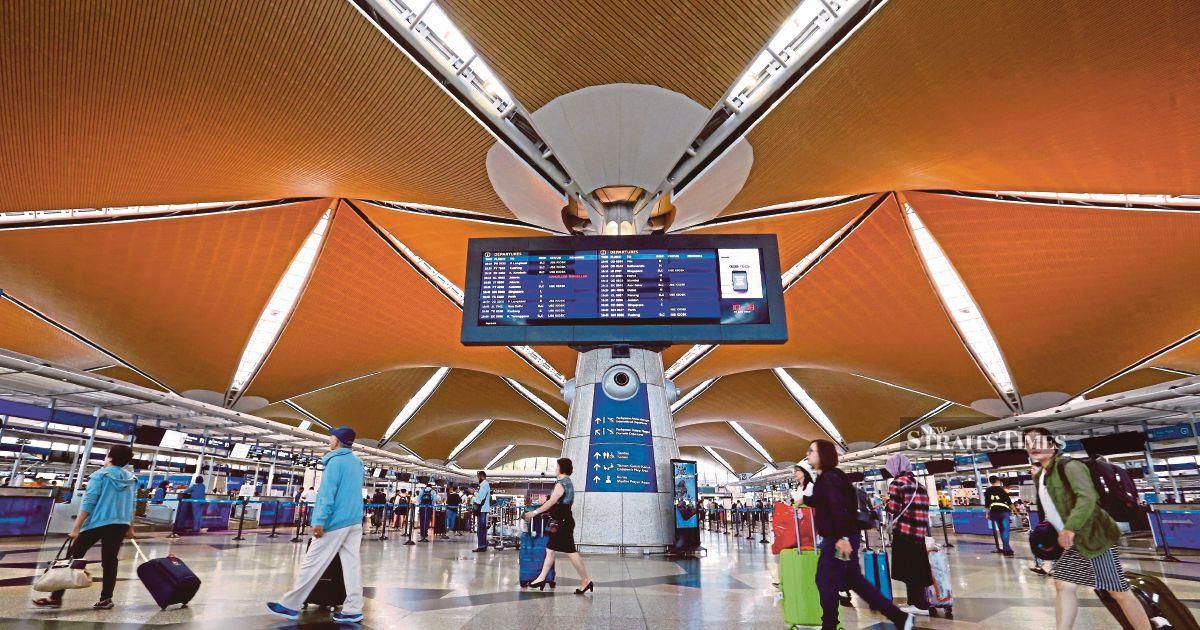
Malaysia Airports Holdings Bhd (MAHB) acknowledged today that a technical fault had temporarily disrupted the baggage management infrastructure at Terminal 1 of Kuala Lumpur International Airport (KLIA), one of Southeast Asia's busiest aviation hubs. The incident, which impacted luggage handling during the afternoon period, was fully resolved by 5.30pm, according to the operator's statement, allowing normal operations to resume before the evening surge in passenger traffic.
The glitch affected KLIA's primary terminal building, which handles the majority of the airport's international passenger movements. While MAHB did not initially specify the technical nature of the malfunction or which specific baggage processing zones were compromised, the incident highlights the critical importance of baggage systems to airport operations. Any disruption to these automated conveyor networks, sorting mechanisms, or tracking systems can create cascading delays affecting multiple flights and leaving passengers frustrated.
Terminal 1 processes flights for major carriers and international routes, making the afternoon timing particularly significant. The timing of the malfunction during daylight hours, rather than during quieter night operations, meant the disruption had the potential to affect a considerable volume of departing and arriving passengers. However, swift intervention by MAHB's technical teams appears to have contained the disruption to a manageable window, preventing the extended delays that could have rippled through the airport's schedule.
The rapid resolution reflects investments MAHB has made in its operational infrastructure and maintenance protocols over recent years. Modern airport baggage systems are highly complex, integrating conveyor belts, laser scanners, automated sorting systems, and tracking software that must function in precise coordination. When one component falters, technicians must quickly diagnose whether the issue stems from mechanical failure, software malfunction, or sensor problems before corrective measures can be implemented.
For Malaysian travellers and international visitors using KLIA, baggage reliability represents a fundamental service expectation. The airport's reputation depends partly on minimizing such disruptions, particularly given intense regional competition from airports such as Singapore Changi and Bangkok's Suvarnabhumi. Recent years have seen growing scrutiny of airport service quality across the region, with passenger feedback increasingly influencing carrier route decisions and airport selection.
MAHB's public acknowledgment of the issue, combined with confirmation of the resolution timeline, represents transparent communication that passengers and airlines value during operational challenges. This contrasts with scenarios where airports downplay or delay announcing service disruptions, creating confusion and reputational damage. The operator's decision to confirm both the problem and its resolution demonstrates commitment to stakeholder confidence during inevitable technical incidents.
The incident underscores the broader vulnerability of modern airport infrastructure to technical failures, despite sophisticated redundancy systems. Baggage handling represents a critical link in the passenger experience chain; malfunctions can force flights to delay, inconvenience connecting passengers, and create bottlenecks that extend well beyond the initial problem window. While the KLIA situation was contained to a single afternoon disruption, it serves as a reminder of why continuous investment in system maintenance, operator training, and backup infrastructure remains essential.
Industry analysts note that baggage system reliability has become increasingly important as airports compete for premium carrier partnerships and premium passengers. Airlines frequently conduct operational audits of airports they serve, with baggage handling performance featuring prominently in these assessments. Any pattern of repeated disruptions can influence route profitability calculations and investment decisions. MAHB's swift resolution of today's issue therefore carries implications beyond immediate passenger inconvenience.
For the broader Malaysian aviation sector, incidents like this also highlight the importance of cybersecurity and system resilience. Modern baggage systems integrate software and connectivity that, while enabling efficiency and tracking, also introduce potential vulnerability vectors. Protecting critical airport infrastructure from both accidental failures and deliberate threats has become an operational priority for regional airports seeking to maintain competitive positioning and passenger confidence in a rapidly evolving travel environment.

