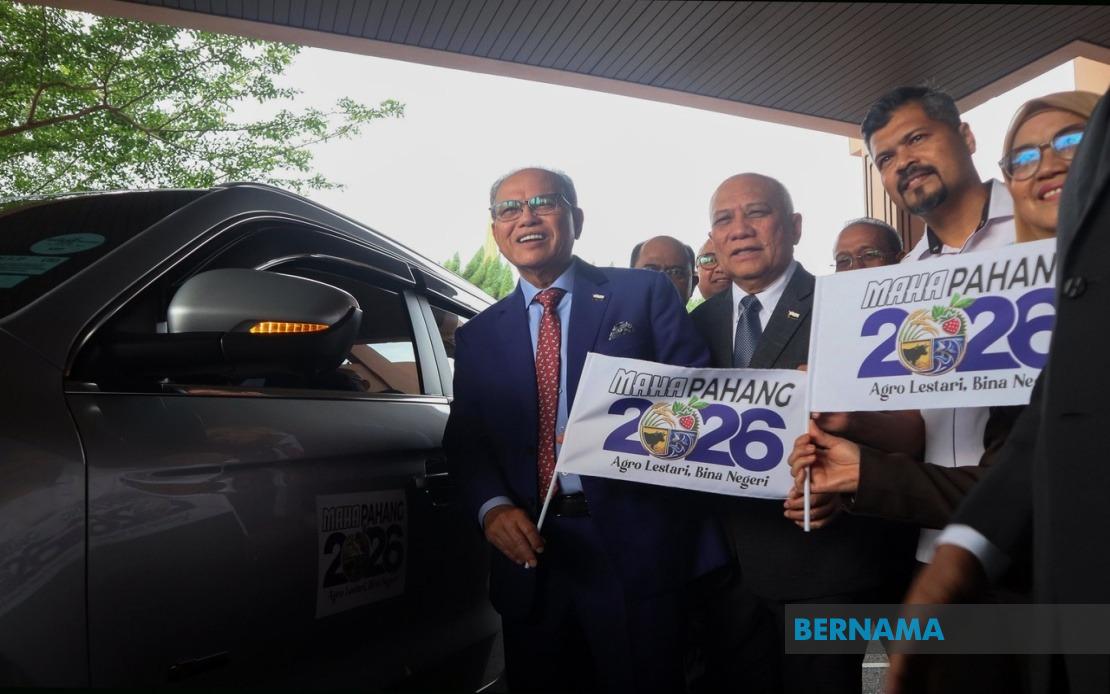
The Pahang state government is banking on its biennial agricultural showcase to become a significant draw for rural commerce and agribusiness engagement this coming July. MAHA Pahang 2026, scheduled to run for four consecutive days from July 30 through August 2 at Dataran Raub in the Raub district, has set ambitious visitor targets and revenue projections that signal the state's commitment to promoting modern farming and rural entrepreneurship across the region.
Menteri Besar Datuk Seri Wan Rosdy Wan Ismail unveiled the event's scope during a media briefing in Bera, revealing that organizers expect to welcome more than 100,000 visitors over the four-day window. The showcase will feature the participation of approximately 100 entrepreneurs, providing a concentrated marketplace for agricultural products, farm inputs, livestock, and rural services. These numbers, if achieved, would position MAHA Pahang as one of the state's major annual commercial events, rivalling similar agricultural fairs held across Malaysia.
Revenue projections for the event stand at RM1.3 million in direct sales, reflecting confidence in visitor spending power and merchant participation. This target suggests organizers expect healthy foot traffic with meaningful purchasing intent, particularly from farmers, agricultural traders, and rural consumers seeking products and business connections unavailable in their immediate localities. For a state that derives considerable economic benefit from agriculture and agribusiness, such marketplace events serve as critical platforms for value chain integration and rural income generation.
The Pahang state government has invested in visitor engagement incentives to boost attendance and spending. A lucky draw scheme will offer visitors the chance to win premium prizes, including a Wagyu cow and a Perodua Bezza vehicle, supplemented by various other giveaways of varying value. These incentives reflect a sophisticated understanding of event marketing in the Malaysian context, where lucky draws and vehicle prizes have proven effective in driving traffic to rural and provincial gatherings. The Wagyu cow prize is particularly significant, signaling support for livestock production and high-value farming ventures.
Wan Rosdy publicly acknowledged the contributions of Agriculture and Food Security Minister Datuk Seri Mohamad Sabu and the event's committee leadership in bringing the showcase to fruition. The involvement of the federal agriculture ministry underscores the event's significance within broader national agricultural development strategies. Coordination between state and federal authorities on such initiatives demonstrates the integrated approach Malaysia is taking towards supporting rural livelihoods and commercial agriculture, particularly in states like Pahang where farming remains economically central.
The location at Dataran Raub carries particular relevance, as Raub district encompasses significant agricultural land and serves as a commercial hub for surrounding rural communities. Choosing a district-level venue rather than confining the event to the state capital makes it more accessible to farming communities and traders operating in peripheral areas, potentially widening the catchment of entrepreneurs and visitors. This accessibility consideration suggests organizers understand the logistical challenges rural participants face in reaching major events.
Beyond immediate commercial objectives, MAHA Pahang 2026 aims to function as an educational forum on agricultural advancement. Exhibition spaces will showcase new crop varieties and provide farmers with insights into evolving agricultural practices and innovations. This dual purpose—combining marketplace functions with knowledge dissemination—reflects global trends in how agricultural fairs now operate, moving beyond simple product sales to encompass extension services, technology transfer, and sectoral networking.
The convoy flagging-off ceremony involving twenty vehicles from government departments and agencies served as a publicity mechanism and symbolic endorsement of the event by the state administration. Such ceremonial elements enhance visibility and signal official backing to potential participants and visitors, establishing MAHA Pahang 2026 as a state priority rather than a routine commercial gathering. The participation of multiple government agencies suggests coordination across health, safety, agricultural development, and administrative functions to ensure event success.
For Malaysian agricultural stakeholders and rural entrepreneurs, such showcases offer concentrated opportunities for business connections, market access, and exposure to innovations that might otherwise require travelling to urban centres or waiting for dispersed networking opportunities. Particularly for smaller-scale farmers and traders lacking established distribution networks, these fairs function as market democratization mechanisms, enabling direct vendor-to-consumer transactions and business partnership formations.
The projected RM1.3 million in sales, while substantial in absolute terms, reflects the measured expectations of event organizers. This figure likely represents direct point-of-sale transactions within the venue rather than broader economic impacts through supply chain activation or future business relationships catalysed by the event. The actual economic multiplier effect on the Pahang rural economy could exceed this figure significantly if visitors subsequently purchase from participating entrepreneurs throughout subsequent months.
As Malaysia navigates agricultural modernization and rural economic diversification, events like MAHA Pahang 2026 provide valuable infrastructure for connecting supply with demand, entrepreneurs with resources, and farmers with innovation. The state government's commitment to hosting and promoting such commercial gatherings reflects recognition that rural prosperity remains central to broader national development objectives.

