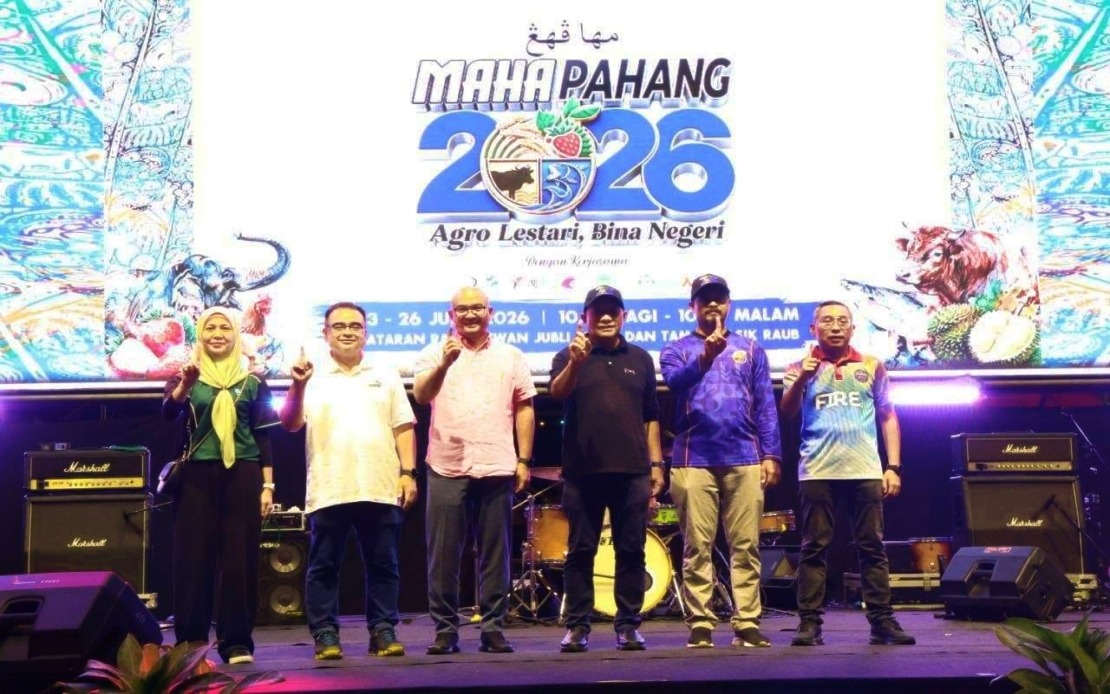
The MAHA Pahang 2026 agricultural exhibition has concluded its four-day run at Dataran Raub with impressive performance metrics that signal growing momentum in the state's farming and food production sectors. Visitor numbers reached 212,374, more than double the event's original target of 100,000 people, while revenue from the showcase totalled RM2.33 million against a projected RM1.3 million. The strong outcomes underscore sustained public interest in agricultural products and services across Malaysia's east coast region.
Datuk Seri Mohd Soffi Abd Razak, chairman of the Pahang Agriculture, Agro-based Industry, Biotechnology and Education Committee, attributed the event's success to overwhelming community participation and departmental coordination. In remarks following the exhibition's closure, he highlighted that the number of entrepreneurs participating had grown to 220 entities, nearly tripling the original estimate of 100 businesses. This expansion reflects growing entrepreneurial interest in agricultural ventures within Pahang, suggesting an expanding ecosystem of small and medium enterprises focused on farming, value-added production, and related services.
The doubling of visitor attendance and near-doubling of sales revenue points to several underlying dynamics. Strong public turnout indicates sustained consumer demand for locally-produced agricultural goods, from fresh produce to processed foods and livestock products. For Malaysian shoppers, particularly those in regional areas, such exhibitions offer direct access to farmers and producers, potentially providing better pricing and product freshness compared to conventional retail channels. The figures also suggest effective promotion of the event across Pahang and neighbouring states, drawing visitors from beyond the immediate locale.
Mohd Soffi's emphasis on sectoral potential reflects broader economic considerations for Pahang state planning. Agriculture remains a significant employment sector and income source across rural Pahang, though it has faced persistent challenges including volatile commodity prices, climate variability, and competition from cheaper imports. Exhibitions like MAHA serve dual purposes: they provide a platform for farmers and agribusinesses to reach consumers directly, bypassing traditional supply chains, while simultaneously signalling government commitment to supporting rural livelihoods and agricultural modernisation.
The strong entrepreneurial participation—220 businesses versus the planned 100—indicates that the state's agricultural community perceives genuine commercial opportunity. These entrepreneurs span multiple subsectors: conventional farming, livestock and fisheries, food processing, biotechnology applications, and agricultural education initiatives. The diversity of participants reflects Pahang's varied agroecological zones and production capacities, from highland vegetable farming to coastal fisheries to palm oil and rubber plantations. Supporting this entrepreneurial base through exhibitions and other promotional platforms aligns with Malaysia's broader economic diversification goals, particularly as the nation seeks to reduce dependence on traditional commodities and develop higher-value agricultural segments.
For consumers across Malaysia and Southeast Asia, the success of MAHA Pahang 2026 carries implications for local food security and supply chain resilience. Regional agricultural exhibitions, when successful, can stimulate investment and innovation in primary production and food processing, contributing to more stable domestic supplies of essential foodstuffs. This becomes increasingly relevant as global supply chains face disruption and as regional nations prioritise food self-sufficiency. Pahang's demonstrated agricultural potential, evidenced by this event's attendance and sales figures, positions the state as a potential contributor to broader Malaysian food production goals.
Mohd Soffi's public acknowledgment of contributions from departments, agencies, security personnel, and individual participants underscores the coordination required to execute such events successfully. Beyond the immediate exhibition logistics, successful agricultural showcases depend on broader ecosystem support: extension services providing technical advice, financial institutions offering credit to farmers and entrepreneurs, logistics providers managing product distribution, and regulatory bodies ensuring food safety standards. The event's success therefore reflects not merely consumer interest, but the functionality of Pahang's agricultural support infrastructure.
The sales figure of RM2.33 million warrants contextual consideration. Across a four-day period and 212,000 visitors, average expenditure per visitor approximated RM11, suggesting modest but meaningful purchasing. This pattern is typical of agricultural exhibitions, where visitors purchase fresh produce, processed goods, and specialty items at comparatively lower volumes than visitors to conventional shopping venues. However, the sales metric understates the event's economic impact. Direct sales capture only immediate transactions; the exhibition likely generated substantial indirect benefits through networking between farmers and wholesale buyers, market intelligence gathering by producers, and consumer brand awareness for participating entrepreneurs.
The achievement of attracting over 200,000 visitors to a regional agricultural exhibition also reflects consumer behaviour patterns increasingly evident across Malaysia. Growing segments of the population—motivated by health consciousness, environmental concerns, or interest in supporting local producers—actively seek direct connections with farmers and food producers. Agricultural exhibitions appeal to this demographic by offering transparency about production methods, personal interaction with producers, and often competitive pricing. MAHA Pahang 2026's success suggests that such consumer interest remains strong, presenting ongoing opportunities for the state to position itself as a destination for agricultural tourism and agribusiness activity.
Looking forward, the exhibition's performance provides baseline data for future iterations and expansion. Pahang authorities may consider whether current exhibition infrastructure can accommodate growing participant numbers and visitor flows. Scaling up such events carries both opportunities and challenges: larger exhibitions can generate greater economic impact and visibility for participating entrepreneurs, but require proportionately larger investment in logistics, security, and facilities management. The success of MAHA Pahang 2026 will likely encourage state planners to view similar agricultural showcases as valuable economic development tools warranting sustained support and periodic enhancement.
The broader narrative emerging from MAHA Pahang 2026 is one of regional agricultural vitality and entrepreneurial momentum. Pahang, traditionally associated with plantation agriculture and natural resources extraction, demonstrates significant capacity for farmer entrepreneurship and value-added production. The exhibition's success also illustrates the continuing relevance of traditional agricultural sectors to Malaysian economic development, particularly at state and community levels. As national policy increasingly emphasises economic diversification and regional development, events like MAHA provide concrete evidence that agricultural modernisation and agricultural entrepreneurship remain viable pathways for rural prosperity.

