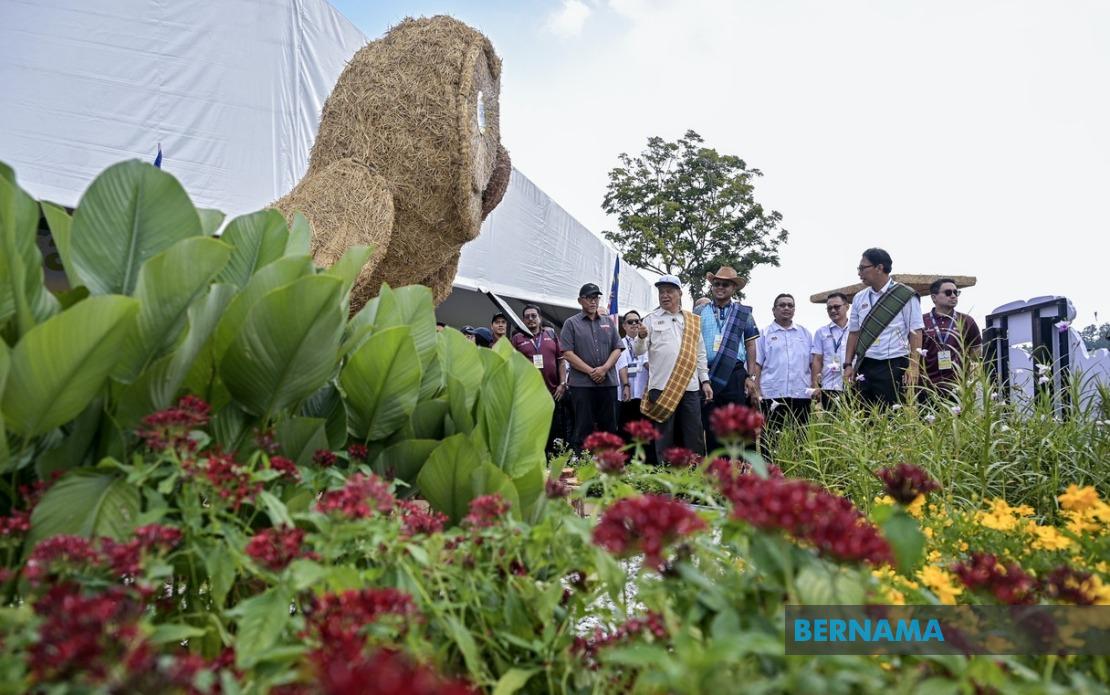
The Malaysia Agriculture, Horticulture and Agrotourism Exhibition (MAHA) 2026 is experiencing a remarkable surge in attendance and commercial activity, having recorded 1.8 million visitors and nearly RM6 million in sales within its opening three days. Agriculture and Food Security Minister Datuk Seri Mohamad Sabu disclosed the figures while launching Laman Padi MAHA 2026 at the Malaysia Agro Exposition Park Serdang (MAEPS), underscoring the strong public appetite for agricultural trade and information platforms in the region. The event, which commenced on August 28 and continues until September 6, has already exceeded expectations in its nascent stages, demonstrating the continued relevance of agricultural commerce to Malaysian consumers and industry stakeholders.
The scale of visitor traffic has strained transportation infrastructure around the sprawling exhibition grounds. Organisers recorded 184,000 vehicle movements in and out of MAEPS during the three-day period, creating significant congestion in surrounding areas. This transportation challenge, while testament to MAHA's drawing power, has prompted immediate management intervention to prevent visitor frustration and logistical bottlenecks from dampening the overall experience. The minister acknowledged the intensity of on-site activity, noting that shuttle services have been expanded to cope with demand, though additional measures remain under consideration as the event progresses.
Experts attribute the robust early turnout to the diverse programming on offer throughout the exhibition. MAHA Merdeka celebrations, held in conjunction with National Day commemorations, featured fireworks and drone displays that drew large crowds and generated considerable social media attention. These experiential elements have transformed MAHA from a purely transactional platform into a broader cultural and entertainment destination, broadening its appeal beyond agricultural professionals and serious farmers to include casual visitors and families seeking weekend recreational activities. This diversification strategy appears to be yielding substantial dividends in attendance metrics.
The sales performance recorded in the first seventy-two hours provides encouraging trajectory toward the event's ambitious RM58 million revenue target. Early purchases have been anchored largely by agricultural inputs, particularly crop seeds, suggesting that professional farmers and smallholders remain committed to acquiring quality planting materials at the exhibition. This purchasing pattern reflects confidence in the agricultural sector despite broader economic uncertainties and climate-related challenges affecting crop production across Southeast Asia. The concentration of seed purchases also indicates that MAHA continues to serve its core function as a crucial nexus for connecting producers with essential agricultural supplies.
Minister Mohamad Sabu outlined that MAHA 2026 encompasses approximately 2,000 exhibitors representing diverse segments of the agricultural value chain. This unprecedented scale of participation reflects the exhibition's established position as a premier regional trade platform and its capacity to attract suppliers, retailers, technology providers, and service providers from across Malaysia and neighbouring countries. The breadth of exhibitor participation creates a comprehensive agricultural ecosystem within MAEPS, enabling visitors to access everything from traditional farming implements to cutting-edge agrotechnology solutions within a single venue.
Operational coordination has become increasingly critical given the volume of daily visitors traversing the grounds. The minister revealed that a dedicated committee meets regularly to address emerging complaints and identify practical solutions ensuring smooth event execution. This proactive management approach acknowledges that visitor satisfaction depends not merely on product availability and sales activity but on the quality of the entire experience, including wayfinding, crowd management, and basic amenities. The decision to monitor feedback continuously and adjust operations accordingly demonstrates organisational maturity and commitment to long-term event sustainability.
State-level participation at MAHA 2026 has been particularly notable, with pavilions representing individual Malaysian states attracting extended queues of interested visitors. These provincial showcases enable regions to promote their distinctive agricultural products, local farming innovations, and state-specific agricultural policies to a concentrated audience of potential distributors, retailers, and consumers. The sustained interest in state pavilions underscores the growing appreciation for regional agricultural differentiation and locally-sourced products, trends that have gained momentum throughout Southeast Asia as consumers increasingly value provenance and regional identity.
Weather conditions have presented ancillary challenges during the event's opening phase. The minister specifically referenced prevailing heat as an aggravating factor affecting visitor comfort and dwell time at various exhibition stations. This environmental constraint has driven the management focus on improving visitor transportation logistics, as reducing time spent walking through open exhibition grounds directly impacts the visitor experience during periods of elevated temperatures. Climate considerations, often overlooked in event planning discussions, have emerged as a material factor in visitor retention and satisfaction at large-scale outdoor gatherings.
The trajectory established in MAHA 2026's opening three days carries broader implications for Malaysia's agricultural sector and agribusiness development. Strong public engagement with an agriculture-focused exhibition signals sustained interest in farming, horticulture, and food production among Malaysian consumers and entrepreneurs. This enthusiasm contrasts with global trends showing declining youth interest in agricultural careers and suggests that Malaysia may possess distinctive advantages in maintaining agricultural participation and innovation. The exhibition serves as both a commercial forum and an implicit advocacy platform for agricultural modernisation and sector growth.
Looking forward, sustaining momentum through the exhibition's remaining ten days will require continued logistical refinement and strategic programming to maintain visitor interest. The organisers' projection of exceeding four million total visitors over the nine-day event period represents an ambitious but seemingly achievable target based on current velocity. Realising this goal will depend on addressing transportation bottlenecks, maintaining weather-appropriate facilities, and ensuring exhibitor satisfaction as daily visitor volumes potentially increase through the final weekend. The financial outcome, measured against the RM58 million sales target, will ultimately determine whether MAHA 2026 establishes a new benchmark for agricultural exhibitions throughout Southeast Asia or represents an anomalous spike driven by external factors.

