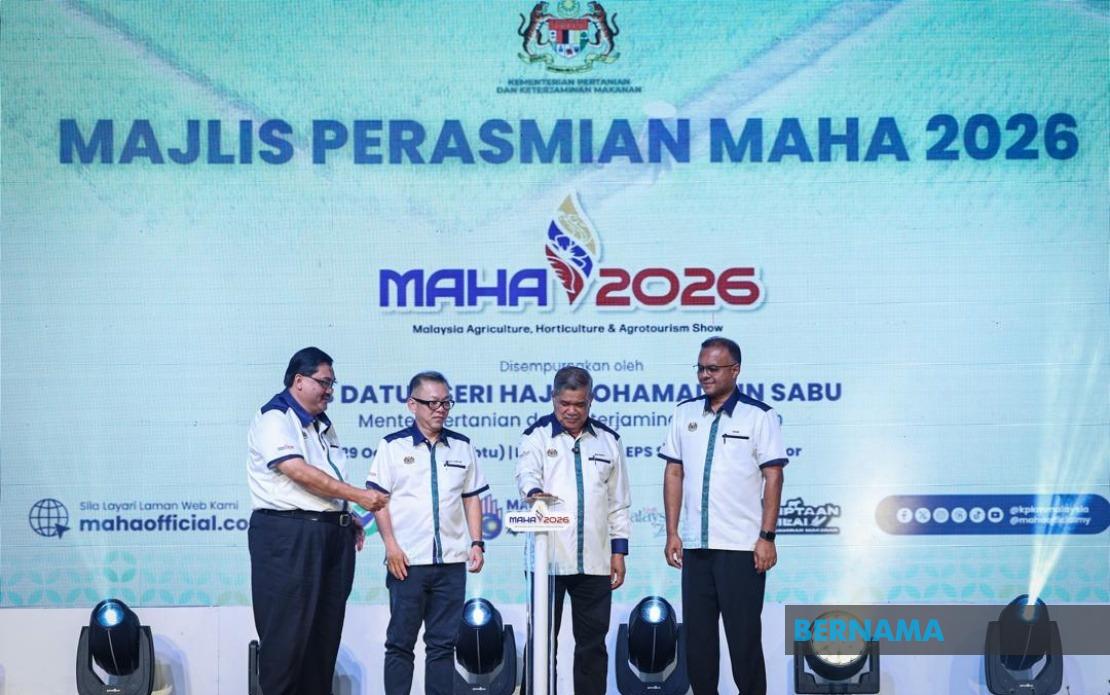
The Malaysia Agriculture, Horticulture and Agrotourism Show (MAHA) 2026, which opened at the Malaysia Agro Exposition Park Serdang (MAEPS) on August 28, represents a watershed moment for the country's agricultural transformation, according to Agriculture and Food Security Minister Datuk Seri Mohamad Sabu. Addressing the opening ceremony, the minister framed the nine-day event—running through September 6 and attracting approximately four million visitors alongside nearly 2,000 exhibitors—as a platform where the sector can fundamentally reorient its practices around environmental stewardship and long-term productivity.
At the heart of Mohamad's vision lies an urgent imperative: positioning sustainable agricultural practices as central to Malaysia's climate mitigation efforts and economic resilience. He emphasised that the adoption of such practices serves a dual purpose, simultaneously addressing the nation's carbon emissions while fortifying local produce competitiveness in both domestic and export markets. This framing reflects growing international recognition that agricultural sustainability is not a peripheral concern but a strategic necessity for countries navigating climate volatility and supply chain disruptions.
The minister cautioned against underestimating the importance of sustainability in agriculture and agrifood operations, effectively elevating what might otherwise be dismissed as technical or incremental improvements to a matter of national consequence. His remarks suggest a deliberate effort to shift industry mindsets and government priorities toward comprehensive environmental accountability rather than treating sustainability as an optional or aspirational add-on.
MAHA 2026 showcases a diverse array of sustainable methodologies designed to reduce the agricultural sector's ecological footprint. These encompass energy-efficient farming systems, integrated waste management protocols, food loss reduction strategies, elimination of single-use plastics from agricultural operations, regenerative farming techniques that restore soil health, and circular economy principles through enhanced recycling programmes. This comprehensive approach signals that sustainability encompasses not merely production methods but entire value chains, from farm gate to consumer.
Modhamad invoked the Green Book Policy, the landmark 1974 initiative introduced under Prime Minister Tun Abdul Razak, as a foundational model for contemporary food security strategies. That policy, which aimed to curtail import dependency and alleviate inflationary pressures on living costs through expanded domestic production, remains conceptually relevant in an era where global supply chain fragilities have become apparent. By resurrecting this historical reference, the minister positioned current sustainability efforts as a continuation of decades-old national vision rather than a novel experiment.
The government intends to reinforce both fisheries and livestock sectors through targeted modernisation efforts. Planned interventions include upgrading fishing vessel fleets, implementing advanced farming technologies, developing high-value aquaculture operations, adopting automated systems in animal feed manufacturing, and strengthening disease control infrastructure. These initiatives reflect recognition that sector-wide productivity gains cannot rely solely on traditional methods but must embrace technological advancement and biosecurity protocols to remain competitive and resilient.
International cooperation constitutes a significant dimension of MAHA 2026's strategic architecture. Delegations from 14 countries are participating in the exposition, with several bilateral and multilateral cooperation agreements anticipated to be concluded. However, Mohamad stressed that mere signing of memoranda of understanding falls short of meaningful collaboration. He explicitly called for these agreements to translate into tangible outcomes, including expanded export pathways, capital mobilisation for agribusiness enterprises, and foreign investment facilitation for Malaysian agritech start-ups and emerging agricultural entrepreneurs. This emphasis on implementation over ceremonial accord-signing suggests frustration with historical patterns where international agreements have yielded limited practical results.
The minister's call for international partnerships to drive export growth and attract venture capital reflects Malaysia's aspirations to position its agricultural sector as a knowledge-intensive, innovation-driven industry rather than one reliant primarily on commodity production. By encouraging agritech start-ups to secure investment from both domestic and international sources, the government signalls intent to modernise the sector through entrepreneurial dynamism and technological innovation.
For Malaysian consumers and policymakers, MAHA 2026 carries implications extending beyond the exposition itself. The event underscores government determination to navigate contemporary agricultural challenges—climate change, resource scarcity, demographic shifts in farming populations, and evolving consumer preferences—through systematic, coordinated strategies rather than ad hoc responses. The emphasis on sustainability, food security, and export competitiveness reflects acknowledgment that Malaysia's agricultural future depends on simultaneously serving domestic food needs, maintaining environmental integrity, and capturing international market opportunities.
The presence of Deputy Minister Datuk Chan Foong Hin and Ministry Secretary-General Datuk Seri Isham Ishak at the inauguration ceremony underscored governmental commitment at multiple institutional levels. This multi-layered engagement suggests that agricultural transformation will require sustained policy attention, inter-agency coordination, and resource allocation beyond a single ministry's purview.
Regional context adds further significance to Malaysia's agricultural reorientation. Across Southeast Asia, governments face common pressures: rising food import bills, climate-related production vulnerabilities, rural demographic challenges, and intensifying global competition for agricultural markets. Malaysia's positioning of MAHA 2026 as a sustainability-focused platform offers a model potentially relevant to neighbouring countries confronting similar pressures, positioning the nation as a thought leader in regional agricultural modernisation.
Ultimately, Mohamad Sabu's vision for MAHA 2026 articulates a comprehensive agricultural philosophy that integrates environmental responsibility, national food security, economic dynamism, and international engagement. Whether this exposition catalyses genuine sectoral transformation or represents aspirational messaging divorced from implementation challenges will become apparent through subsequent policy execution and investment patterns. Nonetheless, the minister's framing of agricultural sustainability as a non-negotiable priority rather than optional enhancement marks a discernible shift in official thinking about the sector's future trajectory.

