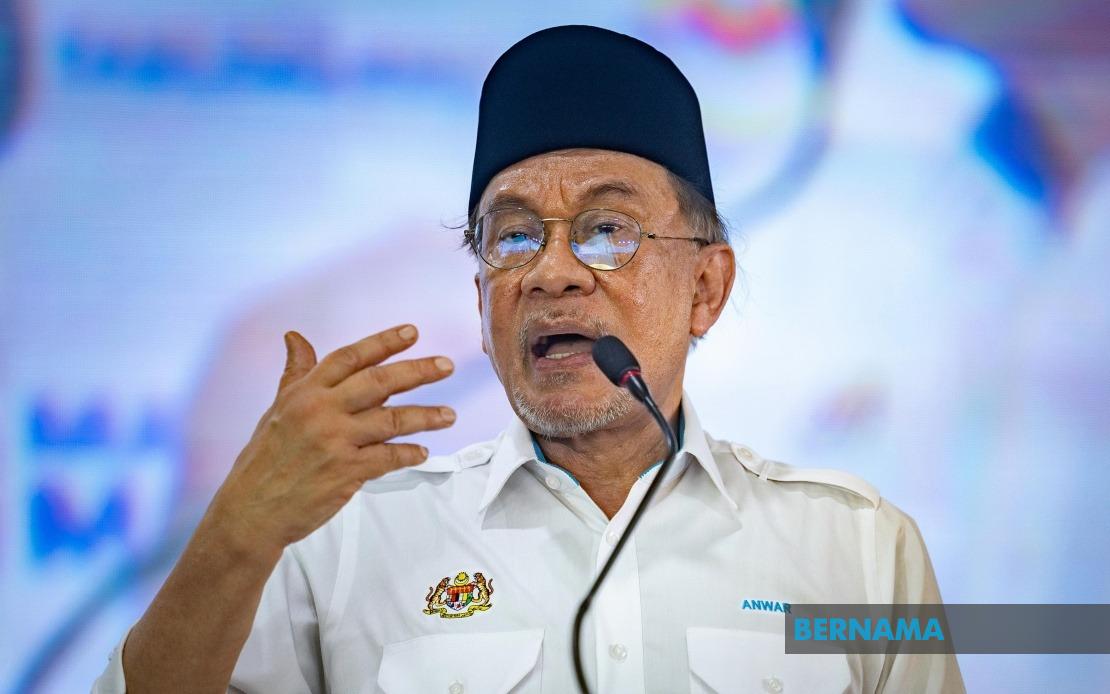
Prime Minister Datuk Seri Anwar Ibrahim has pledged the MADANI Government's sustained commitment to strengthening and modernising religious schools and pondok institutions throughout the nation. Speaking at the 2026 Perak Pondok and Religious Schools Gathering in Ipoh on July 19, Anwar underscored the government's determination to elevate these traditional educational establishments, which have historically formed a crucial pillar of Islamic learning and cultural preservation in Malaysia.
The Prime Minister acknowledged that traditional pondok schools once served as vital educational institutions in Malaysian society, providing knowledge transmission and spiritual guidance to successive generations. However, he recognised that these institutions struggled to maintain relevance as the nation underwent rapid modernisation and technological advancement. The inability of many pondok schools to adapt curriculum to encompass contemporary disciplines left them increasingly marginalised in an economy demanding diverse skill sets and digital literacy.
Anwar expressed particular admiration for religious scholars, pondok leaders, and tok guru who have demonstrated flexibility and forward-thinking despite institutional constraints. Rather than clinging exclusively to classical religious texts and Islamic traditions, these educators have begun embracing emerging fields such as computer technology and artificial intelligence. This willingness to integrate modern knowledge systems while preserving religious values represents a pragmatic approach that could ensure pondok schools remain educationally relevant and economically viable in the twenty-first century.
The commitment extends beyond rhetorical support. Anwar specifically acknowledged collaboration between government agencies charged with modernisation efforts. The Malaysia Digital Economy Corporation and the Implementation Coordination Unit within the Prime Minister's Department have been instrumental in facilitating technological integration and digital infrastructure improvements within religious schools. This institutional cooperation demonstrates that upgrading pondok institutions requires coordinated effort across multiple government portfolios, merging educational policy with digital economy objectives.
Anwar's remarks came with a carefully qualified assurance, contingent on sustained economic performance and national health stability. His invocation of religious language—using "insya-Allah" (God willing)—coupled with conditional language regarding economic conditions, reflects the reality that educational funding priorities depend on broader macroeconomic circumstances. This framing suggests the government views pondok school investment as discretionary spending that expands during periods of fiscal strength, a reality that may concern advocates for stable, long-term educational funding mechanisms.
The Prime Minister specifically referenced his conversation with Sheikh Wazir Che Awang Al-Makki, a prominent Kelantan-based religious scholar, indicating that these commitments have been made at the highest levels of religious leadership engagement. This personal dimension suggests an attempt to build consensus between government and traditional Islamic institutions, crucial for legitimising modernisation initiatives within conservative religious communities that might otherwise resist changes to classical educational approaches.
The gathering itself represented significant government attention to pondok education, with attendance from Perak Menteri Besar Datuk Seri Saarani Mohamad, Minister in the Prime Minister's Department (Religious Affairs) Dr Zulkifli Hasan, and Chief Secretary to the Government Tan Sri Shamsul Azri Abu Bakar. This high-level representation underscores that pondok school modernisation constitutes policy priority at federal and state levels, integrating religious affairs, economic development, and general government coordination.
For Malaysian policymakers, the challenge involves balancing preservation of Islamic educational traditions with economic imperatives. Pondok schools educate tens of thousands of Malaysian youth and maintain cultural continuity in rural communities where alternative educational provision remains limited. Yet their graduates frequently lack skills marketable in modern labour markets, perpetuating cycles of educational disadvantage. Government support for technological integration could address this gap, enabling pondok graduates to pursue diverse career pathways while maintaining their religious foundation.
The regional context matters significantly. Across Southeast Asia, governments have grappled with modernising traditional Islamic institutions without compromising religious authenticity or community trust. Indonesia's pesantren schools and Thailand's Islamic institutions face similar pressures. Malaysia's approach—partnering government digital economy agencies with religious education providers—offers a model potentially applicable elsewhere in the region, suggesting that technological integration need not entail secularisation.
Implementing this vision faces practical obstacles. Many pondok schools operate with severely limited budgets, ageing infrastructure, and teaching staff lacking formal qualifications in technology disciplines. Bridging the digital divide requires sustained investment, comprehensive teacher training programmes, and curriculum development resources. The government's commitment must translate into concrete funding allocations and technical support mechanisms rather than remain aspirational rhetoric. Monitoring mechanisms will determine whether pledges produce measurable improvements in pondok school technological capacity and graduate employment outcomes.
The timing of this announcement—referencing the 2026 gathering—suggests medium-term planning horizons, yet clarity regarding funding timelines, implementation sequencing, and success metrics remains elusive. Schools and administrators require detailed roadmaps specifying resource allocation, training opportunities, and performance expectations. Without such specificity, enthusiasm from government leadership may not translate into institutional transformation at the ground level where educational outcomes ultimately materialise.
Anwar's acknowledgement of pondok schools' historical significance reflects recognition that Malaysia's educational landscape encompasses diverse institutions serving distinct communities and purposes. Rather than treating pondok schools as antiquated remnants requiring dismantling, the MADANI framework positions them as legitimate educational providers requiring strategic modernisation. This stance potentially strengthens social cohesion by respecting religious educational preferences while advancing national development objectives through skills enhancement and technological literacy.

