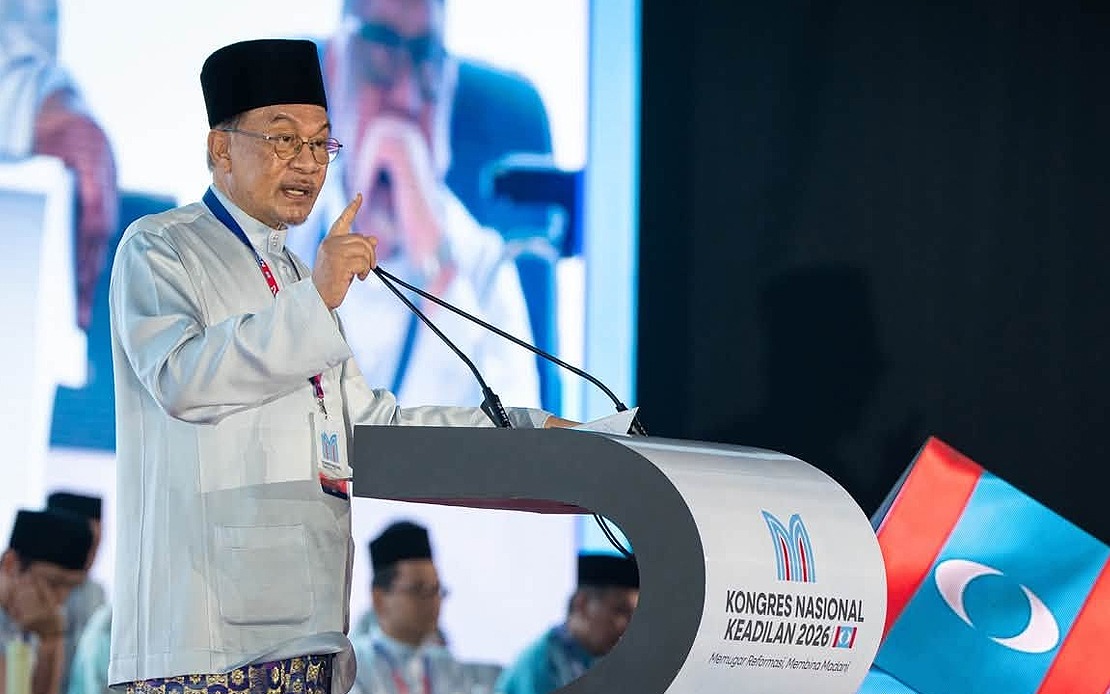
The gap between policy announcements and public perception represents one of the most pressing challenges facing Malaysia's current administration, according to Tengku Datuk Seri Zafrul Tengku Abdul Aziz, the Prime Minister's Senior Political Advisor. Speaking during the 2026 PKR National Congress in Melaka, Tengku Zafrul articulated a fundamental principle that has long troubled reform-minded governments across Asia: impressive statistics on paper mean little without corresponding improvements in daily life. His remarks, delivered via social media on August 15, underscore growing awareness within government circles that the MADANI administration's legitimacy ultimately depends not on the comprehensiveness of its policy portfolio, but on whether ordinary Malaysians experience meaningful change in their economic circumstances and quality of life.
The distinction Tengku Zafrul drew between macroeconomic performance and household-level prosperity strikes at the heart of contemporary Malaysian governance. The nation's economy expanded by six percent, significantly outperforming analyst expectations, yet this headline growth figure obscures a critical reality: not all segments of Malaysian society benefit equally from such expansion. The advisor's emphasis on "spillover effects felt by all citizens" reflects an acknowledgment that without deliberate policy design and effective implementation, aggregate growth can bypass lower-income Malaysians and reinforce existing inequalities. This concern resonates particularly in Southeast Asia, where rapid economic development has frequently masked persistent poverty and widening wealth gaps in peripheral regions and among vulnerable communities.
The MADANI Government's reform agenda, as outlined by PKR President Datuk Seri Anwar Ibrahim during the congress proceedings, encompasses several substantive initiatives intended to reshape Malaysia's institutional landscape. The proposed abolition of the Universities and University Colleges Act (AUKU) represents a symbolic break with restrictive governance frameworks that have long constrained academic freedoms, signalling the administration's intent to modernize state structures that many view as vestiges of authoritarian governance. Simultaneously, the government has prioritized institutional rehabilitation efforts, particularly targeting the Federal Land Development Authority (FELDA), an organization whose performance deterioration has become emblematic of broader governance challenges affecting state-linked enterprises across Malaysia.
Yet Tengku Zafrul's most pointed criticism targeted what might be characterized as a communications deficit within government. His declaration that "if the people do not know, that is not the people's fault" represents an unusual moment of administrative candor, effectively acknowledging that the MADANI Government has failed adequately to publicize its achievements and policy direction to the broader population. This communication gap carries significant political consequences, particularly for a coalition whose legitimacy rests partly on demonstrated competence and public trust. In an era of competing media narratives and sophisticated opposition messaging, administrative silence about government achievements becomes functionally equivalent to those achievements not occurring, from a public perception standpoint.
The congress itself, themed "Reviving Reform, Building MADANI" and held at the Melaka International Trade Centre over two days, provided a venue for PKR to recalibrate its messaging and internal coherence. Tengku Zafrul's observation that debate sessions aligned generally with Anwar's policy speech suggests party leadership successfully maintained disciplinary control over discussions, preventing damaging public divisions that might undermine coalition stability. For Malaysian observers, this internal cohesion matters considerably, given that coalition governments often fragment under pressure, threatening policy continuity and implementation effectiveness.
The emphasis on enhanced communication strategies reflects a broader recognition that policy implementation in Malaysia faces structural challenges beyond mere budgetary constraints or administrative capacity. The average Malaysian citizen's awareness of specific government initiatives remains surprisingly limited, despite their potential to improve living standards in areas ranging from tertiary education access to agricultural sector modernization. Improving this information asymmetry requires sustained effort across multiple media platforms, targeting different demographic groups with tailored messaging that connects abstract policy objectives to concrete personal benefits. Without such strategic communication, even well-designed programs risk becoming obscure bureaucratic initiatives rather than transformative public policies.
Economic initiatives outlined in forthcoming budgetary proposals represent another dimension of the MADANI Government's reform vision. While specific details remained undisclosed at the congress, the administration's positioning of economic measures as central to its reform narrative indicates awareness that institutional restructuring alone proves insufficient without parallel economic policies that improve employment prospects, housing affordability, and income security. For Malaysia's younger demographic, particularly university graduates facing uncertain labor market prospects, economic initiatives connected to job creation and sectoral development carry particular salience.
Tengku Zafrul's call for stronger party machinery and improved working mechanisms points toward organizational challenges that plague many ruling coalitions in Southeast Asia. The translation of policy into ground-level implementation requires coordinated effort across multiple bureaucratic layers, strong institutional capacity, and consistent political direction. PKR's specific role within this machinery becomes critical, given its positioning as the numerically dominant party within the governing coalition. Internal party discipline, volunteer motivation, and grassroots organizational capacity directly influence whether government initiatives actually reach target beneficiaries and achieve intended outcomes.
The advisor's invocation of "God willing" before predicting electoral success carries particular resonance in Malaysian political discourse, where religious framing frequently accompanies political messaging directed toward the majority-Muslim electorate. However, beneath this rhetorical flourish lies a substantive argument: that the MADANI Government's political future depends on demonstrable delivery of promised reforms rather than abstract claims about governance philosophy or ideological purity. This represents a return to fundamentals of electoral competition—performance-based legitimacy rather than ideological positioning.
Looking forward, the MADANI Government faces an implementation challenge that transcends partisan politics. The period between now and the next general election will largely determine whether the current administration's reform agenda translates into voter satisfaction or public skepticism. For Malaysians broadly, the stakes involve whether institutional modernization actually improves government service delivery, whether economic policies create genuine opportunity, and whether anti-corruption efforts reshape actual practice rather than merely adjusting rhetorical emphasis. Tengku Zafrul's frank assessment suggests that government leadership understands this reality, even if the mechanisms for achieving genuine transformation remain uncertain.

