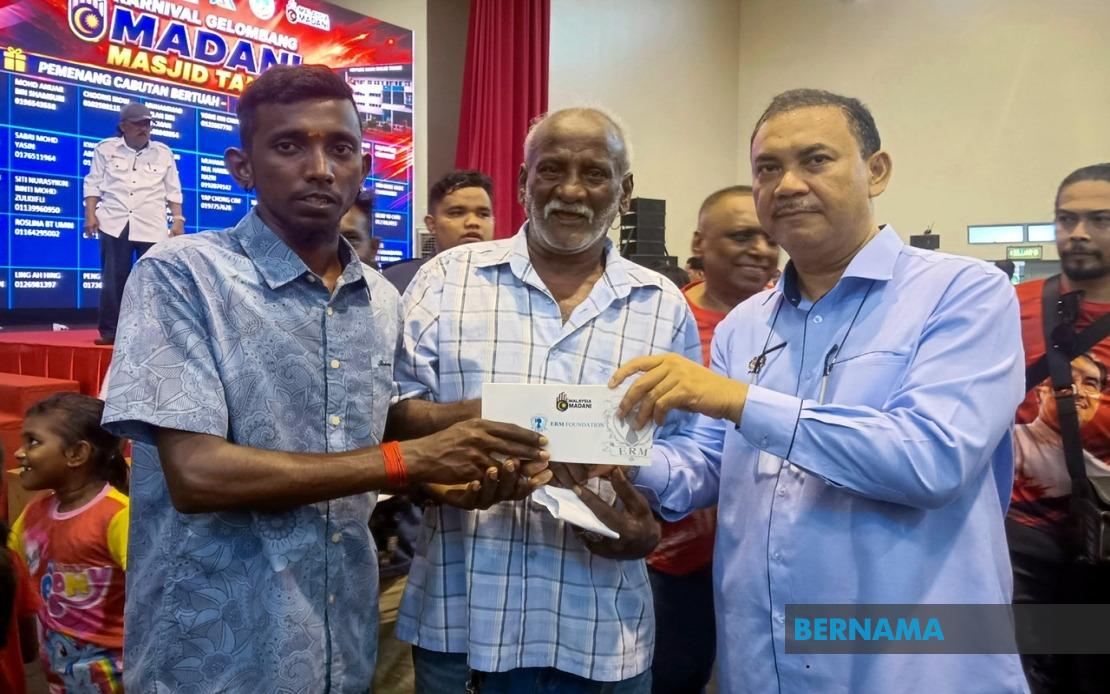
The Gelombang MADANI Carnival in Alor Gajah delivered tangible relief to 2,000 residents of the Masjid Tanah parliamentary constituency yesterday, marking another phase in the government's targeted poverty alleviation efforts. The initiative, known as Sentuhan MADANI, focused specifically on disbursing cash assistance to households struggling with day-to-day expenses, encompassing beneficiaries from across five distinct state constituencies within the broader parliamentary area.
According to Datuk Azman Abidin, the Prime Minister's political secretary, each recipient received RM200 in direct cash assistance as part of the donation programme. The distribution took place at the Masjid Tanah Sports Complex and represented a coordinated effort spanning the constituencies of Kuala Linggi, Lendu, Tanjung Bidara, Ayer Limau, and Taboh Naning. This geographic spread demonstrates the comprehensive nature of the assistance, ensuring that vulnerable populations across the entire parliamentary area would benefit from the support mechanism.
The targeting criteria for the Sentuhan MADANI initiative reveals the government's focus on specific demographic groups facing financial constraints. Recipients were drawn primarily from the B40 income bracket, which encompasses the bottom forty percent of earners, alongside persons with disabilities who often face additional challenges in securing stable employment and managing elevated healthcare costs. Senior citizens also formed a significant portion of beneficiaries, acknowledging the precarious financial positions many elderly Malaysians face when relying on fixed or inadequate pension schemes. Low-income earners across the broader community rounded out the recipient groups, addressing the persistent challenge of wage stagnation and rising living costs that characterise contemporary Malaysia.
The RM200 allocation, while modest in absolute terms, holds considerable significance for households operating within tight financial margins. For families in the B40 category, such assistance can represent a meaningful supplement to monthly income, providing breathing room for essential expenditures. In the Malaysian context, where many lower-income households spend disproportionate portions of their income on housing, food, and utilities, even modest cash transfers can prevent difficult choices between competing necessities.
Ramlah Othman, a 63-year-old beneficiary from Tanjung Bidara, articulated the practical value of the assistance in reducing household burden. Her comments highlight how recipients themselves perceive the initiative as directly addressing their financial pressures rather than serving as mere symbolic recognition. The timing of such interventions during periods of inflation and increased cost-of-living pressures amplifies their importance in the lived experience of vulnerable Malaysians.
The programme's recognition of persons with disabilities as a specific beneficiary category underscores their particular vulnerability to poverty. Individuals managing disabilities often encounter barriers to employment, face discrimination in hiring practices, and incur substantial out-of-pocket medical and accessibility-related expenses. By including this group explicitly within the assistance framework, the government acknowledges that standard poverty reduction measures may insufficiently address the compounded challenges facing persons with disabilities.
N. Mariappan, a 69-year-old stroke patient from Ladang Sungai Baru, exemplified the intersection of disability and advanced age that can create acute financial vulnerability. His perspective on the initiative reflects appreciation for governmental recognition of senior citizens' specific circumstances. As Malaysia's population ages, with projections indicating that persons over 65 will constitute an increasingly significant demographic proportion, the welfare challenges facing elderly Malaysians demand sustained policy attention and resource allocation.
The Sentuhan MADANI programme sits within a broader Malaysian policy framework emphasising targeted rather than universal welfare provision. This approach prioritises identifying and supporting those most in need while managing fiscal constraints. However, the success of such targeted schemes depends critically on accurate identification of eligible beneficiaries, effective programme delivery mechanisms, and ensuring that assistance reaches intended recipients without excessive bureaucratic friction.
From a regional perspective, Malaysia's approach to social assistance shares common characteristics with other Southeast Asian economies grappling with poverty reduction. The emphasis on cash transfers, direct assistance, and explicit targeting of vulnerable demographics aligns with international best practice in development economics. However, questions remain about programme sustainability, adequacy of assistance levels, and coordination with other social protection mechanisms including employment support services and skills development initiatives.
The carnival framework combining assistance distribution with community engagement activities reflects contemporary approaches to social policy implementation. Rather than treating welfare provision as a purely transactional administrative function, linking it with broader community gatherings creates opportunities for beneficiaries to access information about additional government services and programmes. This model potentially increases programme effectiveness by connecting vulnerable populations with multiple support mechanisms simultaneously.
Looking forward, the scale of the Gelombang MADANI Carnival and the geographic breadth of the Sentuhan MADANI initiative suggest sustained governmental commitment to poverty alleviation as a policy priority. However, addressing persistent poverty and vulnerability in Malaysia requires complementary investments in education, healthcare, employment creation, and skills development alongside income support measures. The RM200 assistance, while appreciated, represents a short-term intervention requiring integration within comprehensive long-term poverty reduction strategies.
The testimonies of individual beneficiaries like Ramlah Othman and N. Mariappan provide valuable insight into how government assistance programmes translate into measurable improvements in daily life for vulnerable Malaysians. These direct accounts of appreciation and acknowledgment of the initiatives' practical value serve as important feedback on programme effectiveness. As Malaysia continues developing its social protection framework, sustaining programmes that demonstrably improve the circumstances of the most vulnerable populations remains essential to achieving broader development objectives and ensuring inclusive growth across the nation.

