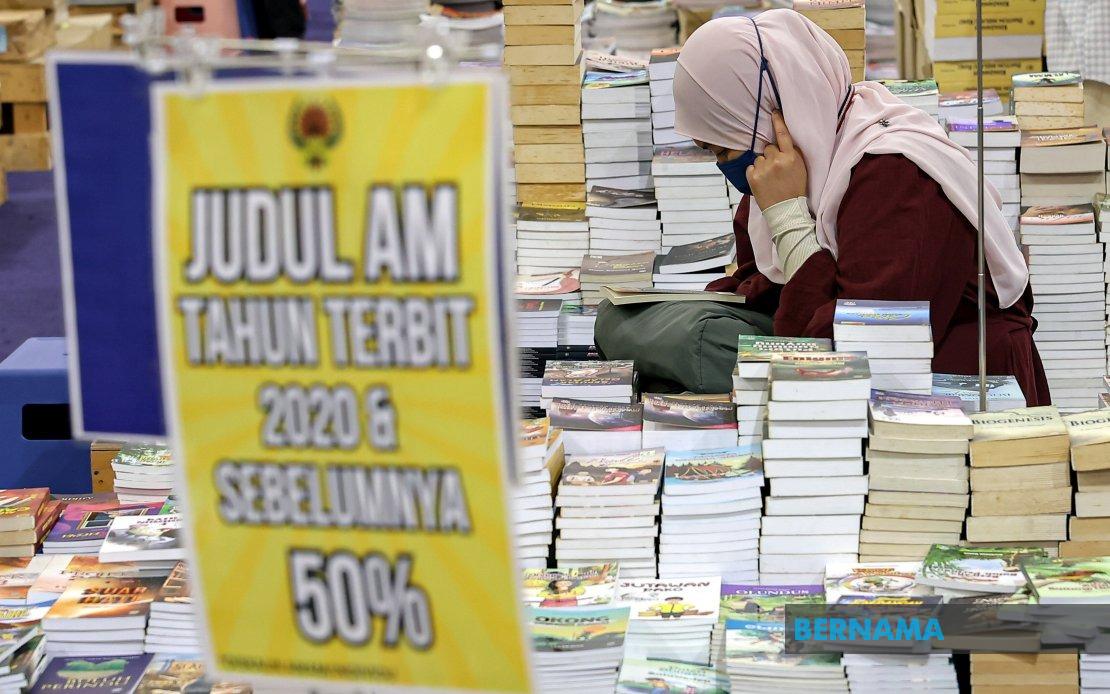
Malaysia's signature MADANI Book Voucher Programme is launching its redemption phase tomorrow with the potential to benefit more than 2.2 million students nationwide. The government has allocated RM221.6 million to support this year's iteration, which Deputy Education Minister Wong Kah Woh announced would run until October 31 in the Dewan Rakyat. The programme targets learners across a broad spectrum of educational institutions, from upper secondary students through to teacher trainees at the Malaysian Institute of Teacher Education, ensuring that the initiative spans multiple pathways within the country's education system.
The redemption mechanism has been entirely digitalised through the BookCapital platform, a decision that reflects the government's broader push toward paperless administration. Beginning at 11 am tomorrow, the 2,217,579 eligible recipients will access their RM100 e-vouchers online rather than through traditional paper distribution. The platform currently hosts 1,238 registered booksellers, creating a competitive marketplace that encourages diverse inventory and pricing. This shift to digital delivery carries particular significance for Malaysia's geographically dispersed student population, where remote communities have historically faced barriers to accessing educational resources on par with urban centres.
A notable feature of this year's programme is the introduction of the MADANI Special Title Focus, a curated collection designed to steer reading habits toward intellectually substantive material. Rather than allowing unrestricted book purchases, the initiative now mandates that each student acquire at least one title from a prescribed category encompassing literary classics, historical works, philosophical texts, and treatises on economics and geopolitics. This pedagogical approach suggests growing concern within the Ministry of Education about ensuring that subsidised reading funds translate into genuine intellectual development rather than casual consumption.
Technology and innovation have become prominent within the approved titles, reflecting Malaysia's competitive positioning in the regional and global economy. The programme prioritises works on artificial intelligence, information technology, and the broader STEM landscape, acknowledging that students today will inherit a labour market fundamentally shaped by digitalisation and automation. By embedding these subjects within the voucher system, the government attempts to cultivate familiarity with future-oriented knowledge at the secondary and tertiary levels. This represents a calculated investment in human capital development, though questions remain about whether reading alone can adequately prepare students for roles in advanced technological sectors.
Evaluation data released by Wong demonstrates measurable positive outcomes from the programme's initial implementation. An impact study conducted by the Darul Ehsan Institute found that 97.5 per cent of surveyed recipients reported that the vouchers substantially assisted their studies, with a particularly strong benefit for students from lower-income households. Furthermore, 92.2 per cent indicated that the reading materials had strengthened their examination preparation. These figures suggest that the programme has achieved meaningful traction, though they should be interpreted within the context of self-reported satisfaction rather than demonstrable academic performance metrics.
The redemption experience across the first two years reveals operational success at scale. Wong highlighted that the 2024 cycle achieved 100 per cent redemption, a remarkable figure that indicates virtually all eligible students utilised their allocations within the designated window. This statistic contrasts sharply with common implementation challenges in public schemes, where uptake often falls significantly short of projections due to awareness gaps, administrative friction, or accessibility barriers. The entirely online mechanism appears to have minimised such friction, enabling participation even among students in remote areas who might otherwise require travel to physical redemption locations.
The equity dimension underpinning the MADANI initiative resonates strongly with Malaysia's broader socioeconomic context. By distributing identical voucher values to all eligible students regardless of family income or geographic location, the programme embodies a commitment to educational equality in its most tangible form. Wong's assertion that the initiative ensures identical books, identical opportunities, and an identical future for Malaysian children articulates an aspirational vision—one that acknowledges how unequal access to reading materials can reinforce existing disadvantages. For families unable to purchase books independently, the subsidy translates into concrete intellectual resources that might otherwise remain inaccessible.
The operational metrics Wong cited—100 per cent redemption, 100 per cent transparency, and zero leakages—suggest tight control over fund deployment. The absence of reported fraud or misappropriation indicates that the digital architecture has successfully prevented the kinds of implementation failures that plague many government assistance programmes. Transparency features built into the BookCapital platform likely contribute to this outcome, creating an auditable record of each transaction and removing opportunities for middlemen or corrupt intermediaries to divert resources.
However, the sustainability and long-term impact of the programme merit closer examination. While satisfaction metrics appear strong, translating reading access into improved educational outcomes requires complementary investments in teacher training, library infrastructure, and pedagogical integration of assigned texts. The curated focus on STEM and technology titles reflects legitimate policy objectives, yet prescriptive reading lists can also narrow intellectual exploration if students perceive them as mandatory constraints rather than gateways to broader inquiry.
The redemption launch tomorrow marks a continuation of a scheme that has evolved significantly since its 2024 introduction. The incorporation of thematic focus areas, the expansion to cover additional institutional categories, and the demonstrated success of the digital platform suggest a maturing programme moving beyond initial implementation toward more intentional design. For Malaysian students, particularly those in lower-income households, the vouchers represent not merely purchasing power but symbolic recognition that their intellectual development warrants public investment.
As the redemption window opens, the real test will extend beyond operational metrics to whether students engage meaningfully with the curated selections and whether exposure to technology-focused and classical literature contributes meaningfully to their educational trajectories. The programme's architects have created the infrastructure for equal access; whether that access translates into substantive educational gains remains a question that will require assessment extending well beyond the October 31 redemption deadline. This iterative approach—gathering feedback, refining selections, and expanding coverage—suggests that policymakers regard the MADANI vouchers as an evolving intervention rather than a fixed initiative.

