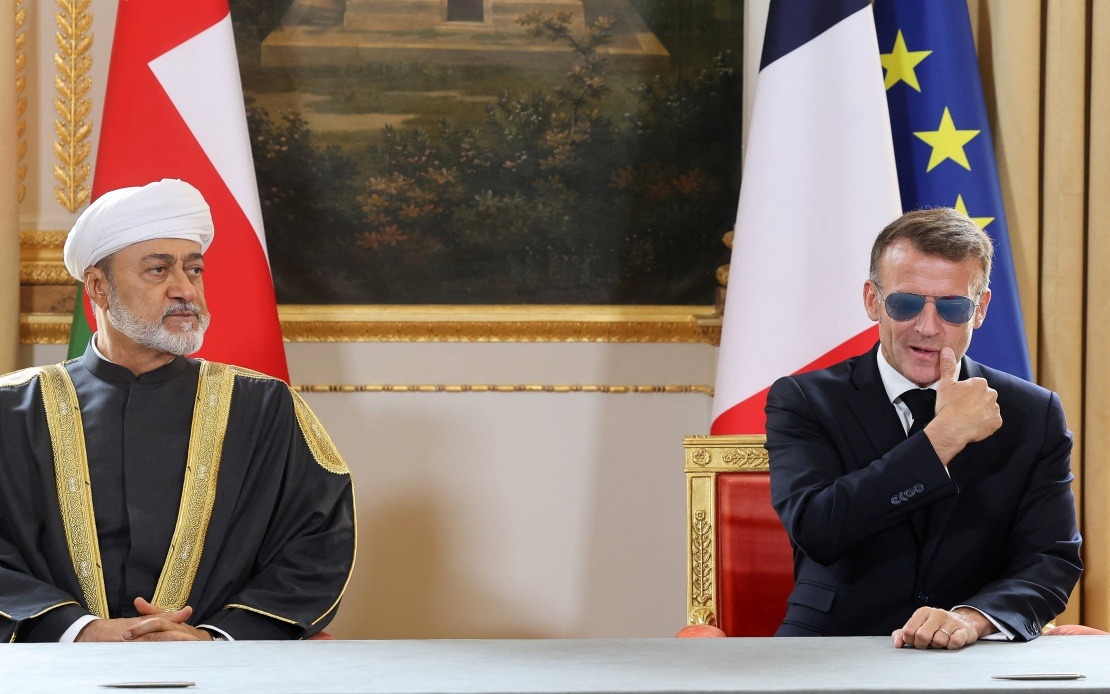
French President Emmanuel Macron appeared at the Élysée Palace on Monday wearing the aviator-style sunglasses that have become something of a signature piece of headwear, this time while receiving Sultan Haitham bin Tariq of Oman. The eyewear remained on throughout the bilateral discussions, drawing fresh attention to an accessory that has already generated considerable international commentary and commercial interest in recent months.
According to French media sources with knowledge of the president's circumstances, Macron wore the sunglasses due to an ongoing eye condition rather than for any fashion statement. Officials had previously disclosed in January that the French leader experienced a minor eye inflammation that necessitated wearing protective eyewear for approximately two weeks. The recurrence of this issue evidently persisted long enough to affect his schedule six months later, underscoring the sometimes unpredictable nature of such medical conditions in public figures.
The sunglasses first captured widespread international attention when Macron wore them to the World Economic Forum held in Davos earlier this year. That high-profile appearance at one of the world's most scrutinised economic and political gatherings transformed what might have otherwise been an unremarkable health accommodation into a subject of considerable public commentary and humour. The eyewear drew particular attention from United States President Donald Trump, who used the occasion to mock the French leader, while media commentators and social media users in France largely responded with good-natured jesting, with many noting Macron's resemblance to actor Tom Cruise in his iconic film roles.
The commercial implications of the Davos appearance proved unexpectedly significant for French luxury eyewear manufacturer Henry Jullien. Following Macron's high-visibility wearing of the aviators at the Swiss forum, the company experienced a substantial surge in customer inquiries about the specific model. Rather than treating the attention as a fleeting moment, Henry Jullien recognised the marketing opportunity and has continued to leverage the association, actively promoting the model using photographs of Macron in the sunglasses.
For Malaysian and Southeast Asian observers, the incident illustrates how the visibility of major world leaders—even in contexts of medical necessity—can generate unexpected cultural and commercial ripples. When France's head of state appears in distinctive eyewear at major international forums, the image circulates globally within hours, creating marketing value that luxury brands can exploit without having paid for traditional advertising. This phenomenon speaks to the contemporary reality of political leadership, where the visual presentation of leaders becomes subject to international scrutiny regardless of the underlying reasons.
The meeting between Macron and Sultan Haitham bin Tariq represented an important diplomatic engagement between France and Oman, a significant player in Middle Eastern geopolitics and a country with which France maintains substantial trade and security interests. Oman's strategic position on the Arabian Peninsula, combined with its reputation for diplomatic neutrality and mediation in regional disputes, makes bilateral discussions with French leadership matters of substance. Yet the international media narrative surrounding the meeting was partially dominated by the accessory worn during the greeting rather than the substantive content of the discussions.
This dynamic raises questions about how contemporary political communication operates in an age of instantaneous global image transmission. Senior political figures must manage not only their policy positions and diplomatic messages but also the visual elements that accompany their public appearances. What was once a minor health accommodation—wearing protective eyewear due to eye inflammation—became transformed through international visibility into a recognisable identifier for the French president.
The persistence of Macron's eye condition, evident from the need to wear the sunglasses again six months after the January inflammation diagnosis, suggests either a recurring problem or extended recovery from the original inflammation. Medical conditions affecting vision in public figures often remain private matters discussed only when they become visually evident during public appearances. The French president's offices determined that the most practical approach was to explain the medical rationale rather than avoid the inevitable questions and speculation that would arise from his appearance in the distinctive eyewear.
Looking forward, the sunglasses have transcended their original medical purpose to become a recognisable symbol associated with Macron's image. Whether the eye condition continues or resolves, the eyewear has now entered the public consciousness as part of his visual identity. This illustrates how unexpected elements of personal circumstance can become woven into the public narrative surrounding political leaders, sometimes overshadowing the substantive matters they are engaged with on the international stage.

