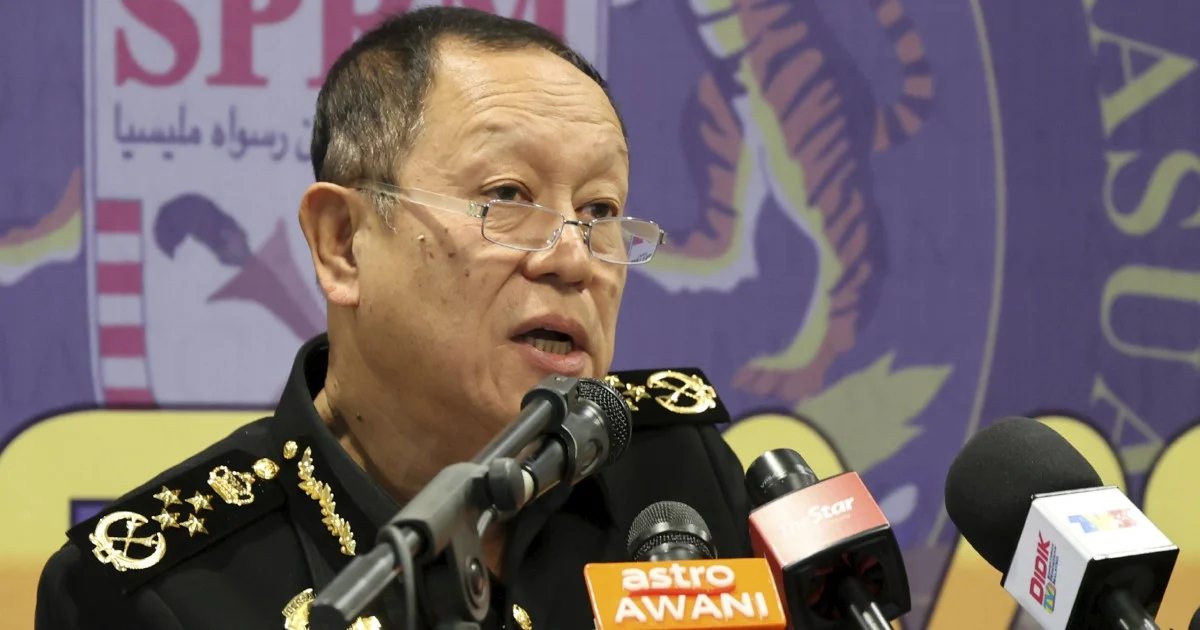
The Malaysian Anti-Corruption Commission has signalled its intention to call in a number of individuals for questioning as part of an expanding investigation into a high-value property acquisition in the United States that authorities believe may have been financed through money traced back to 1Malaysia Development Bhd. The probe represents a fresh chapter in the unraveling of what has become one of the most significant financial scandals in Southeast Asian history, with investigators now pursuing asset trails that extend far beyond Malaysia's borders into the American real estate market.
Among those expected to provide statements is the wife of a former Malaysian prime minister, according to statements made in Kuala Lumpur. The involvement of individuals with direct family connections to high-level political figures underscores the depth to which officials are prepared to investigate the alleged misappropriation of state development funds, even when such inquiries touch upon the nation's most senior leadership circles. This willingness to pursue prominent figures reflects international pressure on Malaysian authorities to demonstrate serious intent in dismantling the corrupt networks through which 1MDB funds were allegedly diverted.
The 1MDB affair, which centred on a government investment fund established in 2009, saw billions of ringgit vanish through an elaborate web of fraudulent transactions and international transfers. Over the past decade, investigations across multiple jurisdictions have recovered assets, secured convictions, and returned substantial sums to Malaysia, yet new leads continue to surface that suggest the full scope of asset diversification remains incompletely mapped. The identification of luxury property holdings overseas funded through the allegedly stolen money has become a priority as authorities work to prevent final dispersal of remaining proceeds and to establish comprehensive accountability for every stage of the illicit financial chain.
The United States property in question represents the type of high-value, easily concealed asset that individuals close to the 1MDB fund routinely targeted for acquisition as a means of disguising the origins of their newfound wealth. American real estate, particularly in desirable metropolitan areas and exclusive enclaves, has long served as a preferred vehicle for international money laundering due to the relative ease with which purchases can be structured through shell companies and complex ownership arrangements. Intelligence agencies and financial investigators have consistently identified luxury property markets in America as a significant concern for assets derived from corruption or organised crime.
The scope of the MACC inquiry suggests that officials have identified documentary or financial evidence establishing a plausible connection between the property in question and flows of capital originating from 1MDB accounts. This may include banking records, wire transfer documentation, or testimony from individuals with direct knowledge of acquisition arrangements. The decision to summon multiple witnesses indicates that authorities are attempting to construct a narrative showing how funds moved from the Malaysian development vehicle through various intermediate accounts and eventually into the hands of property purchasers.
The international dimension of this investigation reflects broader cooperation efforts between Malaysian law enforcement and authorities in the United States and other countries. Over the course of the 1MDB inquiry, American federal prosecutors and the Department of Justice have played instrumental roles in unravelling complex financial transactions and enforcing the recovery of assets held within American jurisdictions. The identification of this particular property likely emerged through collaborative intelligence sharing and joint investigative work that has become standard practice in major transnational corruption cases.
For Malaysian readers, the continuation of investigations years after the initial scandal became public underscores the protracted nature of financial crime accountability. While headline convictions and high-profile trials may dominate news cycles during specific periods, the systematic recovery of misappropriated assets and the pursuit of remaining suspects typically spans many years. Each new investigation phase, whether targeting a specific property or financial transfer, contributes incrementally to the larger objective of demonstrating that corruption has concrete consequences, even for those with powerful political connections.
The questioning of witnesses is expected to shed light on the ownership structures and acquisition processes surrounding the American property. Investigators will likely explore whether the purchase involved front companies, whether beneficial ownership was intentionally obscured, and how funds were ultimately transferred for the transaction. Such inquiries often reveal not merely the mechanics of a single transaction but broader patterns of financial engineering that extended across multiple fraudulent schemes and asset acquisitions.
The investigation also carries implications for Malaysia's international standing and credibility in combating financial crime. Global investors and business partners scrutinise how seriously governments pursue corruption cases involving state funds, particularly when those cases involve prominent figures. The demonstrated willingness of the MACC to pursue investigations wherever evidence leads, regardless of political sensitivity, reinforces perceptions of institutional independence and genuine commitment to accountability.
As the investigation progresses and witnesses provide statements, additional details about the property's financing and the individuals involved in its acquisition may emerge. The involvement of a former prime minister's wife, in particular, may generate significant public discussion about how thoroughly the nation has reckoned with the institutional failures that allowed the 1MDB scandal to occur in the first place. The ongoing inquiry reflects the reality that accountability for large-scale financial crime cannot be compressed into a compressed timeframe but rather demands sustained institutional effort across multiple years and across international boundaries.

