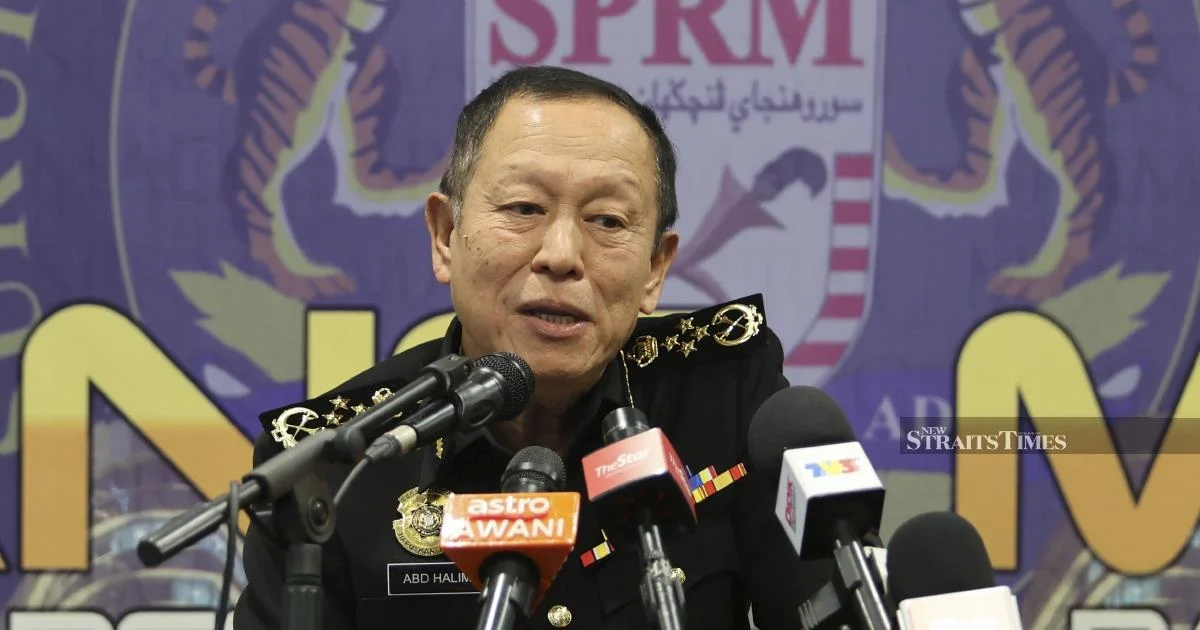
The Malaysian Anti-Corruption Commission (MACC) has firmly reasserted that its investigation into Low Taek Jho, the fugitive businessman at the centre of the 1Malaysia Development Berhad (1MDB) scandal, remains operational and has not been suspended or closed. The statement from MACC's leadership underscores the agency's commitment to pursuing the case despite the challenges posed by Low's absence from Malaysian jurisdiction and the complexities of international enforcement.
Low Taek Jho's role in the 1MDB affair represents one of the most significant corruption cases in Malaysia's modern history. The former financier allegedly orchestrated a vast embezzlement scheme involving billions of ringgit from the state investment fund, with investigations revealing sophisticated international money laundering networks spanning multiple continents. His continued evasion of Malaysian authorities has been a source of frustration for law enforcement agencies and policymakers alike, particularly given the scale of alleged wrongdoing and the impact on national development projects.
The MACC's clarification carries particular significance at a time when public attention on the 1MDB matter has somewhat diminished from its peak. By reaffirming that investigative work continues behind the scenes, the commission is signalling that the passage of time and Low's geographical distance from Malaysia do not constitute obstacles to the pursuit of justice. This persistence reflects broader international cooperation frameworks that enable Malaysian authorities to gather evidence and coordinate with overseas enforcement bodies.
The challenge of prosecuting a fugitive in absentia requires sustained investigative effort and international engagement. Malaysian authorities have worked with counterparts in countries including the United States, Singapore, and others to piece together the intricate financial trails associated with the 1MDB fund diversions. These collaborative efforts have yielded significant results in freezing and recovering assets allegedly linked to the scheme, demonstrating that investigations can advance even without the suspect's physical presence in the country.
Low's flight from Malaysia and subsequent refusal to return represents a calculated evasion strategy. His relocation to countries without extradition treaties with Malaysia, coupled with his alleged use of multiple identities and complex corporate structures, has created substantial investigative hurdles. However, modern forensic accounting techniques and international financial regulatory cooperation have made it increasingly difficult for sophisticated money launderers to completely obscure their activities from determined authorities.
For Malaysian citizens and taxpayers, the ongoing investigation represents an attempt to recover misappropriated public funds. The 1MDB scandal resulted in the loss of billions in development capital that could have been deployed toward infrastructure, healthcare, and education initiatives. The MACC's commitment to continuing the probe reflects a broader expectation that those responsible for such massive fraud should ultimately face accountability, regardless of their current whereabouts.
The reaffirmation also addresses concerns among civil society observers and anti-corruption advocates who have periodically questioned whether political changes or other pressures might lead to a quiet abandonment of the case. By publicly stating that the investigation remains active, the MACC is providing transparency and reassurance that institutional commitment to addressing corruption at the highest levels has not wavered. This commitment is essential for maintaining public confidence in Malaysia's anti-corruption framework.
International dimensions of the case continue to evolve. Foreign governments and their agencies have conducted parallel investigations into the same transactions, resulting in criminal charges and convictions in multiple jurisdictions. These overlapping investigations create additional leverage for Malaysian authorities, as evidence and testimony gathered abroad can be shared through mutual legal assistance treaties and other cooperative arrangements. The interconnected nature of the 1MDB investigation across multiple countries ensures that Low cannot escape scrutiny indefinitely.
The MACC's statement implicitly acknowledges that closing or suspending the investigation would signal a problematic message about Malaysia's commitment to combating transnational financial crime. For a country seeking to strengthen its reputation for good governance and regulatory competence in the eyes of international investors and partners, maintaining active pursuit of major corruption cases is economically and diplomatically significant. The ongoing investigation demonstrates institutional resolve in addressing systemic failures that allowed the 1MDB fraud to occur in the first place.
As for Low himself, his fugitive status remains precarious. Advances in international law enforcement cooperation, evolving extradition arrangements, and shifts in geopolitical circumstances mean that his safety cannot be permanently guaranteed. The MACC's determination to keep the investigation alive ensures that should circumstances change or opportunities for apprehension arise, Malaysian authorities will be positioned to act swiftly.
The broader implications for Malaysia's anti-corruption architecture are significant. The 1MDB scandal exposed vulnerabilities in regulatory oversight, corporate governance standards, and financial transparency mechanisms. The MACC's sustained focus on Low's case occurs against a backdrop of institutional reforms aimed at preventing similar frauds. By maintaining investigative momentum, the commission reinforces the message that financial crime at any scale will face persistent scrutiny, potentially deterring future attempts at large-scale embezzlement.
For Southeast Asia more broadly, Malaysia's experience with the 1MDB case offers important lessons about the regional dimensions of financial crime and the necessity of cross-border cooperation among law enforcement agencies. The investigation has demonstrated that even well-resourced criminals with international connections can eventually be constrained through coordinated international action. This precedent strengthens the region's capacity to address transnational corruption more effectively.
Looking forward, the MACC's reaffirmed commitment means that the Low Taek Jho case will likely remain in investigative limbo for years to come, unless dramatic developments alter the situation. Regardless of timeline, the agency's public position makes clear that from Malaysia's perspective, this chapter of the 1MDB affair remains open and unresolved.

