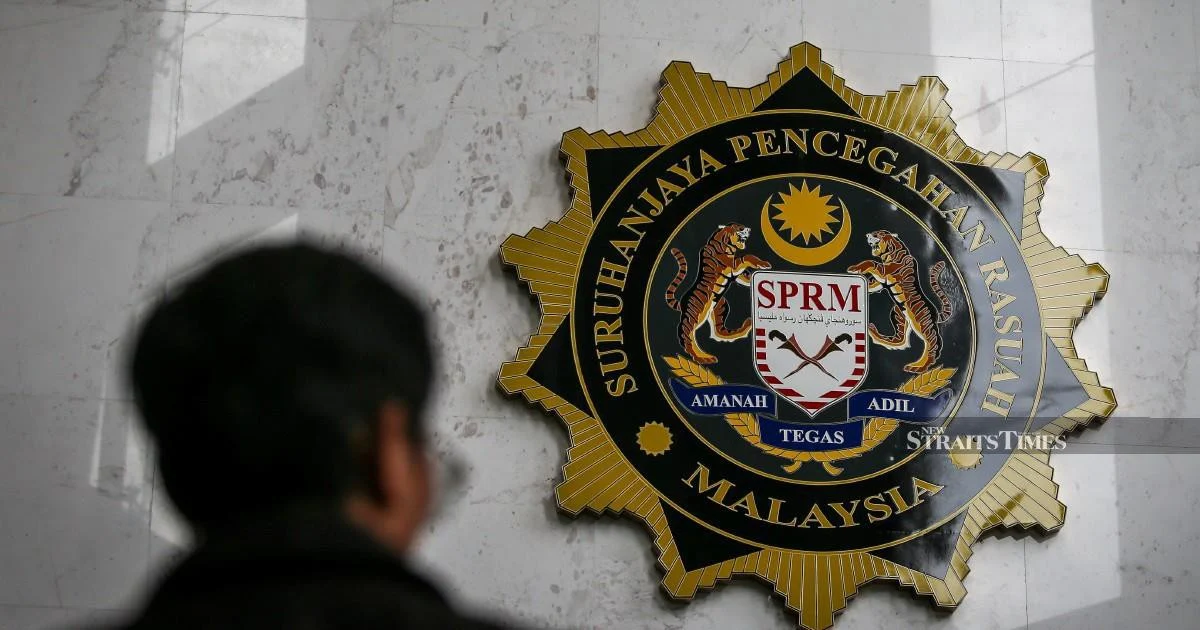
The Malaysian Anti-Corruption Commission has announced a significant enforcement initiative for Johor's forthcoming state election, establishing five dedicated operational centres strategically positioned across the state to maintain continuous vigilance against electoral wrongdoing. This move underscores the anti-corruption agency's commitment to safeguarding the integrity of the democratic process during what is expected to be a closely contested political contest in one of Malaysia's most economically significant states.
The operation rooms will function around the clock throughout the election period, providing accessible channels for citizens to lodge complaints regarding suspected corrupt practices or misuse of official authority by candidates and their representatives. By establishing multiple physical locations rather than relying solely on centralised reporting mechanisms, MACC aims to lower barriers for ordinary Johoreans to participate in the anti-corruption effort, particularly in rural areas where access to urban administrative centres might otherwise prove challenging.
The five-centre network reflects international best practices in electoral monitoring, where decentralised reporting systems have proven more effective at capturing grassroots intelligence about misconduct that might otherwise go unreported. Johor's geographical spread and diverse urban-rural demographics necessitate this distributed approach to ensure comprehensive coverage throughout the state. The timing of this deployment before the 16th state election demonstrates MACC's institutional readiness to respond to heightened corruption risks typically associated with electoral campaigns, when the temptation to deploy illicit resources and influence is at its peak.
Electoral misconduct in Malaysian state polls has historically encompassed a range of infractions, from vote-buying and campaign financing violations to the coercive use of government resources and authority. Johor, as a strategically important state with significant commercial interests and a large population base, has previously attracted scrutiny regarding electoral propriety. The establishment of dedicated operation rooms represents a tangible security measure designed to detect and deter such activities before they can undermine the fairness of the contest.
The public-facing nature of these centres is particularly significant for voter confidence in the electoral system. When citizens observe that an independent agency has visibly mobilised resources to monitor elections, it reinforces faith in institutional oversight and suggests that misconduct carries real investigative consequences. This deterrent effect operates independently of whether any particular investigation ultimately results in prosecution, as the mere visibility of enforcement activity can modify behaviour among actors who might otherwise assume impunity.
Malaysian voters have become increasingly conscious of electoral integrity following high-profile corruption investigations in recent years, and particularly after constitutional and institutional reforms that strengthened MACC's independence. The Johor operation rooms will therefore operate in an environment where public expectations for clean elections are comparatively elevated, potentially generating higher complaint volumes than might occur in less-informed constituencies. This influx of reports—whether substantive or frivolous—creates significant analytical and investigative demands, requiring MACC to deploy experienced personnel capable of rapid triage and follow-up.
The coordination between these five operation rooms will prove crucial for identifying patterns that might not be apparent at individual locations. Systematic vote-buying networks, for instance, often operate across multiple constituencies through centralised command structures; decentralised reporting points allow investigators to piece together evidence of coordinated schemes that would remain invisible to a single monitoring centre. MACC's institutional capacity to synthesise intelligence from multiple sources will determine whether this network effectively disrupts organised electoral misconduct.
From a regional perspective, Malaysia's approach to electoral monitoring through its anti-corruption agency offers instructive lessons for neighbouring democracies grappling with similar integrity challenges. The commitment of dedicated resources, the embrace of 24/7 operations, and the emphasis on public accessibility represent a model that recognises electoral misconduct as an ongoing threat rather than something addressed only through conventional police mechanisms or post-election audits.
The operation rooms' effectiveness will ultimately depend on the quality of MACC's personnel, the clarity of its complaint assessment protocols, and its capacity to transition credible allegations into formal investigations and prosecutions within reasonable timeframes. Voters will perceive the initiative as genuine only if they observe consequences flowing from complaints; centres that become information collection points without corresponding enforcement outcomes risk becoming performative exercises that undermine rather than enhance public confidence in the system.
The announcement signals broader institutional adaptation within Malaysia's enforcement architecture, reflecting recognition that state elections require tailored oversight approaches distinct from federal campaigns. Johor's election thus becomes a test case for whether geographically distributed, resource-intensive monitoring can effectively constrain electoral-period corruption. The results will likely influence how MACC deploys anti-corruption resources during future state polls across the federation, potentially establishing a template for enhanced electoral integrity protection that extends beyond Johor's boundaries.

