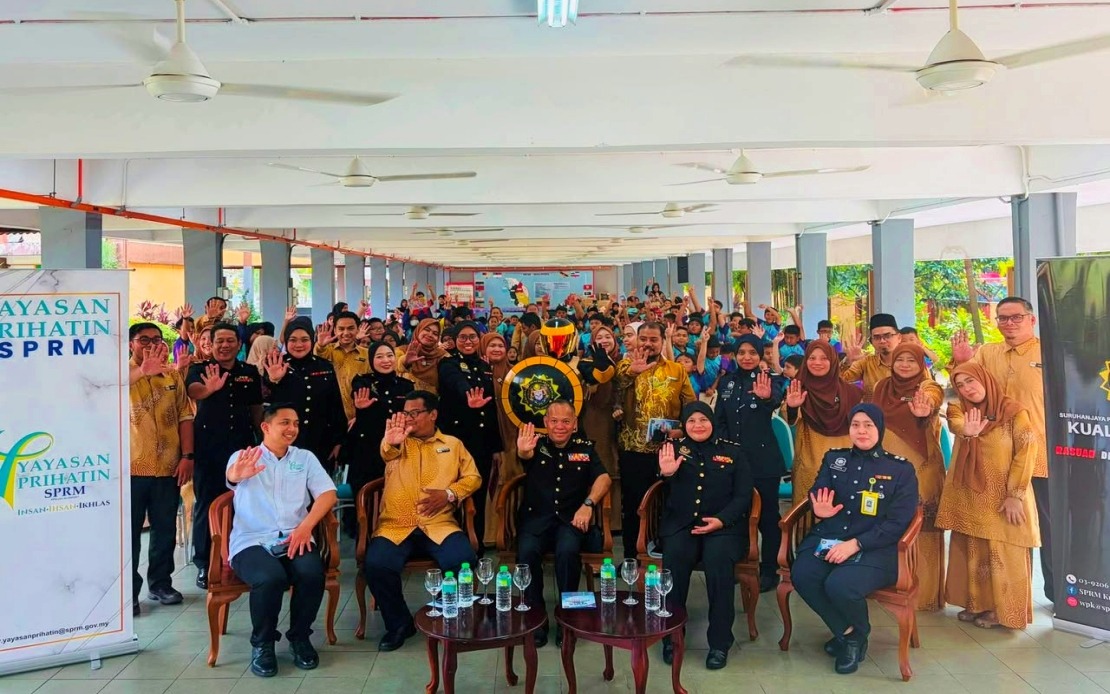
The Kuala Lumpur office of the Malaysian Anti-Corruption Commission has rolled out the Wira Antirasuah (WAR) programme at Sekolah Kebangsaan Jalan Pasar 1, marking a significant shift towards embedding integrity values among students from an early age. The initiative represents a strategic move by the anti-corruption body to address misconduct at its roots, recognizing that cultural change requires intervention at the formative stages of young people's development before ingrained habits and attitudes take hold.
According to Mohamad Zakkuan Talib, the Kuala Lumpur MACC director, the programme embodies a conviction that shaping principled citizens represents a long-term investment in the nation's future. Rather than focusing exclusively on enforcement and prosecution of existing corruption, the approach shifts emphasis towards prevention through education and the cultivation of personal moral resilience. This preventative orientation acknowledges that sustainable anti-corruption work depends not merely on detecting wrongdoing but on developing individuals with the ethical fortitude to resist temptation in the first place.
The conceptual framework underpinning the initiative challenges conventional notions of heroism and integrity. Mohamad Zakkuan emphasized that genuine heroism does not require extraordinary abilities or dramatic gestures, but rather the ordinary courage to make correct choices when facing ethical dilemmas. This reframing proves especially valuable for school-age populations, as it makes integrity aspirational yet achievable, attaching virtue to everyday conduct rather than situating it as an exceptional quality beyond ordinary reach.
The programme places particular emphasis on recognizing integrity as a cumulative phenomenon built through consistent small actions rather than occasional grand gestures. Students learn that honesty manifests through declining to cheat in examinations, respecting others' property, refusing to plagiarize academic work, maintaining personal commitments, and honouring the confidence that others place in them. By disaggregating integrity into constituent behavioural elements, the WAR programme creates a pedagogical framework through which young people can understand and practice ethical conduct in concrete, measurable terms applicable to their daily school experience.
The delivery mechanism for this educational initiative combines multiple engagement strategies designed to maintain student interest and participation. The Kuala Lumpur MACC Community Education Branch conducted briefings explaining the institutional mission and anti-corruption work, while appearances by Kapten MACC, the commission's mascot, provided an accessible and memorable interface for younger pupils. These interactive components proved essential for translating abstract principles of integrity into engaging, age-appropriate content that resonates with children's developmental stages and learning preferences.
Beyond purely educational activities, the MACC established an Anti-Corruption Corner at Sekolah Kebangsaan Jalan Pasar 1 as a permanent information hub. This physical space serves multiple constituencies, providing school staff with resources to understand and model ethical conduct while giving students a dedicated environment where integrity-related materials remain readily accessible. The corner functions as both an educational resource and a symbolic reminder of institutional commitment to maintaining ethical standards within the school community.
The programme extended welfare considerations alongside its educational mission, demonstrating that anti-corruption work encompasses broader commitments to student wellbeing. Yayasan Prihatin SPRM donated a smart television to enhance the school's teaching infrastructure, while the initiative provided educational assistance to 29 pupils from asnaf families. This dual focus acknowledges that integrity cannot flourish in contexts of deprivation, and that supporting students' material needs forms a complementary component of building ethical communities.
The environmental engagement component, through which special education pupils planted hibiscus flowers as part of the Keep Malaysia Clean campaign and National Month celebrations, embedded civic participation within the anti-corruption framework. This activity situated ethical conduct within a broader context of community care and national pride, connecting personal integrity to collective responsibility for environmental stewardship and public spaces. Such initiatives help students recognize that ethical behaviour extends beyond individual conduct to encompass participation in maintaining shared community assets and resources.
For Malaysia's policy landscape, the WAR programme reflects an evolving recognition within law enforcement institutions that corruption prevention requires systemic cultural change beginning in educational settings. As the country grapples with persistent corruption challenges affecting public trust and institutional effectiveness, initiatives that establish integrity as a normative expectation among younger generations represent a necessary complement to enforcement-focused strategies. The programme's deployment in urban Kuala Lumpur schools provides a testing ground for approaches that could eventually extend to educational institutions across diverse Malaysian communities.
The initiative carries particular significance for Southeast Asian contexts where institutional capacity and corruption present ongoing governance challenges. By prioritizing integrity formation during childhood and adolescence, Malaysia joins regional peers in recognizing that sustainable anti-corruption efforts require generational change. The hands-on, community-embedded nature of the WAR programme demonstrates how international best practices in anti-corruption can be adapted to local educational and cultural contexts, creating ownership among school communities rather than imposing external frameworks.
The MACC's grassroots approach reflects sophisticated understanding that corruption persists partly because individuals lacking formative experiences of ethical conduct struggle to maintain integrity under pressure. By contrast, young people socialized into systems that consistently reward honesty and penalize deception develop internalized commitments to ethical behaviour that persist into adulthood and professional life. This approach therefore represents an investment in cultivating future civil servants, business leaders, and citizens equipped with the moral resources to resist corruption's temptations.
Looking forward, the programme's success depends partly on institutional consistency and follow-up engagement beyond initial activities. Schools implementing the WAR initiative require sustained MACC support, periodic reinforcement sessions, and mechanisms for recognizing students demonstrating exceptional integrity. Additionally, extending the programme to parental communities could amplify its impact, as children's ethical development occurs within family contexts alongside school environments. The sustainability of such initiatives ultimately determines their long-term effectiveness in reshaping societal attitudes toward integrity and corruption.

